

Donald Trump publicly pressuring FIFA into reviewing Folarin Balogun’s red-card suspension is probably the most blatant example of host-nation privilege in recent years. In a tournament where the U.S had already barred many fans for arbitrary reasons, effectively fired a referee, and problematically constrained Iran’s performance, this was the peak of a host nation’s political majority really leveraging that position to alter outcomes in their favour or against people they do not like. Hosting tournaments in today’s world cannot be politically neutral; it reveals what nations want to project about themselves.
Morocco will co-host the 2030 Men’s World Cup, which will be the culmination of a concerted effort to build its football capacity and institutional muscle. Once a ‘bridesmaid but never the bride’ in African football, its investment in its football has paid dividends: consecutive Men’s World Cup quarterfinals, the last two Women Africa Cup of Nations (WAFCON) finals, a U-20 World Cup title and, depending on who you ask, the Africa Cup of Nations (AFCON). It has hosted the most recent edition of both the men and women’s tournaments and is now a giant of the continental game. This apparent transformation points to something bigger: how hosting propels the presentation of a coherent national story way more than it does infrastructure or sporting success.
Hosting rightly demands excellent infrastructure and investment needed to safely welcome visitors and create a memorable experience. But it also requires honesty and clarity around the identity the nation espouses through its cities selection and through the composition of its team. In other words, it’s a reflection of the narrative being cultivated on a global stage to support broader efforts. It means Nigeria cannot properly host anyone till it reconciles with this persistent and uncomfortable question: what can Nigeria show about itself when hosting? Evidence suggests an uncomfortable answer: the two sporting instruments Nigeria has used to make itself legible as one country—the tournaments it stages and the team it fields—have each reproduced the very divisions they were meant to paper over.
The Optics Behind Hosting
Nigeria’s size and wealth mean it has been extensively approached and bid to host tournaments. It has hosted two African Cup of Nations tournaments (1980 and, as co-host, 2000), two African Games (Lagos 1973 and Abuja 2003), the FIFA World Youth Championship in 1999, and the U-17 World Cup in 2009. Nigeria also maximised home advantage —it won gold at the Lagos 1973 African Games and topped the medals table at the Abuja 2003 edition, won its first AFCON title at home in 1980 and was penalties away from regaining it in 2000, and narrowly lost the final of the 2009 U-17 World Cup in Abuja.
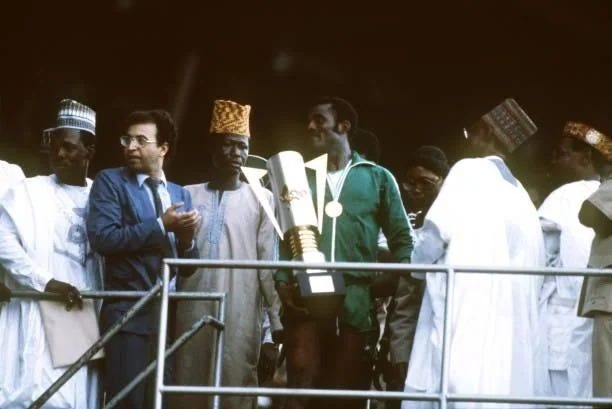
These moments fuelled patriotism and camaraderie as Nigeria made giant sporting strides. After all, what better image for a new democracy a decade after a civil war than Christian Chukwu, captain of the team from the East, receiving the AFCON trophy from Shehu Shagari, president from the North, in Lagos? Such images, demonstrating a perceived unity of the nation, inspired hope and encouraged a generation of young Nigerians to pursue sports as a livelihood.
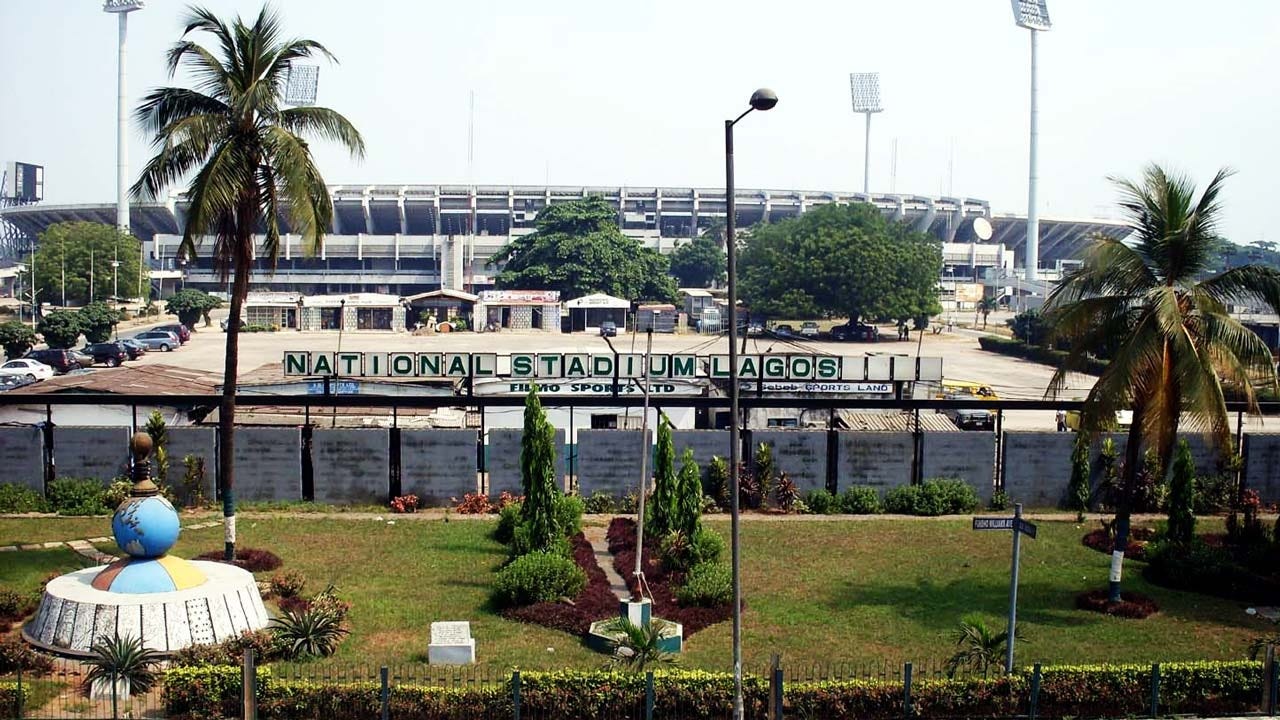
Its investments also followed considerable economic and domestic growth. The National Stadium in Surulere, which hosted the 1973 Games and the 1980 AFCON Final, was opened in 1972, amid the oil boom that followed the Civil War. The Abuja Stadium, which followed in 2003, was built at a cost of $360 million under the Obasanjo government during another oil windfall, and the Athletes Villages were also designed with an eye to long-term housing. But neither stadium had sustainable thinking behind it. While newly built stadiums around the world are concessioned to local sports clubs or private companies to run and maintain, both national stadiums have been largely abandoned and now require substantial renovation before they can host anything at all. The result is a culture in which such events are no longer seen as viable investments.
These optics might have affected Nigeria’s bid for AFCON 2027. The joint bid with Benin collapsed when the House of Representatives committee on sports pointed out the irony of spending money while citizens were still reeling from the 2023 fuel subsidy removal. Nigeria’s record of failed bids also includes the 2014 Commonwealth Games (which went to Glasgow), the 2030 edition, and, more recently, the 2031 African Games (Kampala). The last defeat, for a Games Nigeria hosted twice, likely owes more to its poor sporting administration. Repeated failures left hosting bids looking less like national ambitions and more like elite political projects, and the public sensed it. This meant the expected scrutiny and accountability that bid officials should have faced never came.
Fields of Dreams
Stadium politics has always been a staple of Nigerian sports and speaks to the importance of location in politics. In 1977, Shooting Stars of Ibadan faced Rangers of Enugu for a place in the African Cup Winners’ Cup Final, the continent’s second-tier club competition. Both teams produced the majority of the national team, and their rivalry worried administrators. Because of their rivalry, it was agreed that both matches would be played in ‘neutral’ Lagos. Later, after a contentious first leg and accusations that the Yoruba-majority Lagos would favour the nearby Ibadan club, it was moved to Kaduna. By 1980, Nigeria was hosting AFCON in Lagos and Ibadan, home to the country’s two best stadiums.
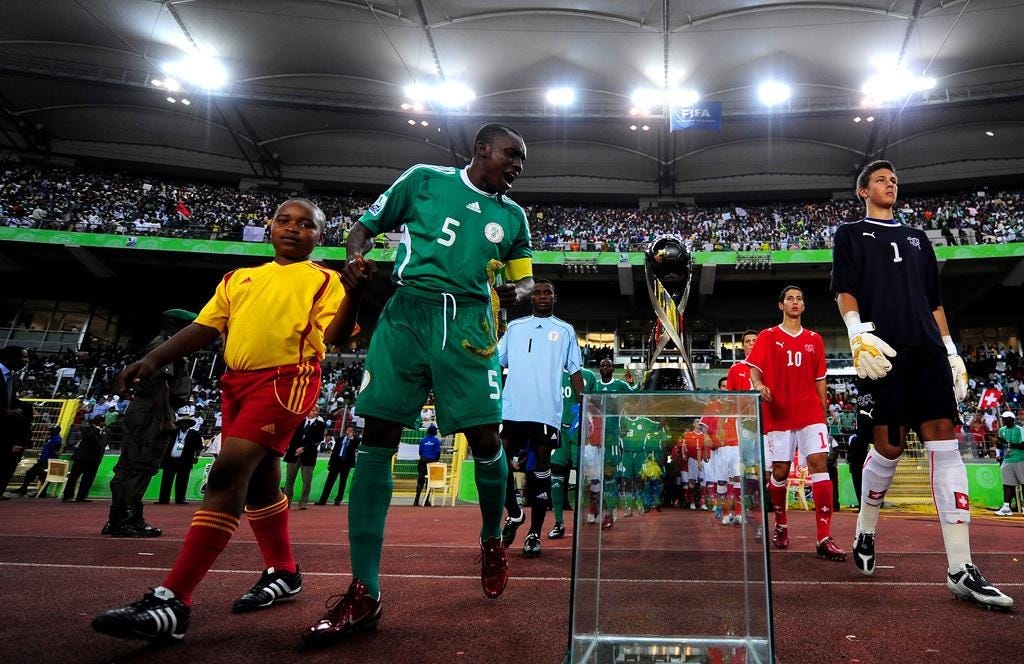
The 1999 FIFA World Youth Championship was the last major event Nigeria staged under military rule, and it was held across the country. Alongside established hosts Lagos and Ibadan, the South-South was represented by Port Harcourt and Calabar; the East by Enugu; and the North by Bauchi, Kaduna and Kano. By 2003, Abuja had received extensive investment and hosted the African Games. By the time the 2009 FIFA U-17 World Cup arrived, Abuja had replaced Port Harcourt, Ijebu-Ode replaced Ibadan, and the other six cities from 1999 resumed hosting duties.
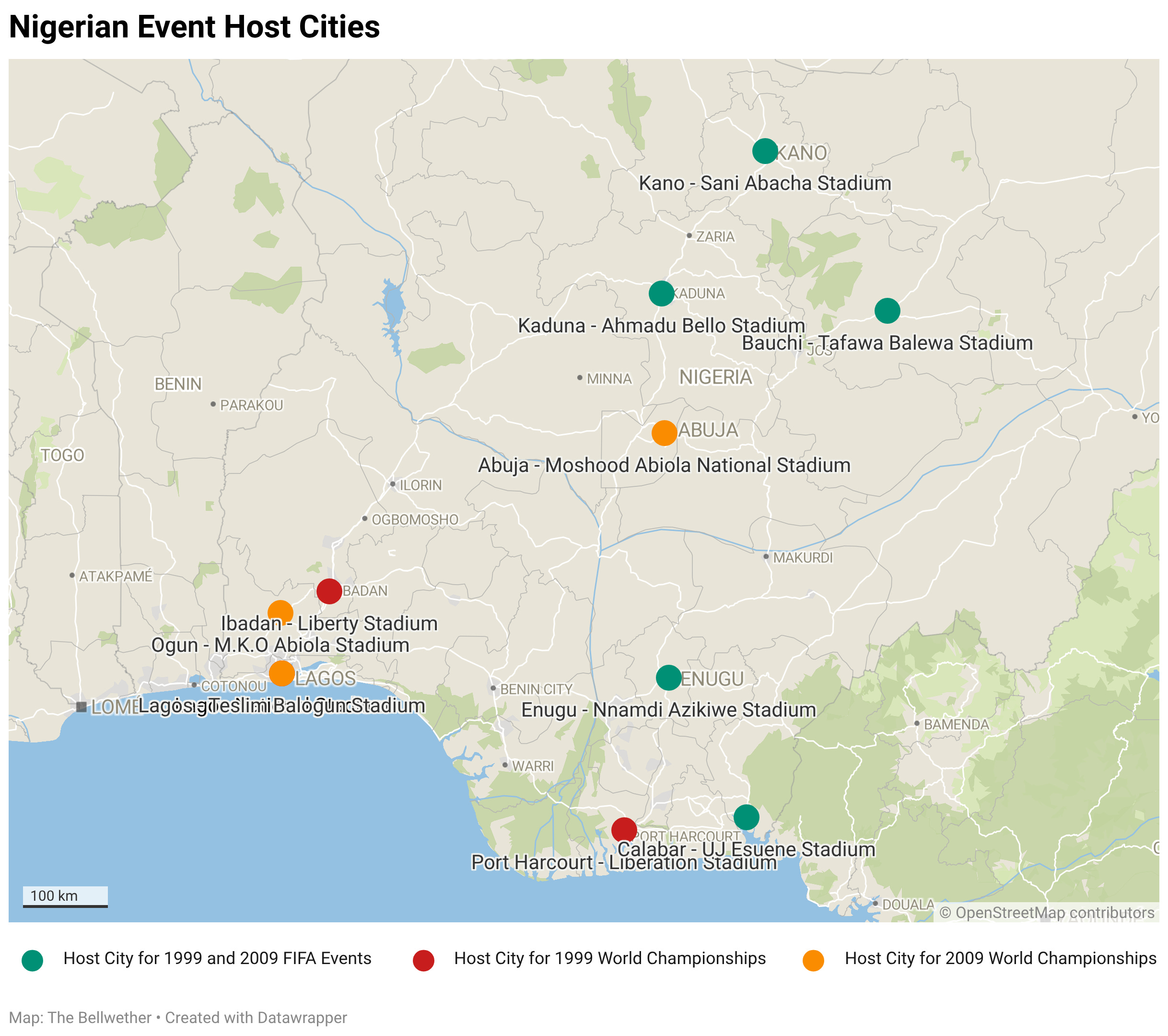
But just as visitors in one’s home are unlikely to be allowed to wander into untidy rooms, host cities are often chosen with an eye to which parts of the country are considered safe enough to showcase. In 2009, despite then-President Yar’Adua’s unconditional amnesty for Niger Delta militants, Warri was removed from the list of host cities over this concern. The absence of host cities in the North East also reflects similar insecurity concerns. Which cities get to represent Nigeria to the world has never been a question of stadium capacity alone, but also about how they would be regarded, including safety. In other words, host-city selection has often reflected political comfort much more than national representation.
There is a question here about hosting ‘etiquette’ and what it demands of hosts who cannot agree on what to put forward. Nigeria’s identity has been in question for most of its existence, and attempts to provide a balanced palette through the host cities for tournaments have only reinforced these distinctions rather than foster cohesion. The infrastructure and investment argument helps paper over gaps in standards between an established metropole like Lagos and virtually every other city in the country. Investment in host cities can and should showcase the range of a country’s people. What it cannot do is conjure a national, collective push that does not exist. Tournaments have often isolated whole swathes of the country as forced chaperones of the party rather than enthusiastic hosts.
A country at odds with itself struggles to present a united front. It is part of why sportswashing, the concept of leaders of ‘problematic’ nations using sports to launder their image, works. Autocrats can performatively present a cohesive state precisely because no one at home is allowed to contradict the performance, and of course, divided countries tend to expose their flawed democracies when they host.
The ‘successful’ hosts of recent tournaments have been governed by leaders who have largely been able to devote resources without any scrutiny or accountability: AFCON’s recent hosts were Morocco and Côte d’Ivoire, for example. Before 2026, FIFA had taken the World Cup to Qatar and Russia. The U.S is the latest example of a country at odds with itself, with the contention over leadership styles and Trump’s involvement in Balogun’s suspension. But that is a country with 250 years of brand management and a curated idea of what it means to be a nation; Nigeria cannot yet agree on what ‘the Nigerian dream’ is.
Bleeding Green
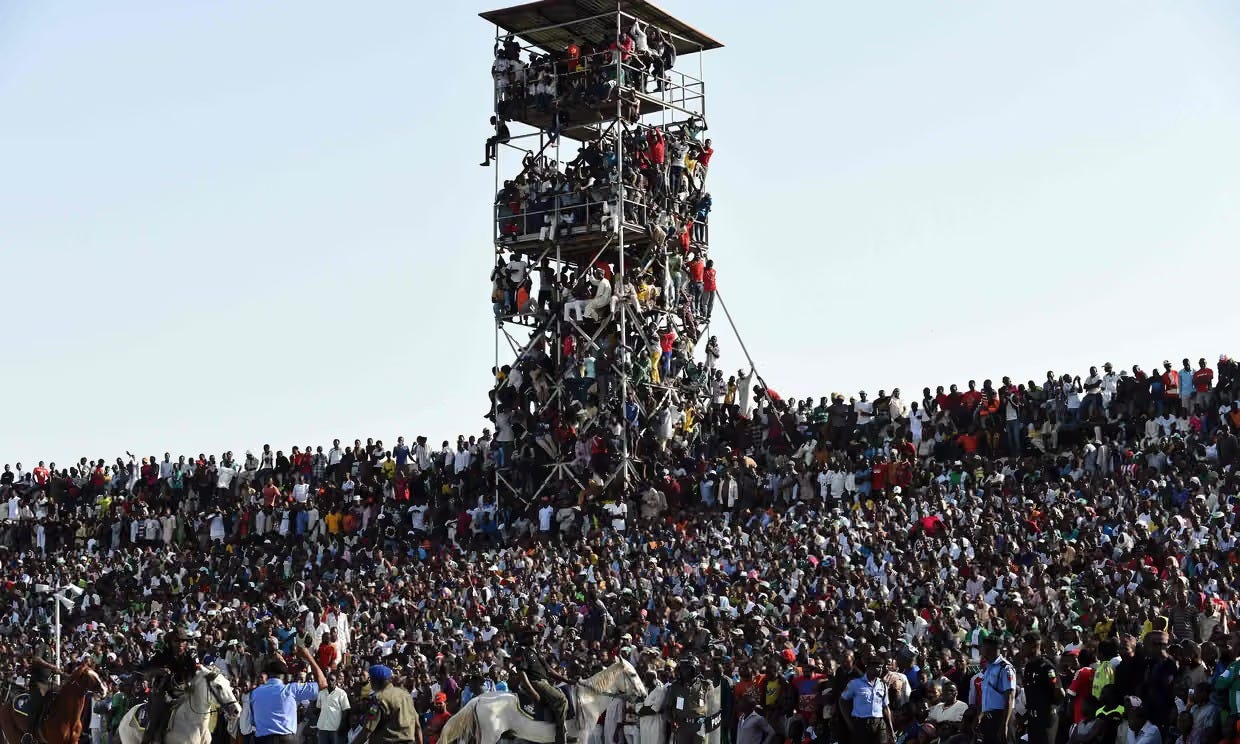
A final case for hosting is the obvious incentive: it might be easier to back yourself at home. If we count Morocco’s current, disputed status as champions, 13 of 35 AFCON hosts have won the title, with three reaching the Final. The number admittedly plummets at the World Cup, where only six hosts have won, most recently being France in 1998. But the fervour of a home crowd and the ability to invest in building momentum around the squad, since qualification is assured, are part of the appeal. However, none of this works if the country will not gather around the team. And if host cities are a question of which places Nigeria is willing to showcase, the squad is an even more intimate curation, since it shows which people get to stand for the country.
Nigeria’s team has struggled to command nationwide support because many people have not felt represented by the team. The men’s national team has not played in the north for over a decade, following a mismanaged World Cup qualifier in Kaduna in March 2016. The North has not just been unvisited, it has also been grossly unconsidered. In 61 years of international football, only 13 players from the north have represented the Super Eagles at an AFCON. Most of that history runs through a handful of names—Garba Lawal, Tijani Babangida, Sani Kaita—before narrowing, by the 2010s, to essentially one player: Ahmed Musa, a Kano Pillars product who became Nigeria’s most-capped international and, eventually, its captain. By the time of the 2023 tournament in Côte d’Ivoire, Musa’s role had become almost entirely symbolic.
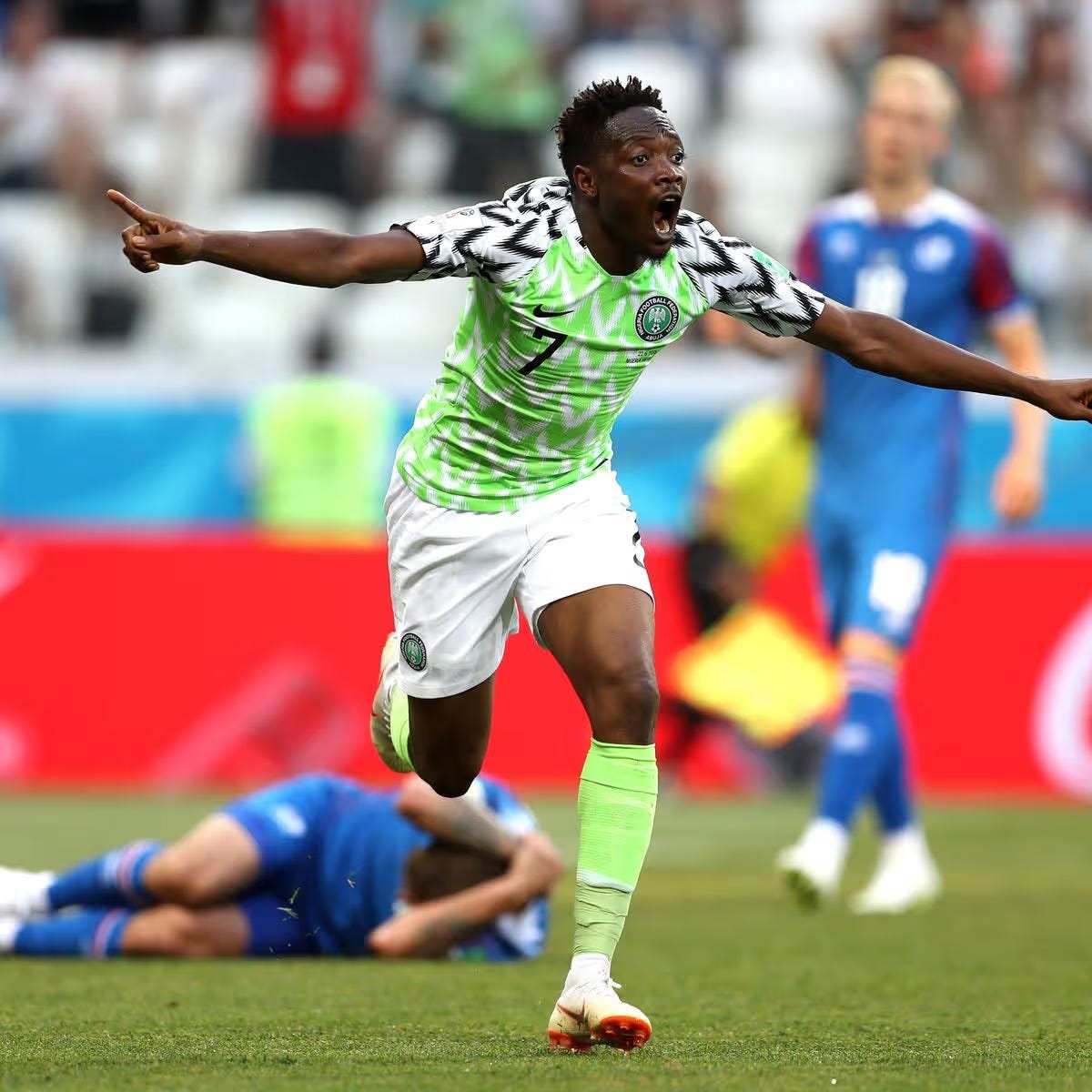
He did not start a single match in Nigeria’s run to the Final, and head coach José Peseiro defended his inclusion on leadership and mentoring grounds rather than his ability to contribute on the pitch. Musa, for his part, used the platform that came with wearing the armband to say exactly what the moment called for: that Nigeria stands united beyond tribe and religion, and that the team’s strength lay in coming together. Underneath him, fans were describing the selection process in almost the opposite language. One supporter, reacting to the squad list, called it simple favouritism, asking why players from lesser leagues were picked over stronger options elsewhere. By the following year, Nigerian football writers were warning that Musa’s would-be successors (Jamilu Collins, Zaidu Sanusi, and prodigy Alhassan Yusuf) were each falling out of contention for reasons ranging from injury to a move to America’s lower-profile league, and that the North risked having no Super Eagle at all.
None of this means representation is a prerequisite for support. Nigeria’s last Men’s AFCON victory was in 2013, and no northerner started the game; Musa came on in the 54th minute. But the joy of victory united Nigerians for a moment and showed the power of unifying images.
At the end of the day, there is a question of what supporting Nigeria means, especially when the game is at home. During the ongoing World Cup, Norway’s run to the quarterfinals has seen supporters around the world engage in the famous ‘Viking row’. The irony is that this celebration is relatively new and was simply manufactured by the team, but it has become a way to connect with fans and supporters globally.
Arguments for Norway have often included its homogeneity, whereas Nigeria, like many African states, has to engage with its diversity and multiethnicity. But homogeneity is not the operative difference. Norway could manufacture a ritual because its team already plausibly stood for the whole country. Nigeria’s problem is that there are still questions about what constitutes a truly national identity. Without addressing this, we cannot properly leverage any hosting opportunity.
Extra Time
Put the team and the stadiums side by side, and the same theme appears. The venue list has always run wider on paper than in practice, its inclusiveness dependent on truces, oil windows, and security assessments that expire the moment the tournament ends. The squad has run narrower than the country it claims to represent for its entire history, propped up for a decade by essentially one man performing the unity his own presence was supposed to prove. Both themes are evidence of a recurring issue—making an abstract, argued-over country briefly legible as a single thing. And the institutions in charge of the venues and the national squad have quietly underperformed on that job for six decades, without anyone treating the shortfall as anything more than an administrative detail.
There is an example that Nigeria can learn from. Its women’s team, the Super Falcons, has been able to bridge religious and diaspora representation in its roster. It is the most successful African side, including a memorable comeback in the 2024 WAFCON Final against hosts Morocco. The squad has long drawn from both domestic leagues and the diaspora, yet this blend has rarely provoked the same anxieties about authenticity or allegiance that surround the Super Eagles. Instead, diaspora players are often seamlessly integrated, their presence seen as an extension of Nigeria’s global footprint rather than a dilution of it.
Perhaps most striking is that this relative unity has been achieved despite chronic underfunding, limited media attention, and weaker institutional support. In other words, where the men’s team has often mirrored Nigeria’s divisions, the Super Falcons suggest that a more inclusive and less politicised model of representation is not only possible, but already exists.
None of Nigeria’s recent issues, notably failing to qualify for consecutive World Cups for the first time in history, either proves a lack of talent, pedigree, or a genuine appetite among its citizens to see the country host again. What it demonstrates is narrower and harder to dismiss: that the two sporting instruments Nigeria has relied on to make its own nationhood visible, the team on the pitch and the tournaments it bids to host, have each, independently and for decades, reproduced the same regional imbalance the country has never resolved politically. Perhaps the most vivid image is that of the most successful country in U-17 World Cups failing to deliver on this promise and instead creating the impression of being age cheaters.
The mistake is assuming this is a football problem awaiting a football solution. This is still a national question, with its answer still being debated. That negotiation has been playing out on pitches and stadia, a country trying to prove to itself that it is one thing rather than several. Hosting can paper over some cracks but, like a game of two halves, there’s a much longer and much more consequential segment yet to kick off.
--
The Village
The Trade Union has struck again, but that is also because between 1-2 am chats and edits we agreed on a set focus that was a bit more distinct and more ‘Bellwether’.
Temitayo Akinyemi has an impressive, albeit occasionally annoying, way of providing few comments and turning the piece around—such as losing my preferred intro that fought against hydration breaks, making this a game of four quarters. The title is a subtle protest against this. ChiAmaka Dike and Seyi panel-beat the piece around the identity question and also forced a more direct voice than I am used to. Peter Akinnusi is still amused by the hilarious African narrative around “mentality” vs poor prep/tactics, qualification, self-infantilisation. He was the perfect eye to take the final brush on this piece, in the middle of his own nocturnal workload.
Special shout-out to Argentina-Egypt for delivering a reminder of why I like this game, and to Colombia-Switzerland for the snoozefest that let me focus on this.