
An Obituary for the PDP
No umbrella for the rain

Almost every attempt to trace the fall of the People’s Democratic Party (PDP) begins the same way: with Vincent Ogbulafor’s infamous 2008 declaration that “the PDP will rule Nigeria for the next 60 years.” At that point, with 28 state governorships, a supermajority in the National Assembly, and a president descended from one of the country’s most powerful political networks, it was understandable that the party would establish a firm grip on the country’s politics for years to come. More importantly, the opposition was largely fractured and confined to separate fiefdoms, posing no real threat to the PDP’s fortunes.
There is a timeline in which, today in 2026, the PDP is about halfway through fulfilling Ogbulafor’s prophecy. Instead, the party is down to two state governorships, Oyo’s Seyi Makinde and Bauchi’s Bala Mohammed, and the latter is reportedly negotiating an exit to the All Progressives Congress. After a raft of defections on 12 March 2026, the PDP has been reduced to just eight senators, relegating the former party to third place in the Senate.
That we are even discussing the demise of a party once as dominant as the PDP should be perplexing. With a different set of actions, it could easily have won the 2023 elections and been in power today. Just before its presidential primaries, it lost Peter Obi and Rabiu Kwankwaso, who secured the Labour Party (LP) and New Nigeria Peoples Party (NNPP) presidential nominations, respectively, and together secured an estimated 7.6 million votes. If we add the roughly 7 million votes that Atiku Abubakar—whom the PDP fielded—gained, all three opposition candidates received well over the 9 million votes attributed to Bola Ahmed Tinubu.
The PDP has become the template for the lifecycle of a ruling party. A combination of poor party administration and complacency in power has left the umbrella unable to provide shelter when it might have been most effective.
The PDP, at least as we know it, is dead.'
The Midwife of the Fourth Republic
Led by former Vice-President Alex Ekwueme (1979-1983), a group of political elders and ex-military officers began coordinating to oppose General Sani Abacha’s attempt to legitimise his rule through a democratic transition. After Abacha’s death in June 1998 and the lifting of the ban on democratic activities, this group—G34—became the PDP and leveraged its national union to provide the most viable political platform ahead of forthcoming elections.
The PDP was a convenient vehicle for the transition because its membership attracted elite agreement and the necessary acceptance of the military regime, and, compared with its rivals, had a genuine national profile. But PDP, from the outset, also struggled with the same issues that would befall many Nigerian political parties: despite having a manifesto, it was unclear which set of ideologies would inform its governance style. It was first and foremost a vehicle to gain political power, which is why two presidential candidates, Abubakar Rimi (PRP) and Alex Ekwueme (NPN), and its founding national chair, Solomon Lar (NPP), could come together under one umbrella despite representing parties with distinct ideological differences in the Second Republic. It also struggled to ensure proper party administration, which would have insulated it from select interests. This second point is best exemplified by Olusegun Obasanjo being sprung from prison and virtually imposed on the PDP as their presidential candidate to satisfy the anxiety of some key officers in the military regime.
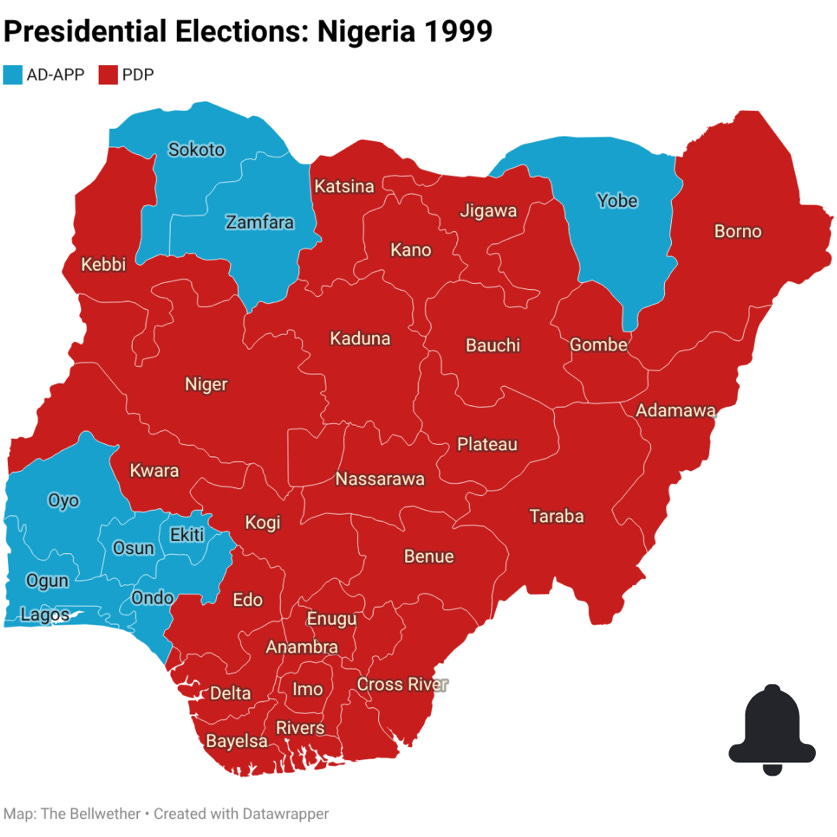
PDP owed its victory to its national network, but it maintained loyalty by governing in its stakeholders’ interests. This brought the term ‘zoning’ into Nigerian political lingo. It ensured that geopolitical zones were adequately represented in the government and the party’s top leadership. It even extended this to positions expected to be insulated from such political considerations, such as secretary to the government of the federation and head of the civil service.
Obasanjo’s management of the party and the country demonstrated the confidence of someone who had served before, but also highlighted the limitations of a former military general coming to terms with more oversight and accountability. He carried out at least five major reshuffles during his tenure, merging and splitting ministries at will. He also went through five party chairs, beginning a pattern of inconsistent party leadership. His role in the growth of the telecom sector, the 2005 Paris Club debt relief, the transition of the OAU to the African Union, and even the rebuffing of the 2003 coup attempt in São Tomé and Príncipe showed his strengths in government coordination and foreign policy nous. His roles in the Odi massacre, several states of emergency, and several intra-party issues, such as in Anambra and Ekiti, also saw him push the limits of his powers as president and party leader.
History is full of intriguing ‘what ifs’. One of the most consequential for PDP concerns an oft-cited rumour that Atiku Abubakar, an influential vice-president, once had the leverage to challenge Obasanjo for the party ticket in 2003, leading the president to beg his deputy to enjoy a second term. What followed was a dramatic breakdown in relations between the two men, leading to Obasanjo hounding Atiku out of the party and nearly out of the vice presidency and the 2007 elections.
A Term too far?
A lot has been made of PDP’s inflection point, the exact moment things started going down. And while some will argue about later issues concerning presidential nominee choices in 2015 and 2023, there is a case to be made about 2007. The party had just beaten forces that sought to give a powerful president a third term. PDP’s stature was such that, if it were truly a party move, the constitution could have been changed. This showed the power of officials to check the ambitions of a dominating leader. The right move would have been to consolidate party primacy by further ensuring its control over the nominating process for its next presidential flagbearer. This was key because, again, given PDP’s power, this would likely be the next president.
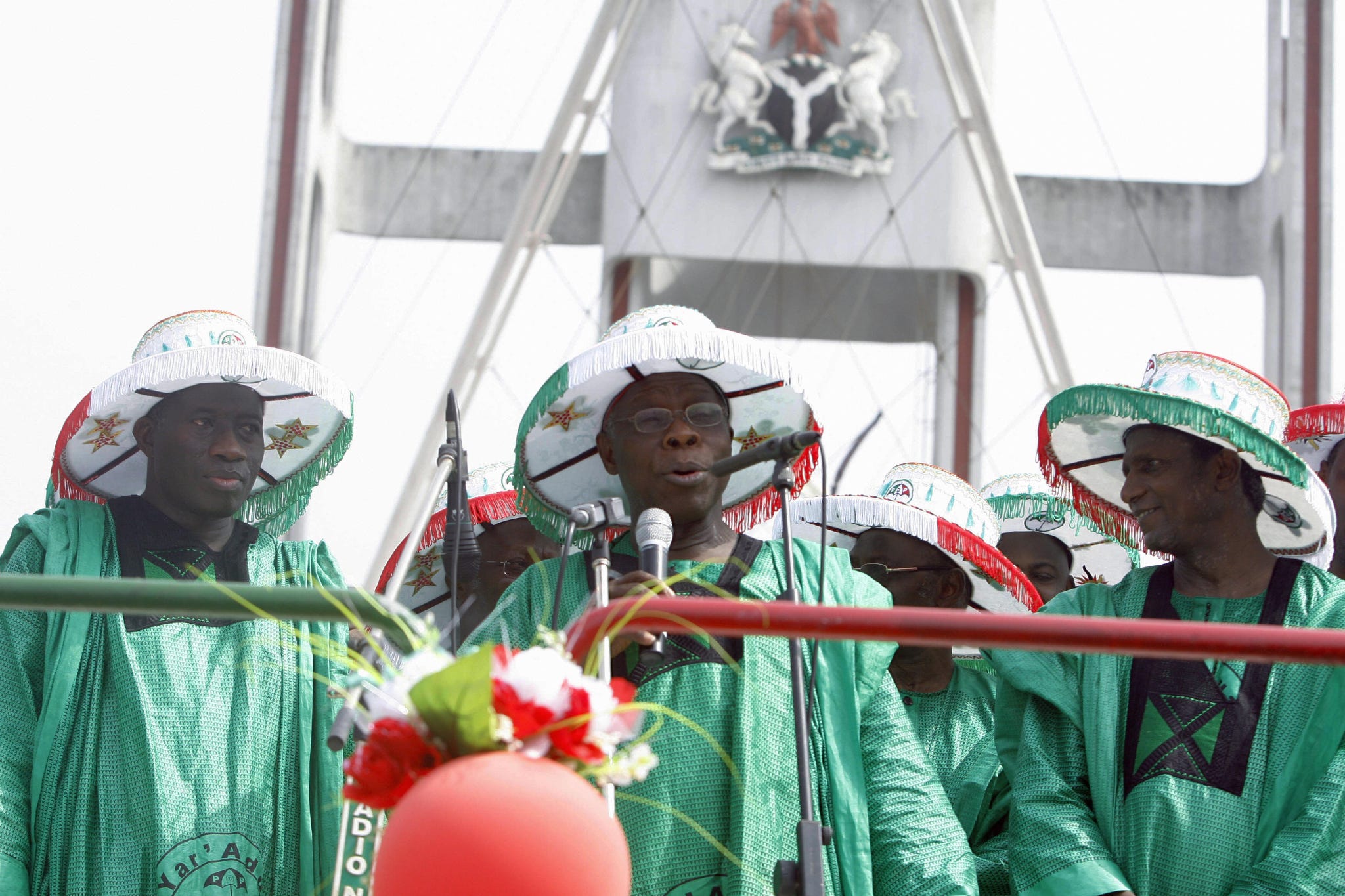
Instead, Obasanjo fought back and regained control. By most accounts, he determined the Umaru Yar’Adua-Goodluck Jonathan ticket, utilising the financial crimes watchdog to disqualify most of the other candidates. He also overruled the choice of Kaduna Governor Ahmed Makarfi (1999 – 2007), who by several accounts was the preference of the party’s governors to become president, because he “was too smart and would not be easily controlled”. The party’s inability to ensure such a choice contrasts with that of APC governors when faced with a similar choice in 2023.
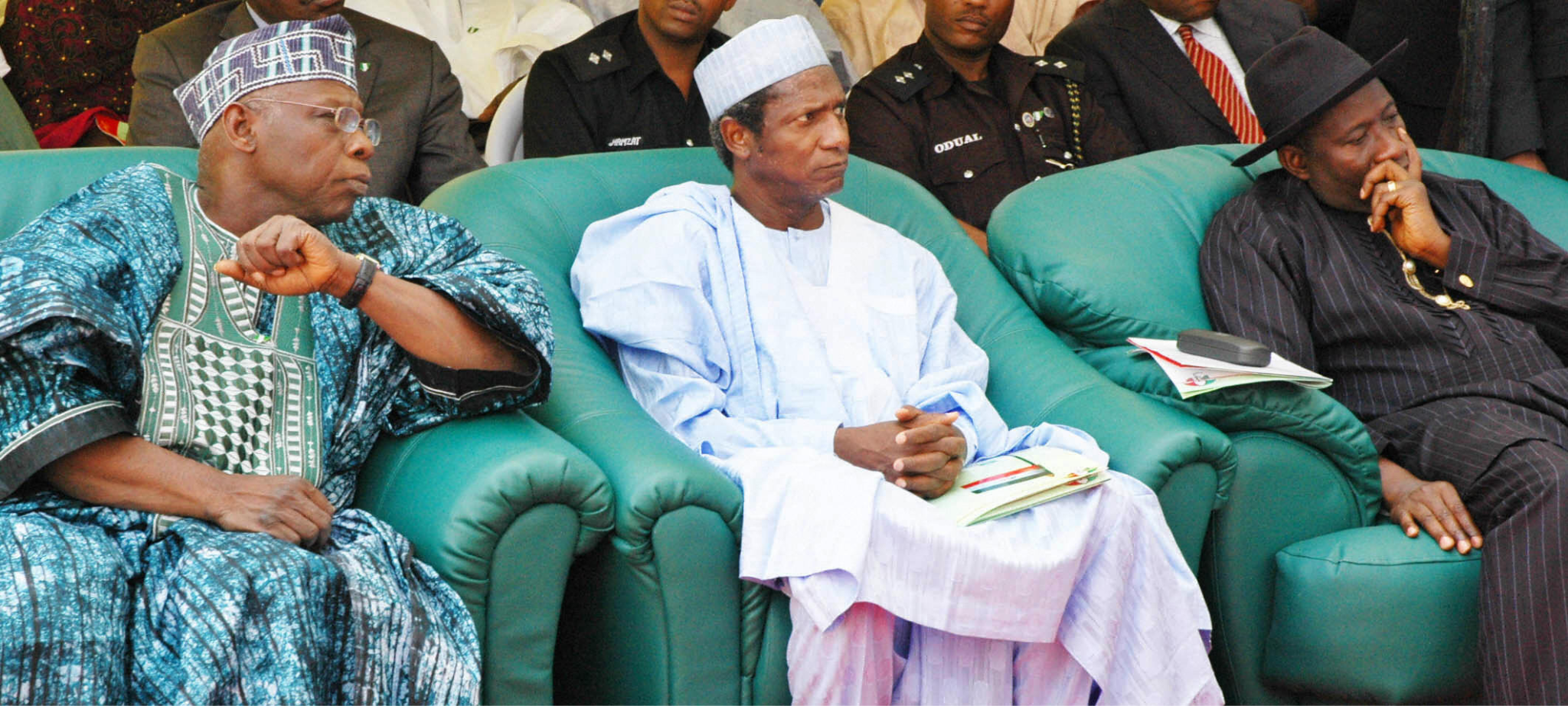
Yar’Adua would seek to distance himself from Obasanjo’s administration, with little overlap in terms of appointees. But his health challenges negated a proper fight for control of the party. This led to the growth of opposition parties, with increasing court-backed rulings that systematically weakened the PDP. Jonathan’s succession to the presidency after Yar’Adua’s death was another chance for older leaders to fight back through their influence over a ‘weak’ president.
Against the growing disillusionment of northern politicians who felt cheated out of their time in power, Jonathan sought and won a full term in office in 2011. But a subsidy rollout that faced considerable, coordinated civil society opposition sapped him of much of his good luck. He gained control of the party, especially after Obasanjo’s resignation as chair of the board of trustees, but this meant alienating strong party members. This included his ill-advised fight with Rotimi Amaechi, the influential chair of the governors’ forum, and his efforts to ensure a coronation at the primary in 2014.
The emergence of the APC, through the merger of opposition forces, provided the first real alternative to the PDP for many Nigerians, but even its success owed as much to its campaign prowess as to the PDP’s internal dysfunction. There was no clear ideological basis for the party, no think tank or policy pipeline to help communicate and strategise its project. It relied on favourable patronage networks and served as a convenient cover while different factions competed for control in their states and, later, nationally. This ‘hollowness’ meant that reform could achieve little. It also meant that the party drew no real loyalty, allowing pragmatic politicians to discard it when convenient. This would happen in 2015, en route to its defeat in the polls.
Ill-suited for opposition
After leaving power, it became clear that its control of the presidency masked a lot of its challenges. The party barely carried out an effective autopsy of its defeat and, within a year, was embroiled in a battle for control between Ali Modu Sheriff and Ahmed Makarfi, which further complicated its ability to hold the government to account. Obasanjo had resigned his membership and endorsed Buhari before the 2015 elections, which meant that, coupled with Jonathan’s seeming political retirement, the PDP had no former leader to rally around or help lead its transition.
This situation created a vacuum that its governors filled. The party became beholden to the interests of those who controlled any of the states in which it still commanded influence. But it also meant that these governors could easily sacrifice group success on the expedient altar of their personal ambitions. It meant that while they were content to let Atiku run for president in 2019, there were concerns over actions he took that were ‘independent’, such as picking Obi as his running mate. By the time preparations for 2023 came, it was impossible to attend to the ambitions and interests of all the governors who were term-limited.
The irony of PDP’s complicated relationship with Nigerians is that, by 2023, it was actually possible for the party to regain power. Fuelled by nostalgia and anger with the present, Nigerians appeared ready to punish the APC. Because Buhari had ‘taken the turn of the north’, conventional politics dictated that the presidency move south, but there was no clear consensus on how to proceed. Rivers Governor Nyesom Wike schemed to replace the national chair, Uche Secondus, with Iyorchia Ayu from the north, because of a convention requiring that the party chair and the presidential nominee come from different parts of the country. But the Enugu Governor Ifeanyi Ugwuanyi committee, tasked with settling the zoning arrangement, reached a stalemate under pressure from prominent candidates and declined to make a decision.
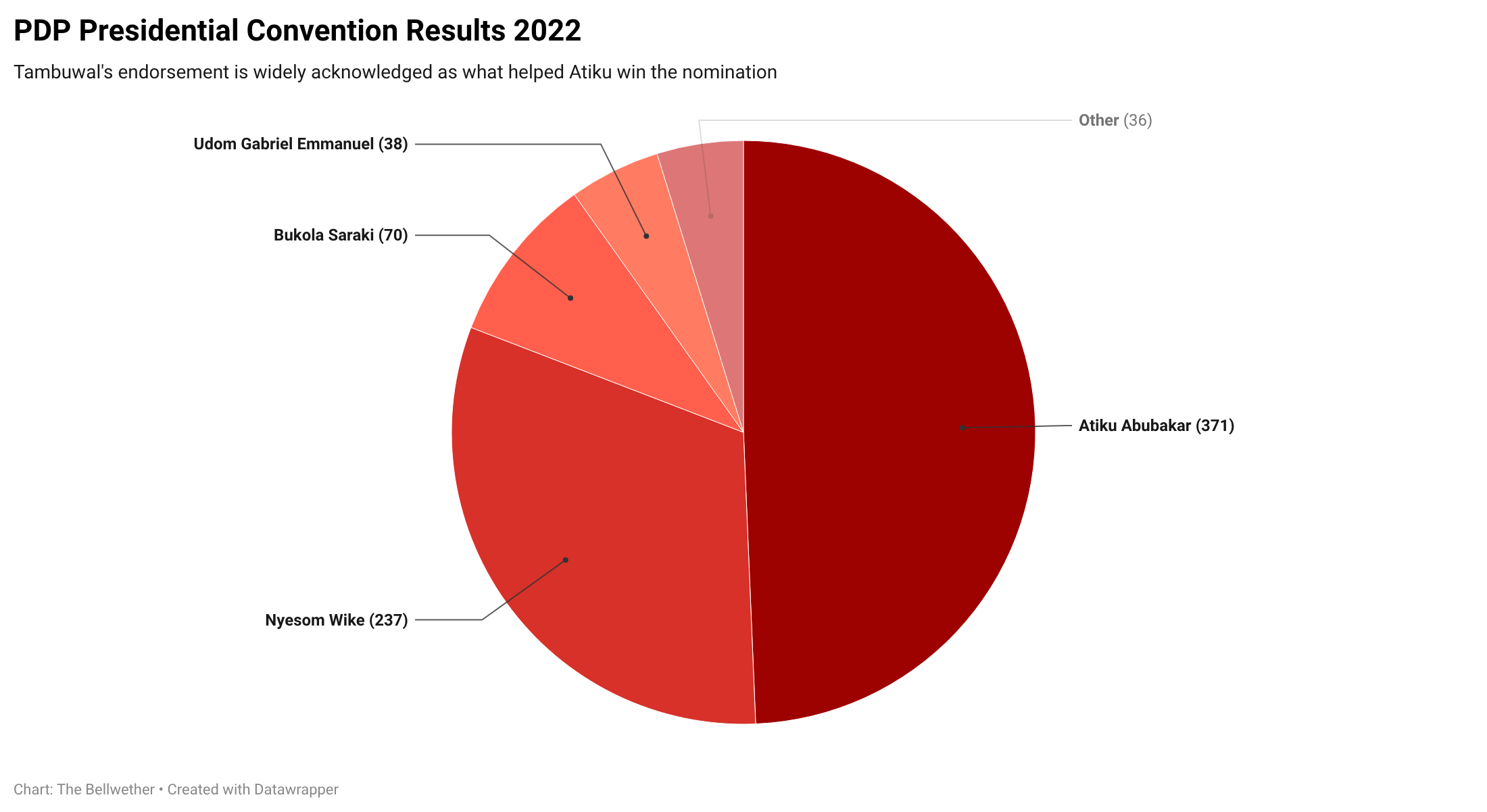
It meant that by the time the party assembled in Abuja, there was little guidance on what to do and more space for aggrieved participants to point to when seeking recompense. To build on this, Obi and Kwankwaso had concluded that they could not compete within the party and sought tickets from other parties, taking their considerable influence elsewhere. By the time Aminu Tambuwal encouraged his delegates to back Atiku, basically handing him the convention, Wike had begun his claim that the South was being marginalised. This rupture would see him lead five governors against the party and into the hands of Tinubu and the APC.
The third time might be the curse for the PDP as the party appears unable to muster enough strength to compete in 2027. Its unofficial leader, Nyesom Wike, is a member of the APC government and has already endorsed Tinubu’s re-election bid. Erstwhile leaders, including Atiku, Obi and Tambuwal, have chosen the African Democratic Congress (ADC) as the select vehicle for contesting future elections. Its representatives have dwindled in the National Assembly, and it is down to two governors, leaving only the question of who will turn off the lights.
A lot has been made of the wave of defections, mostly in PDP’s former ‘strongholds’ of the South South and South East, and in states that it had carried confidently in previous elections. But there is a point: PDP did not have these strongholds; it had individuals who controlled them and could act through whatever party structure was in place. Because PDP became beholden to governor-godfathers more than other parties, it was most susceptible to defections, which were more impactful.
Lessons from a life
Nigerian politics is interesting enough that this ‘obituary’ could be premature, with a miracle very much in the offing. But while some of the issues that plagued the PDP are fairly existential, others are at the core of the limits of Nigerian political parties.
The PDP’s patronage network relied on individuals, trusting a governor or minister to handle party mobilisation and to ensure members felt the party in their territories. But this dependence meant ambitious or incompetent officeholders could damage structures necessary for contests. It also meant that, because governors were virtually in charge in their states, they could act as godfathers and impose successors. This also affected the party at the national level, since officeholders in key positions fund political parties, and regular membership dues are virtually non-existent. As such, the party became beholden to these individual interests and Wike, who governed one of the country’s wealthier states, was in a position to take control of the party.
Another prevalent issue was the clear lack of party discipline or a reward for member loyalty. Defection was convenient until it was not, and members who stayed were not rewarded. Similarly, anti-party activities only mattered if you were not a prominent party member—it is ironic that Wike and Oyo Governor Seyi Makinde, two men competing for party control, both worked actively against the party and its nominee in 2023. None has been sanctioned or even reprimanded. Longstanding leaders, such as Sule Lamido, were not allowed to contest for the party chair, showing how contributions and commitments have been easily discarded and experience ignored.
No Nigerian institution has successfully solved the problem of grassroots revenue collection at scale — but one comes close. The Pentecostal church, with clear targets for weekly offerings and revenue funnelled up the chain for management, deftly manages these issues. In fact, given the level of reverence and obeisance that politicians show elected officials, it might be a comparable model. But a long-term solution to the financing gap, especially when not in power and without access to state or ministerial allocations, is key for any party seeking to survive. Paired with effective policies that encourage party commitment and investment, members can feel better about devoting time and resources to the party.
The biggest lesson from PDP’s travails is that no one person should be bigger than the party. This fixation on individuals also made it susceptible to encroachment and infiltration from other forces. After all, if all you need to gain influence is close proximity to a governor or minister, then what’s stopping you from parlaying that for tangible stakes elsewhere? At some point, PDP’s control of the centre papered over the necessary separation of state between running a government and managing a party. By the time this was necessary, during a contested election against a better coordinated party, it was unable to rely on its heritage and longstanding support.
In retrospect, PDP had lost its states long before it lost its power. What it had were not party structures, but ‘political managers’. Ironically, its 2019 vice-presidential nominee provides the best proof of this claim. Peter Obi’s ability to get the presidential nomination of another party, with less than a year to the elections, and make it competitive was primarily down to the PDP’s hollow state structures. Most of the states Obi won were gained from PDP, which is more impressive considering he did not move with party members or recognised state leaders. Tellingly, the party’s inability to woo back its members does not show a structure prepared to be competitive in 2027. It confirms that the PDP, at least in this iteration, is dead and will need to be drastically overhauled if it is to perform a miracle and return to relevance, let alone power.
Under the sun and in the rain
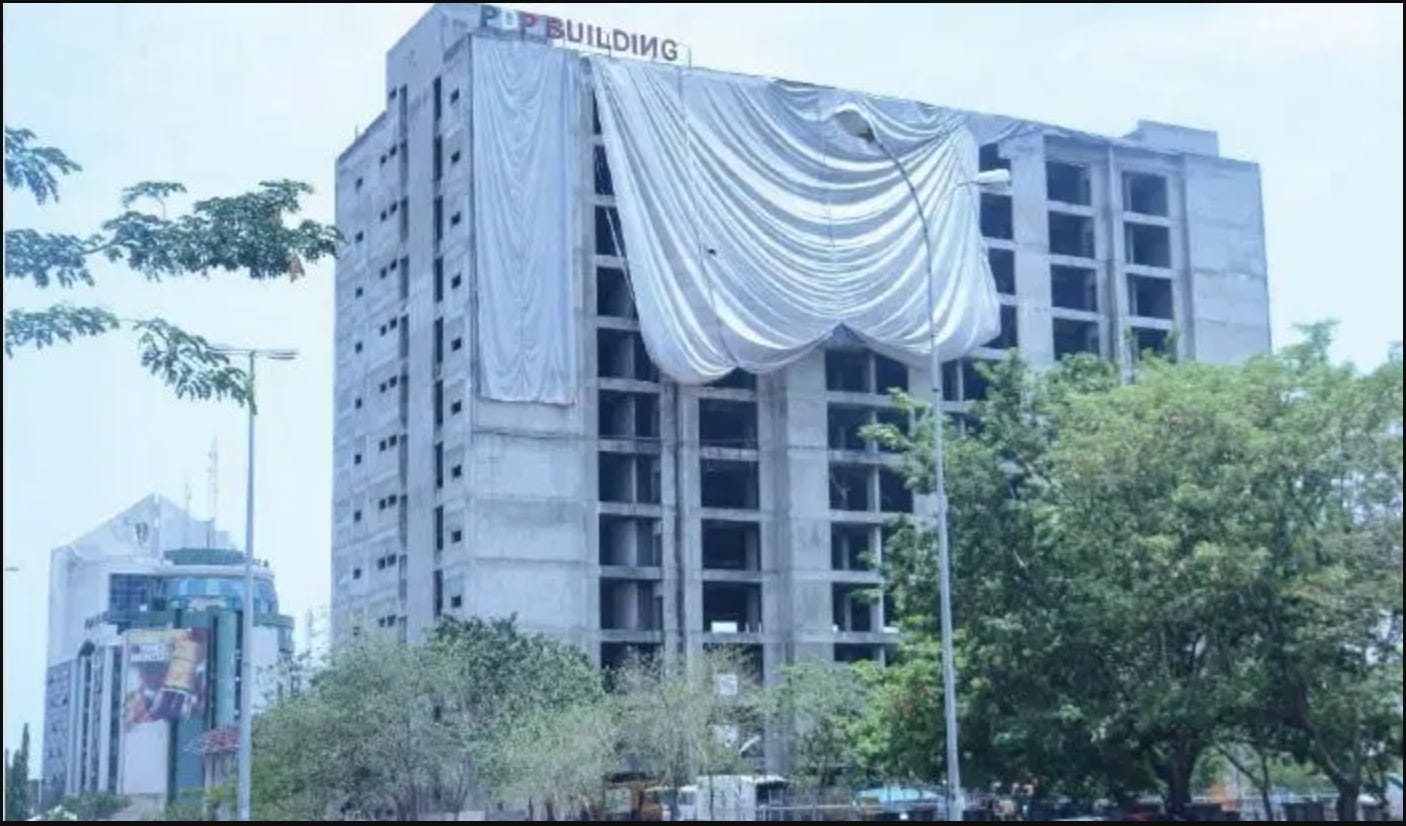
Before it was closed due to the party’s infighting and court litigation, PDP’s headquarters at Wadata Plaza remained a hub of activity. Yet the perfect metaphor for the party is the uncompleted building that was meant to house a training institute and think tank when it was the ruling party. That building in Abuja still has the PDP sign above it, but despite producing three presidents and winning four elections, it is unlikely to be completed.
This is the perfect, yet puzzling, symbolism of a party with the potential to dominate, which instead succumbed under the weight of poor planning and discipline. And while it is possible that it was always fated to follow the lifecycle of a Nigerian ruling party, it was also in a unique position to buck the trend.
In consecutive elections since it left power, the PDP was in a position to leverage national frustration against the government and a growing nostalgia for its years in control. Its failure is a warning to other parties, especially its successor as the ruling party, but it should also prompt reflection on the institution of political parties in Nigeria.
In the event that this ‘obituary’ proves premature, a PDP death is not just a casualty for those involved, but for the idea of sustained political competition in Nigeria.
_____
Written by: Afolabi Adekaiyaoja
Edited by: Kunle Adewumi, Temitayo Akinyemi, ChiAmaka Dike and Hillary Essien
A really good read.
The PDP failed to build the party as an institution from the start. Instead, it opted to build it as a coalition of politicians and people with means and influence. This meant as these individuals left, the party was left behind as a shell. Sadly, it is the same error the APC is making, and all the rest are likely to make in the same circumstances. For example, LP came from nothing to something due to Peter Obi, and it is back to being nothing. Again, no institutions - just a gathering of all the big men (and sometimes women) they can find.
A thorough, well-researched piece. I enjoyed reading this. I thought that the piece could have used some zeroing in on the famous "16 is greater than 19" saga during the 2013 Nigeria Governors Forum election, which is deeply underrated as a key factor that accelerated the PDP's demise. It dovetailed with losing control of the North Central region, which arguably is *the* so-called swing region in Nigerian electoral politics.
All things said, the PDP's collapse was as self-inflicted as it was predictable. By the end of the 2027 general election, it is entirely possible that the party would not return a single governor to power, which would be quite the shift in Nigerian politics.