
Introducing The Bellwether
For your consideration

def:
noun
something that leads or indicates a trend.
Hello, and welcome to The Bellwether.
Before diving into what this is, it’s important to start with a confession.
For the longest time, despite it being recommended reading in different classes and copies dotting the shelves of school libraries, I had not read Chinua Achebe’s Things Fall Apart. I always had the reputation of being a wide reader, a trait my parents built by first forcing and then feeding me newspapers and magazines at a young age, so people naturally assumed I had read one of the most important and significant pieces of African literature (at least for English or Nigerian readers). I did not discourage them from holding on to these ideas, and I continued to look for morsels and hot takes on this most important of books. I watched the play twice as a student, found the dramatisation on YouTube interesting, and deftly managed conversations when they came up.
At some point in university, I read Peter Ekeh’s ‘Colonialism and the Two Publics in Africa’. It is regarded as one of the most cited and well-read political science pieces on Africa. The piece argues that colonialism created a distinct political structure in Africa from that in the West. Here, there were two publics – the primordial public, which was governed by kinship, ethnicity and morality, and the civic public, which was the foreign, extractive and colonial imposed state. Africans, he argued, were more attuned and loyal to the primordial public, which is why there was often encouragement to take from the civic public and move to the primordial public that we are more familiar with. It helped his explanation of corruption and ethnic nepotism because the civic state did not acquire legitimacy, and people were more familiar with their ethnic bonds. In short, Ekeh seeks to explain the supposed ‘dysfunction’ that affected African states’ development and shows that it was a rational response to the colonial legacy.
Then I read Things Fall Apart.
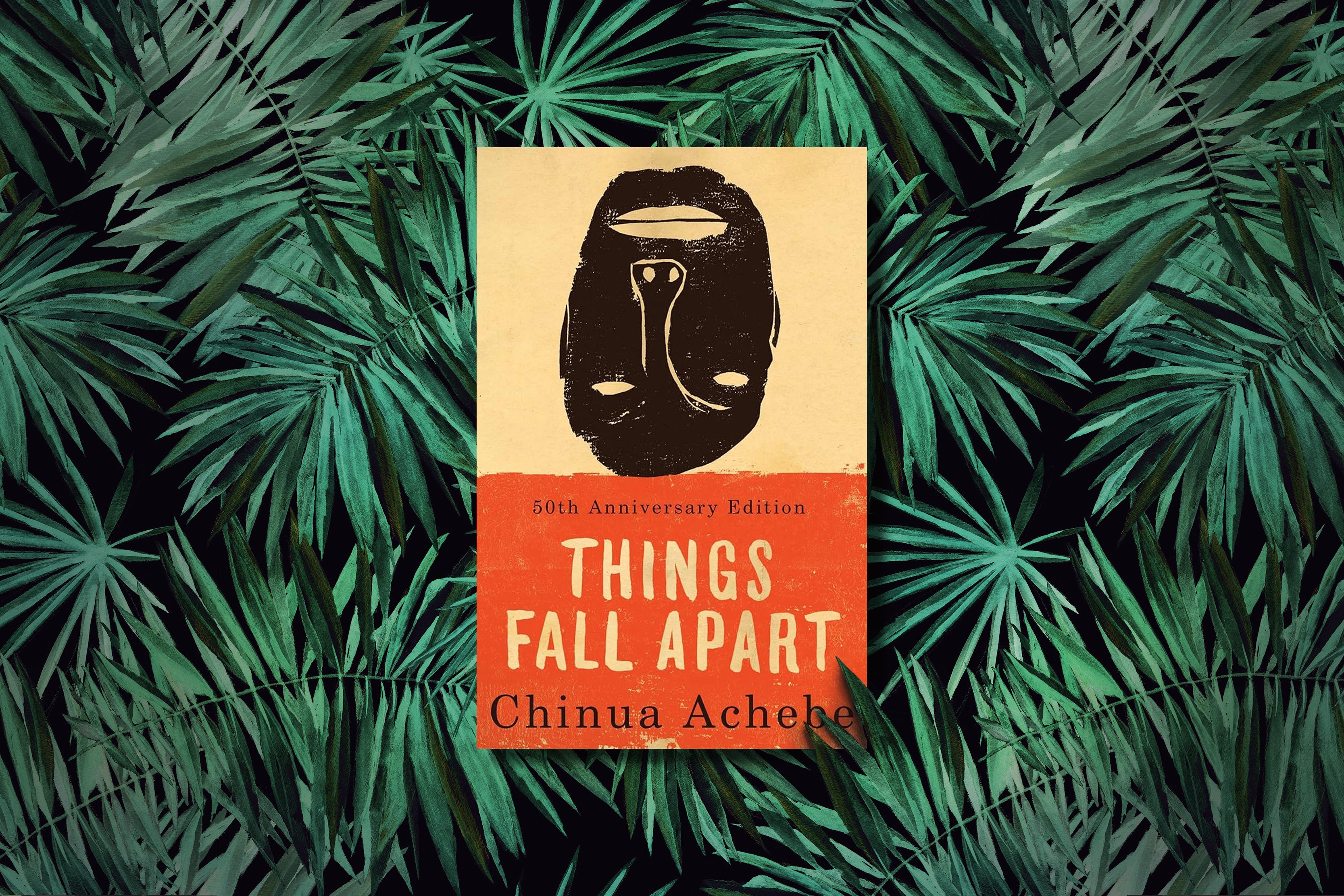
Okonkwo is one of the most legendary characters in Nigerian literature because he embodies the tension between roots in culture and tradition and the struggle with an evolving, modernising world. Achebe is masterful at presenting an ‘everyman’ who becomes ‘yesterdayman’, someone who is venerated for his skills and prowess at all things manhood, who is faced with the fast-paced influence of Christianity and the demystification of culture and tradition. Okonkwo’s story is a path, an option for society, but it appears to be a relentless tussle between simple understanding and deep engagement. He chooses one side, for better or worse. But, decades on, we don’t have the luxury of a choice—we have to navigate an ongoing and uneasy balance.
I needed Ekeh to understand Achebe. I needed to get an idea of this binary beyond literature to see both the practical application and the complementary parts that might not have fit into a fiction piece. To see culture and modernity clash, to see the colonial legacy, and to see how that application still plays out today.
Some might have reached this conclusion or path in other ways. Many, probably smarter, did not need this unnecessary detour. That detour is, in a sense, the argument for what follows. In an era where calculated misinformation spreads faster than context, and where debates are shaped by the loudest rather than the most informed voices, there is a need for platforms that do what Ekeh did for me: ground the conversation in the structural context that makes it legible — whether that context comes from a political science text, music lyrics, or a social media trend.
Most knowledge production platforms fight to break the news, but fewer still synthesise it with the necessary background that helps a reader make sense of why yesterday informs today and what that means for tomorrow.
For us, The Bellwether is a couple of different things. First and foremost, it is an aspiration. The word means something that leads or indicates a trend. We hope to spotlight ambitious ideas, daring debates, and necessary conversations that eventually prove prescient and telling in how we engage with Nigerian analysis. It is also a bet that there is a willing public out there looking for depth and rigour over noise and pace. It is a belief that taking the long way, or, as I prefer to call it, the more scenic route, can help people better understand and engage with the key issues that will shape our times. It is a labour of love that seeks to challenge the notion that the Nigerian, and in time African, citizenry is uninterested, apathetic, or simply reactive to the workings of the state.
For us to succeed, The Bellwether will do two things.
One, we will write pieces that can be cited in days and decades to come. Not hot takes, but work grounded in enough rigour and detail that it holds up when the news cycle has moved on. We will platform diverse perspectives and guide conversations toward policy rather than noise. Two, we will challenge how Nigerians engage with the electoral process. Presidents should have to debate in order to earn our votes. Party manifestos should be dissected, not merely published. We will build this through projects and collaborations with like-minded institutions that share a vision of a more informed civic public (we love a callback).
We invite you on a journey today to challenge the more negative stereotypes of our current political environment. This is expressly important because it shapes lives, whether or not we engage. We also seek to show the politics in everything, because it is too important to ignore.
Nigerians are a political people. It is seen in Big Brother Naija, where voters continue to form tribes, herded by campaign handlers to ensure that a housemate emerges as the winner in the country's most uncontroversial and widely accepted democratic process. The absence of any part of the country from the Super Eagles’ starting XI goes unnoticed — unless the team is unsuccessful. It is telling in how particular conversations or public culture discourse, ranging from gender rights in the north or liberal moralism in the south, are segregated and focused on different parts of the country. And when protests erupt, they are framed through the lens of where they are based and where the sitting president is from, rather than a clear conversation about how the state and society are at odds. If there is to be a country, there needs to be dialogue – and the metaphorical handshake across the Niger must take place not just as a matter of political expedience, but as an insistence of mental engagement.
There is another reason why The Bellwether will be important. As a new generation of Nigerians, increasingly divided between the diaspora and geographical home, there is a need for a platform to engage in political discourse with the rigour and diverse contexts required. In the past, many publications catered to specific constituencies – either across geography, class, or ideology. It is the position of The Bellwether that we will, and if we must fail, will relentlessly keep striving to present a fair and honest account of the Nigeria that exists today — and a hopeful record of the Nigeria that can be, tomorrow.
For now, we will present one essay for your consideration every week. We will leave comments on and engage with posts respectfully and clearly. We hope to revisit this in a couple of months and see where we go from there.
We are writers and readers, dreamers and doers, and — honestly — we are scared. Imposter syndrome has delayed this project for longer than it should have. But that dread cannot compete with the fierce urgency of now. We want to build a community of readers, citizens and writers who will take this bell, ring it and make it their own.
In our own small way, we are doing our part to ensure the centre does hold, and things don’t fall apart.
Afolabi Adekaiyaoja
For The Bellwether.