
The Lifecycle of a Nigerian Ruling Party
What goes up, must come down...

At the peak of the People’s Democratic Party’s (PDP) rule, after the 2007 elections, it controlled 28 of Nigeria’s 36 states. The only states it did not control included Abia, Bauchi, Imo and Zamfara, whose governors would defect between 2007 and 2009, as well as stalwart opposition states like Borno, Kano, Lagos and Yobe. Over the remainder of that term, it would lose ground in the South West after several judicial rulings overturned governorship elections. President Umaru Yar’Adua’s illness affected not only his leadership of the country, but it also left the PDP largely rudderless and at the mercy of infighting. Former President Olusegun Obasanjo moved to assert control through the Board of Trustees, while ambitious younger politicians began positioning themselves for succession. When Goodluck Jonathan assumed the presidency following Yar’Adua’s death, the goodwill the ruling party had garnered was quickly spent on his re-election bid and was lost during the rollout of the subsidy removal in 2012. Within a few years, Jonathan would lose the 2015 election, marking the first defeat of an incumbent president in Nigeria’s Fourth Republic. It was the last time the PDP held the presidency.
APC will mark 12 years in power at the next election, and it will take a brave person to bet against it going at least four more. However, despite difficult economic and security situations, its ‘inevitability’ has been confirmed not through mass support for the government, but through a series of well-laid defections. This is not a new template or pattern: Nigeria’s dominant parties expand through opposition defection, bloat from internal competition, then break up when mega-mergers exploit divisions. If APC is trying to predict its future, it might be best placed to look to the past and the party it replaced.
Three-stage mushrooming cycle
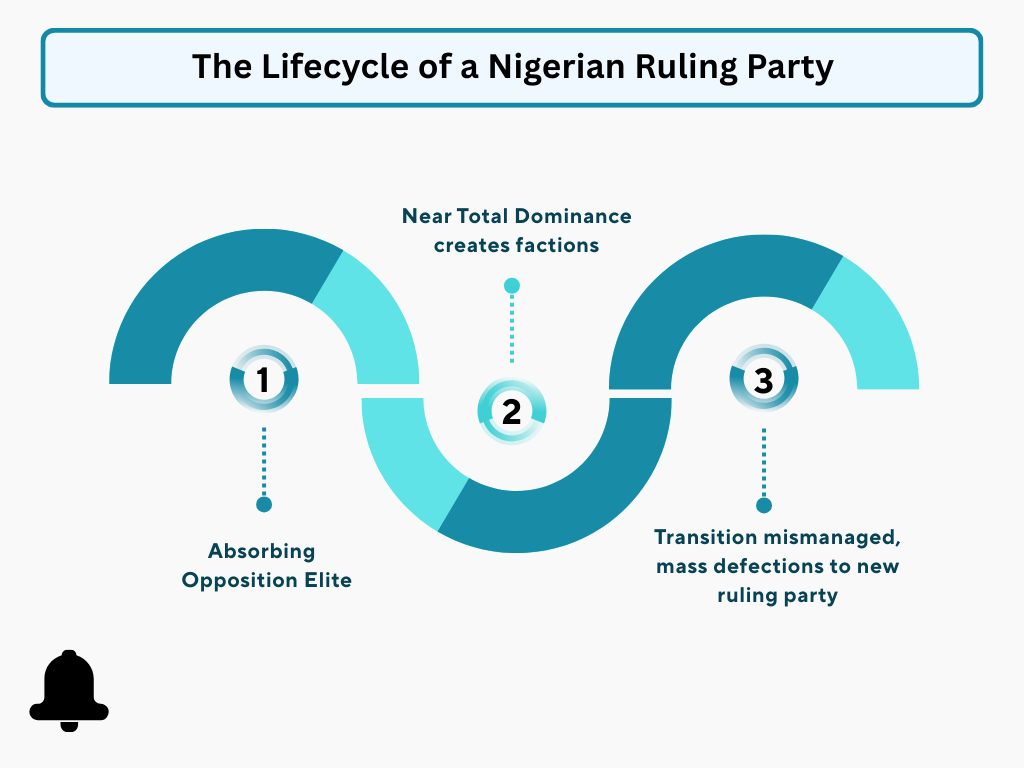
Since Nigeria’s return to democracy in 1999, its politics has exhibited a predictable three-stage pattern. First, a ruling party consolidates power by eventually absorbing the opposition elite seeking access to federal resources. This often follows a sense of resignation about the prospects of electoral victory.
Second, opposition parties, which are usually strong in one or two zones, go through cycles of trying to merge and form a consolidated opposition to counter the ruling party. This goes through one or two failed attempts before a possible consensus is reached.
Third, this opposition is bolstered by disillusioned elements within the ruling party, as too many factions compete for diminishing patronage, leaving it vulnerable to defeat. There is academic research on how dominant parties in competitive politics consolidate control through appointments, funding, and access to state resources. In Nigeria, the patronage structure means this control is personalised, rather than institutional, flowing through personal loyalty arrangements rather than party structures. PDP fits this pathway.
Opposition parties were often influential only in specific geopolitical zones, and their governors, seeking the cover of federal power, defected to the PDP. Questions around zoning—especially when southern Christian Goodluck Jonathan succeeded northern Muslim Umaru Yar’Adua, who hadn’t completed his term in office, led to claims that the north was being ‘cheated’. Jonathan ran for re-election despite the clamour that it should be a northerner in office, and ambitious party opponents defected to join the successful merger of opposition parties. This led to PDP’s defeat and APC’s ascendancy.
APC is now at risk of the same fate. It relied on the cult of personality around Buhari, which helped it manage some organisational tensions and missteps, including allocation of key roles in government after Bukola Saraki and Yakubu Dogara outmanoeuvred the party’s picks to lead the National Assembly. It was just about able to afford losing Saraki, Sokoto Governor Aminu Tambuwal, and Kano Senator Rabiu Kwankwaso, who all contested the PDP presidential nomination, because it remained strong in its northern strongholds.
In the lead-up to the 2023 elections, the PDP governors of Cross River, Ebonyi, and Zamfara moved to the APC, building the momentum it needed to stave off a difficult transition as it prepared to field its second-ever presidential nominee. During the elections, it was even helped by five PDP governors who openly defied their party and supported Tinubu’s election bid. Research on party financing shows that opposition parties are more competitive when they have independent access to funding, with the alternative being a ruling party with sole access to state revenue. This adds to the value that Nigerian governors, with their access to state funds, are uniquely positioned to provide.
After electing a second president under the party’s banner, it has gained more governors through defections and is now facing intense internal competition. Today’s APC includes factions that are at odds with each other: Tinubu loyalists, which include former Action Congress members; Buhari loyalists, which include former Congress for Progressive Change members that have no uniting leader; former PDP members who have and continue to join the party; and new figures moving into politics and hoping to be competitive. There are only so many elective offices and appointments that a president and party can use to manage differing ambitions.
The Mechanics of Defection
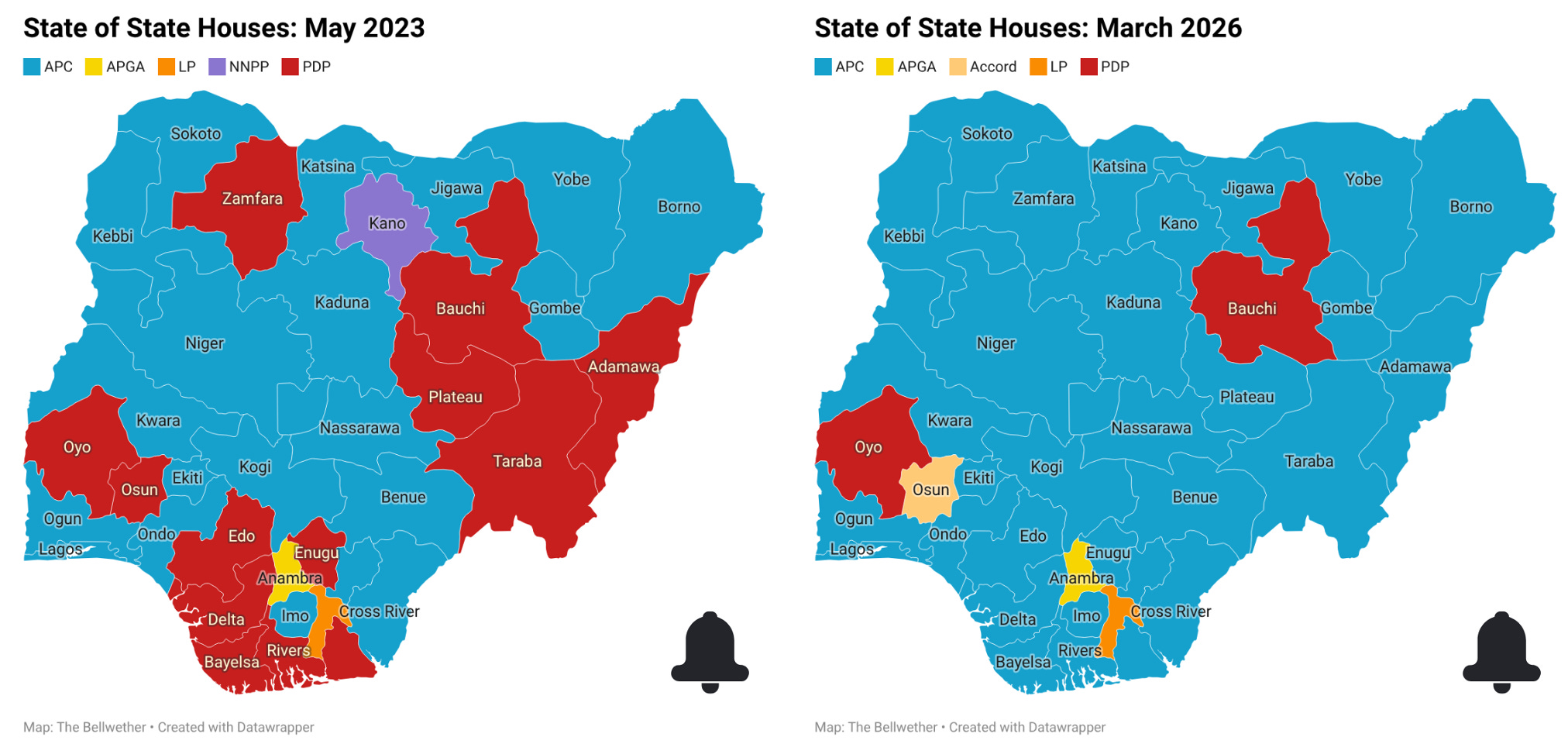
In 2025, six governors defected from the PDP, with five joining the ruling All Progressives Congress (APC) and one joining Accord. This year has already started with three formalising similar moves to APC, two more from PDP and the sole New Nigeria Peoples Party (NNPP) governor in Kano. Except for Bayelsa, all are first-term governors expected to seek re-election. Except for Rivers, all are from states that opposition presidential candidates won in the 2023 elections. On 9 March 2026, Zamfara Governor Dauda Lawal defected to the APC, which now controls 31 states. As of early 2026, no other party in Nigerian history has been as dominant or impervious.
While PDP’s gradual erosion was planned from the then-ACN’s grip on the South West and the strong ANPP presence in the North East and North West, there is barely any opposition ‘stronghold’ for such parties to assail APC from. Of the seven non-APC states, there are two in the South West (Osun, Oyo), two in the South East (Abia, Anambra), two in the North East (Adamawa and Bauchi) and one in the North West (Zamfara), with three governors – Adamawa, Bauchi, and Oyo – leaving office next year. The prospect of an even stronger ruling party, with elite consensus around a likely Tinubu re-election, should make good reading for any APC member.
APC now controls more states than any party has at any point in the Fourth Republic. The current wave of defections recalls the pre-2015 realignments, though its long-term consequences remain uncertain. It is distinct, however, because many of the states affected were long considered PDP states, having produced successive governors from the party. That these governors have decided to pitch their tents elsewhere speaks to the seeming unassailable strength of the APC as a ruling party.
Ahead of the 2003 elections, Anambra and Borno Governors Chinwoke Mbadinju and Mala Kachalla carried out the first defections in the Fourth Republic, largely citing opposition from party leaders and godfathers to their re-election. However, recent governors have tried to explain their reasons beyond just fighting for their political survival. Some defections, especially in Rivers, are still squarely in that camp. But others, such as Governors Peter Mbah (Enugu) and Abba Yusuf (Kano), were strong enough to win re-election, but they defected to further ‘align their states with a strong centre’.
Most governors have cited infighting in the PDP as a major reason, while also expressing support for President Tinubu’s decision to push ahead with subsidy removal, harmonised exchange rates and tax reform proposals. It surely helps that such moves have resulted in the highest financial allocations to states in Nigerian history, which they are the prime beneficiaries of.
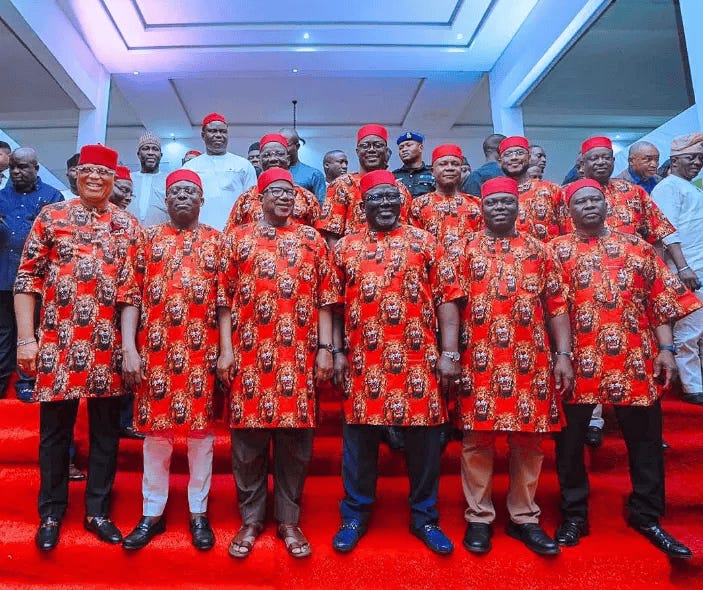
They have also made careful efforts to engage stakeholders and move with a large retinue of aides and appointees to secure a foothold in the new party. This is not to cater to the electorate, but to ensure they are well-positioned for internal party contests. Most governors, such as Delta and Enugu, were careful to move alongside predecessors and key party stalwarts who had largely become disillusioned by the lack of effective coordination at the national level. It meant even in states where the party was still naturally strong, the impact of the national schism discouraged loyalty.
This system is also bolstered by Nigeria’s federal structure, where a defecting governor’s influence over appointments and revenue control can flip a state overnight. Most states remain fiscally dependent and rely heavily on federal resources and projects, with a few exceptions, such as oil-producing states or those with historic relevance, such as Lagos, Nigeria’s commercial nerve centre. As a result, politicians often try to force compliant, loyal successors to ensure they can retain some influence, which usually means there is either a rebellious governor or one affected by their godfather’s political fortunes when a defection occurs.
In a strong democracy, the biggest deterrent against defection would be voters being put off by such moves. But while this does happen in Nigeria, it takes different forms depending on the nature of the contest. Victor Agboga’s work has highlighted that most legislators who defected did so to the opposition, often to run when they were likely to lose party primaries. And, in most cases, they often performed worse than non-switchers. Interestingly, most governors who defect do so to the ruling party. Because governorship positions have largely been won by the APC and the PDP, the effect has been more rewarding. It explains why governors are often not as worried about going back to voters even after defecting.
As dominant parties bloat, they become a coalition of incompatible factions rather than coherent structures. Each new wave of elite defectors moves in numbers to help ensure influence in the new party, aiming to prove their utility instantly in wider contests. They will inevitably make friends and enemies as they navigate party candidates, in the hope of currying favour for future moves. If this move succeeds, their risk is rewarded, and their political acumen is praised. But if they back the wrong horse or fall even further behind peers, they are questioned by allies and followers. Politicians can quickly find their influence wasted if they are unable to deliver instant value for the move, and there are only so many bodies you can hire for a defection rally.
Likewise, when a presidential administration changes, old beneficiaries of the patronage system might feel shut out and consider contesting the party or even leaving it altogether. Several ministers and key aides of former President Buhari have since left the party and have become critics of the Tinubu administration.
The Implications for the current ruling party
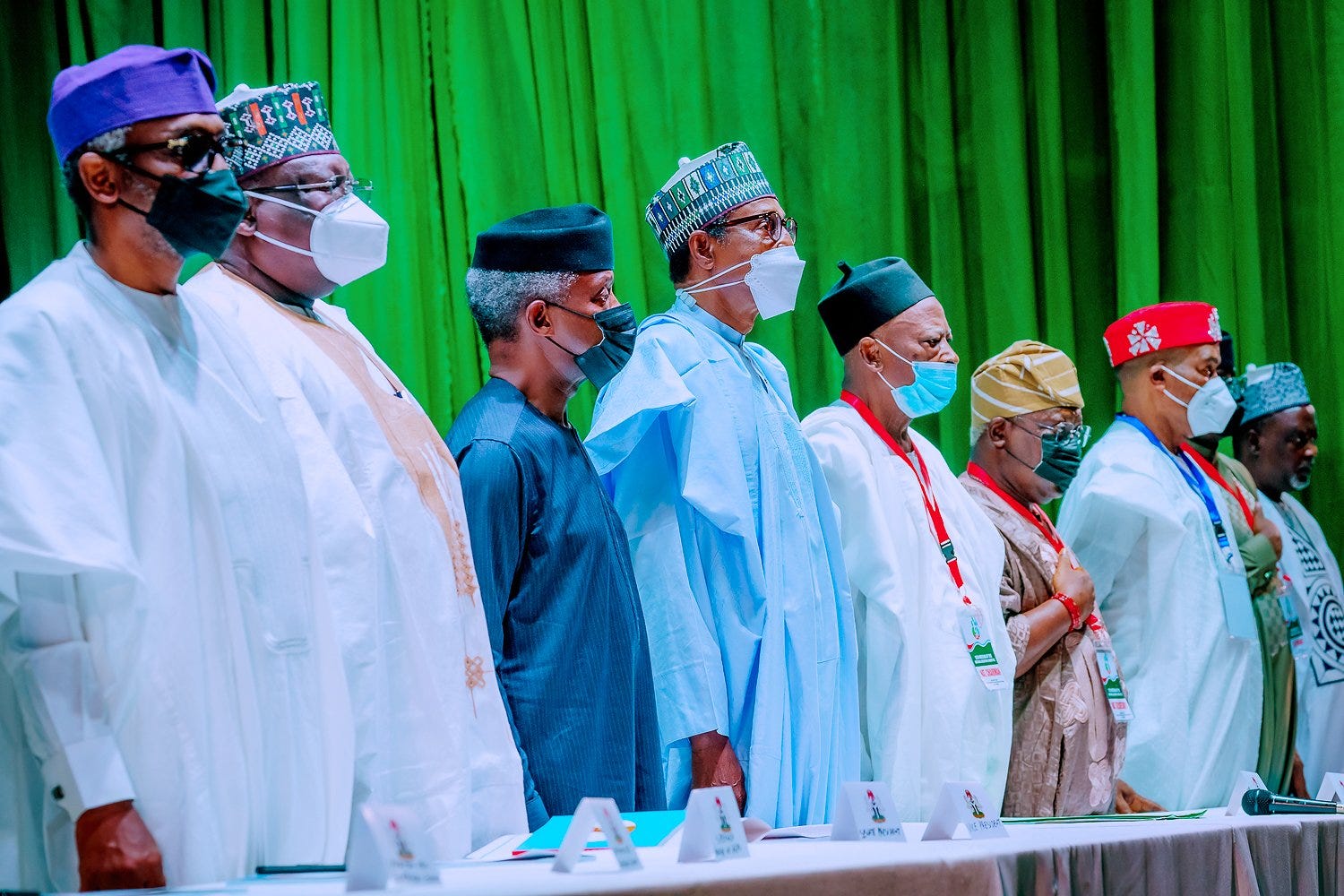
APC’s ability to consolidate strong party administrators has been key in keeping most members in line. It has also ensured that governors joining the party are aware of the established hierarchy and their place within it. Mostly, it has also benefited from a fractured opposition. PDP is now a factional party, embroiled in legal battles over its actual leaders. The African Democratic Congress (ADC) has received 2023 runners-up Atiku Abubakar and Peter Obi, as well as some Buhari ministers, but because it is led and populated by many established politicians with some issue or the other, it struggles to present a clear break from the past—made even clearer when David Mark, its national chair, is a three-term senate president and Rauf Aregbesola, the national secretary, was a Tinubu commissioner, and former APC Osun governor and minister under Buhari. How different can ADC be if many of the same figures from the past are now claiming they can lead Nigeria differently?

Yet if the cycle holds, APC is approaching its peak and will soon have to reconcile with the multiple ambitions of its large, fractious membership. In states where governors have defected to APC, former governorship nominees and party stalwarts have had to reconcile with the new state leadership, which has impacted their ambitions. After 2027, when many become term-limited, the party will have to find a way to handle transitions and keep its ambitious membership in line.
At some point, those within the party who expected to be attended to after ‘surviving’ the Buhari era will wonder why they have not fared any better under Tinubu. And while his likely re-election may be driven by the lack of feasible alternatives with sufficient elite support, the real drama will come when he and the party have to reconcile on who succeeds him in 2031. The many ambitious politicians seeking to move up might see other parties as viable options, and, leading their blocs, they could then merge with other opposition forces, mirroring the APC’s 2013-2015 breakthrough and presenting yet another ruling party.
Northern leaders, who will expect the presidency to move up, will weigh their options, and some might fancy their chances on other platforms. The party will also have to consider which ‘wing’ will produce the next president, since both major figures behind its merger would have finished serving their terms.
Party management was notably different under Buhari, who has been widely described as aloof in this regard, and Tinubu, who has been more hands-on and active. Yet, his firm grip over party structures, evident for years in Lagos politics, was largely absent under the Buhari administration. It is therefore possible that a post-Tinubu APC may struggle to retain the same internal cohesion, even if its strongest competition remains itself.
Vice President Kashim Shettima and National Security Advisor Nuhu Ribadu have been frequently cited in political commentary as likely successors, though no formal succession framework has emerged. The absence of a definite heir apparent leaves room for others to step forward. Likewise, Tinubu’s loyal acolytes from the south will have seen how Buhari’s team was largely chased out and will try to ensure an uncertain future does not affect their prospects.
The longer Nigeria’s democratic practice endures, and the more its political class grows, the less likely it is that someone with the reach and influence of a Tinubu will emerge. And then APC will face its true test: how will it survive Nigeria’s climate, notorious for empowering individuals, over well-structured and well-run parties? It has thrived on the back of two of the country’s best-known politicians, who became president, making it easier for followers to unite around, at least because of electoral prospects. What happens when the party does not have that option?’
The Consequences for Nigeria’s Democracy
This cycling does not provide much optimism about the quality of democracy. If Nigeria’s democratic progress is simply new parties prioritising appointments and resources over service delivery, then voters will never face genuine policy alternatives. Instead, Nigeria’s mushrooming cycle reflects politicians simply seeking power through interchangeable party vehicles.
There might not be a supply, but there is definitely demand. The number of ‘third-party’ candidates who won elections in 2023, and buttressed by Obi’s strong performance in the presidential election without an established party base, shows that Nigerians can break the duopoly and engage with other parties. Voters might want to punish defectors, but party structures and the absence of independent candidacies often leave them unable to do so.
Most times, these efforts are driven by proposals for electoral reform. The idea is that with democratised access to funding, followership, and factions, outsiders and underrepresented groups might feel confident about contesting, especially younger politicians who will fight to avoid ‘their turn’ slipping away. Sadly, without reform actually addressing how parties assume, retain, and lose power, it merely reinforces the pattern: today’s dominant party becomes tomorrow’s hollow opposition, ready to be defeated by the next mega-merger that presents itself as a vessel of hope with the same recycled elite.
_____
Written by: Afolabi Adekaiyaoja
Edited by: Temitayo Akinyemi, ChiAmaka Dike and Hillary Essien
Unfortunately not much is said in this article about an alternative. What replaces APC? Less than a year to the general elections and the “coalition” still can’t get its act together.
It seems competent politicking (not governance) is now a lost art in Nigeria.
Come to think of it, Tinubu might actually lose in 2027
For Obi to get 6m votes last time (if I had 200millon I would have placed a bet that he wouldn't get more than 2 million)
If by some miracle, ADC gets a candidate they can all support, and even get PDP and LP to support that candidate, Tinubu might lose. If he wins in this scenario, it'll be by less than 1 million votes.