
The State Sends Its Condolences
Is Nigeria's insecurity by design?

Nigeria’s insecurity crisis can be categorised into three experiences: those who receive a social media post and the usual call for greater action, those who receive neither and face conflicting reports, and those who receive a presidential condolence visit. Presidential condolence visits are reserved for the more egregious events or those with clear political significance.
The most recent of these occurred in Plateau. On Palm Sunday, 29 March 2026, armed bandits/assailants on motorcycles attacked Angwan Rukuba in Jos North, Plateau. At last count, at least 26 people were reported dead, including women, children and a pregnant woman. The state is governed by the APC, boasts the APC national chair, and is politically significant within the Middle Belt, which has often been a bellwether for Nigerian electoral results. But when President Bola Tinubu arrived, he briefly remained at the airport while the bereaved and victims were brought to meet him. His spokesperson confirmed an overrun meeting with the Chadian President and a need to leave before sunset due to poor visibility for outgoing aircraft. But the messaging was clear—this was a meet-and-greet packaged as a condolence visit.
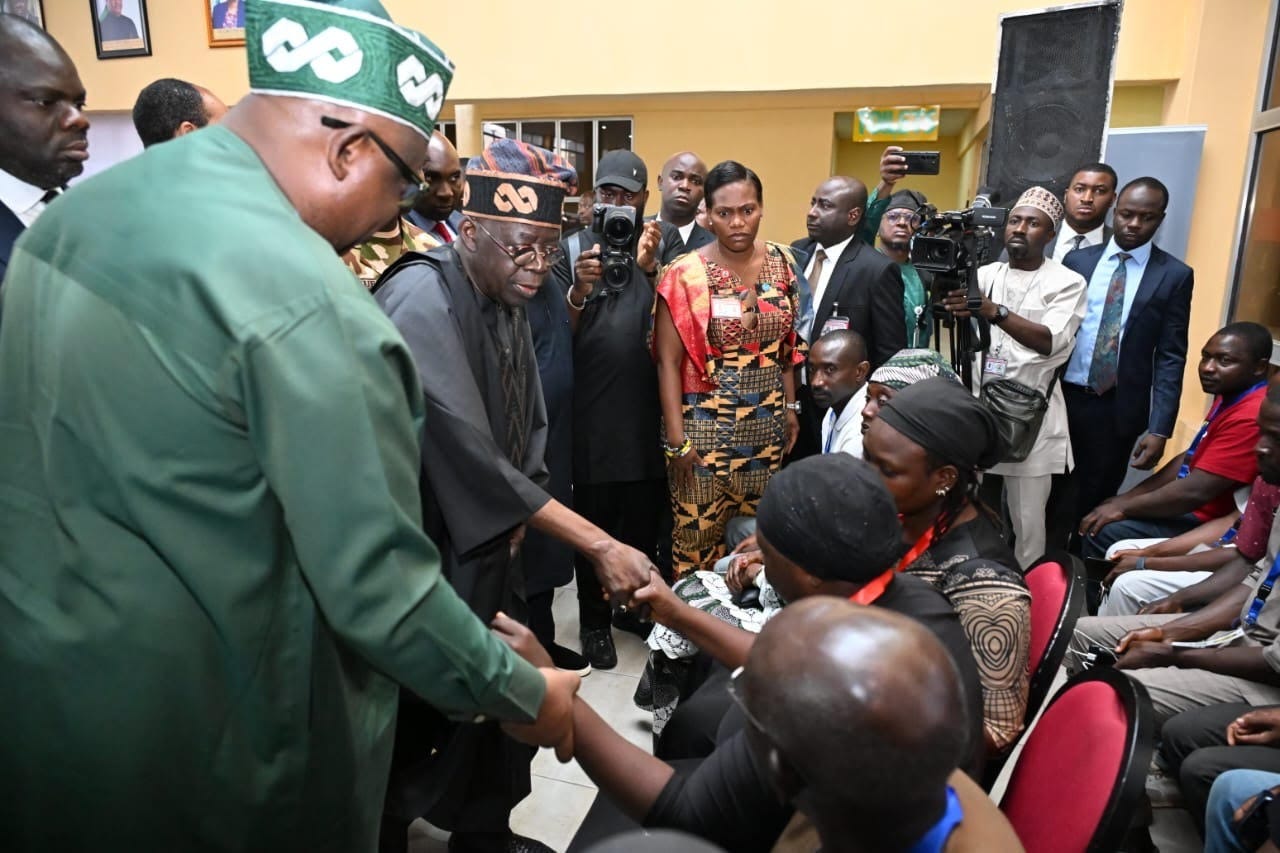
Ten months earlier, the Yelwata massacre in Benue reportedly killed between 100 and 200 people, mostly at an internally displaced persons shelter at a Catholic mission. Pope Leo XIV denounced the killings and prayed for the victims. Again, Benue is governed by the APC and boasts of the Secretary to the Government of the Federation. Again, Tinubu visited the state, but could not reach the affected community because the roads were impassable. Children were lined up on the pathway to welcome the president. Another meet-and-greet packaged as a condolence visit.
These examples might give the wrong impression that Insecurity is exclusive to the Middle Belt fixture. But Nigeria faces so much chronic insecurity, and there are instances in many parts of the country. What emerges is a system, a machine, defined by who runs it, why it exists, how it is funded, and what it is ultimately used for. It also informs how Nigerians relate to security forces and the deployment of those forces as political instruments rather than protective ones. Sadly, it is also why the question is no longer if your state will receive a condolence visit, but when it will.
Who Runs the Machine?
To understand how the security forces operate, it is worth examining their original intentions. The origins of the Nigerian Police Force can be traced to the Hausa Constabulary, established in 1820 as a 1,200-member armed paramilitary force to protect British commercial interests. Other local police groups followed: Lagos Police in 1896 and the Niger Coast Constabulary in 1894. These were instruments to reinforce colonial control.
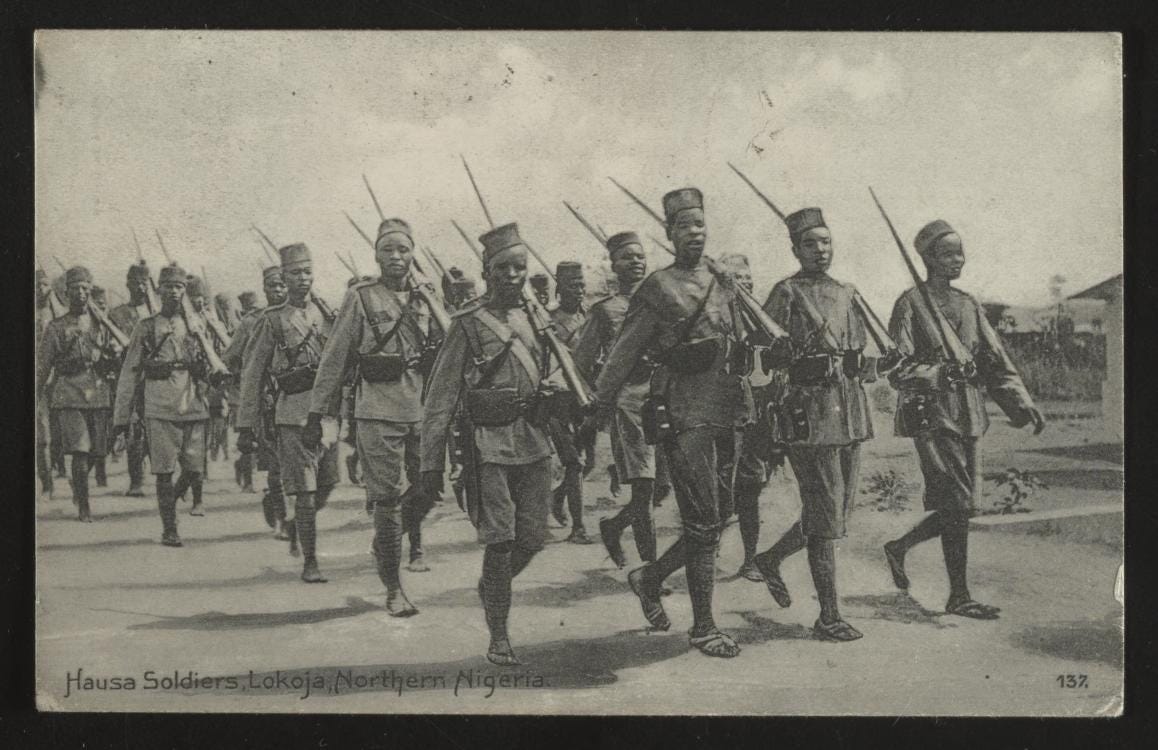
Etannibi Alemika, a prominent Nigerian scholar, argues that police brutality and oppression in Nigeria resulted more from the legacy of political authoritarianism and social exploitation. This was especially glaring because many Nigerian cultures and communities had their own forms of law enforcement and dispute resolution. But the colonial police destroyed these, along with the homegrown notions of security and justice. In its place, communities got a system geared towards commercial extraction and the suppression of protest movements. The 1929 Aba Women’s War, where colonial police violently enforced exploitative taxes, and the widespread resistance to Native Authority police in the 1930s and 1940s are part of its foundation.
After independence, the force was centralised further during the Civil War (1967-70), while decades of military rule stunted its institutional development. Nigeria’s postcolonial political class then replaced the colonists as the beneficiaries of a system designed to protect the elite from the masses. Military governments (1966-79; 1983-99) routinely deployed the police and the army to enforce compliance. When democracy returned in 1999, civilian leaders largely inherited this structure, replacing military leaders as its new patrons.
The result is a police force whose institutional culture is oriented toward control rather than service. It also reflects expectations. According to Afrobarometer’s 2023 survey, only 15% of citizens trust the police ‘somewhat’ or ‘a lot’, and only 13% say the police “often” or “always” operate in a professional manner and respect citizens’ rights. This sentiment is reinforced in the sad incident in Angwan Rukuba —residents mistook their attackers for security operatives, ostensibly because they dressed as armed personnel. Police stationed in Yelwata were similarly overwhelmed. It is telling that the most recent and publicised debate on security, at least in the National Assembly, occurred when police orderlies were being withdrawn from ‘VIPS’ due to poor personnel allocation.
Why the Machine prevails
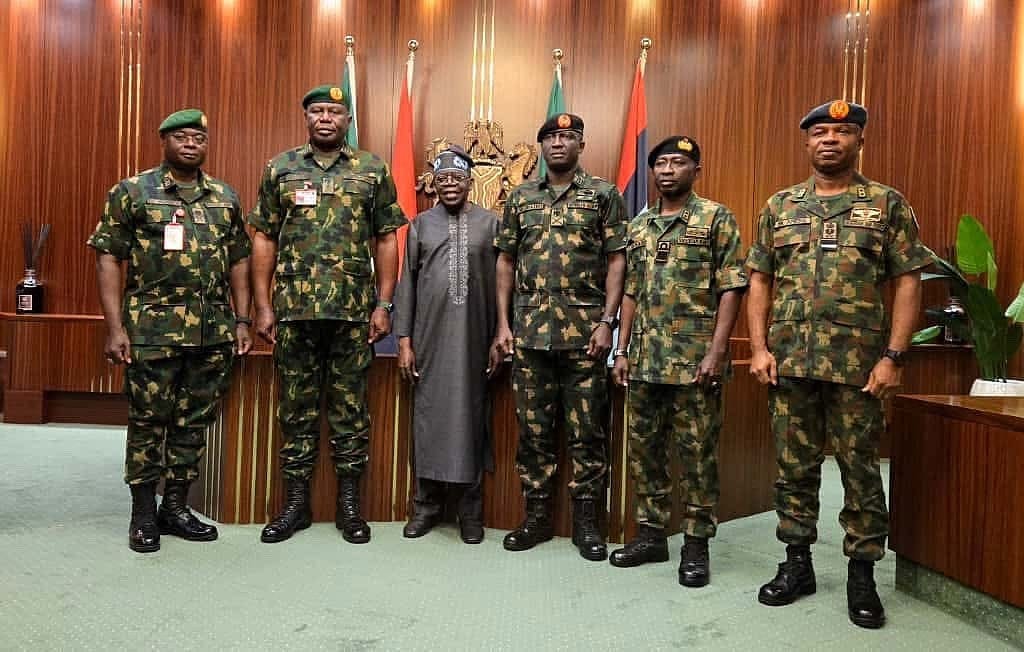
After understanding who runs the machine, unpacking how it works helps explain why this system is sustained. Officials, from military service chiefs to intelligence heads, serve at the pleasure of the president and, by extension, the political leadership. Most presidents ensure that kinsfolk serve in the strategic roles of chief of army staff, inspector-general of police and director-general of the state security services.
The nature of political management of security leadership means there is a clear case of who they are accountable to. There is a similar argument around the Minister of the F.C.T—since they owe their position to the president, there is really no need to cater to citizens as a governor seeking re-election might. If security chiefs owe their careers not just to their political leaders, but also to the places these leaders come from, they become politicised. This also ensures that they become not just defenders, but champions of this system since, in time, they too will become beneficiaries. It also means they are more likely to push for recruitment from their part of the country to shore up ‘loyalty’ in the service.
It is worth noting that the most extensive reform of Nigeria’s intelligence structure was not in response to a spate of attacks or failures, but to worries of coup plotting. The National Security Organisation (NSO) was established under the Olusegun Obasanjo regime in 1976 to consolidate intelligence. But it soon became the embodiment of domestic repression, surveillance of political opponents, arbitrary detention and regime protection. Citizens had long protested and decried it and its efforts. But when it was dissolved in 1986 by Ibrahim Babangida, it was not because of citizen concerns but his own fear. It had become a threat to the military regime’s security.
Its division into three—the State Security Service for domestic intelligence, the National Intelligence Agency for external intelligence, and the Defence Intelligence Agency for military intelligence—was intended to ensure intelligence was dispersed, preventing any one body from accumulating enough leverage to threaten the head of state. Nigeria’s most substantial intelligence sector reform was not a governance solution; it was a coup-proofing one.
The opacity in reviewing the activities of the military and intelligence space, all due to ‘state security’, has made it an authority in itself. It also means there is little extensive research carried out to enable its policymakers to break out of their groupthink and take on board external feedback on their processes. This opacity also extends to one of its more well-known powers—access to restricted government funding.
How the Machine is funded
Nigeria has committed an estimated ₦32.88 trillion to defence over the past fifteen years. In the 2025 budget, security and defence received ₦6.57 trillion—the largest single sectoral allocation. For 2026, President Tinubu proposed a budget of ₦5.41 trillion. These are not trivial sums. At current exchange rates, the 2026 allocation is approximately $3.9 billion. Nigeria spends on security; the question is around what the spending buys.
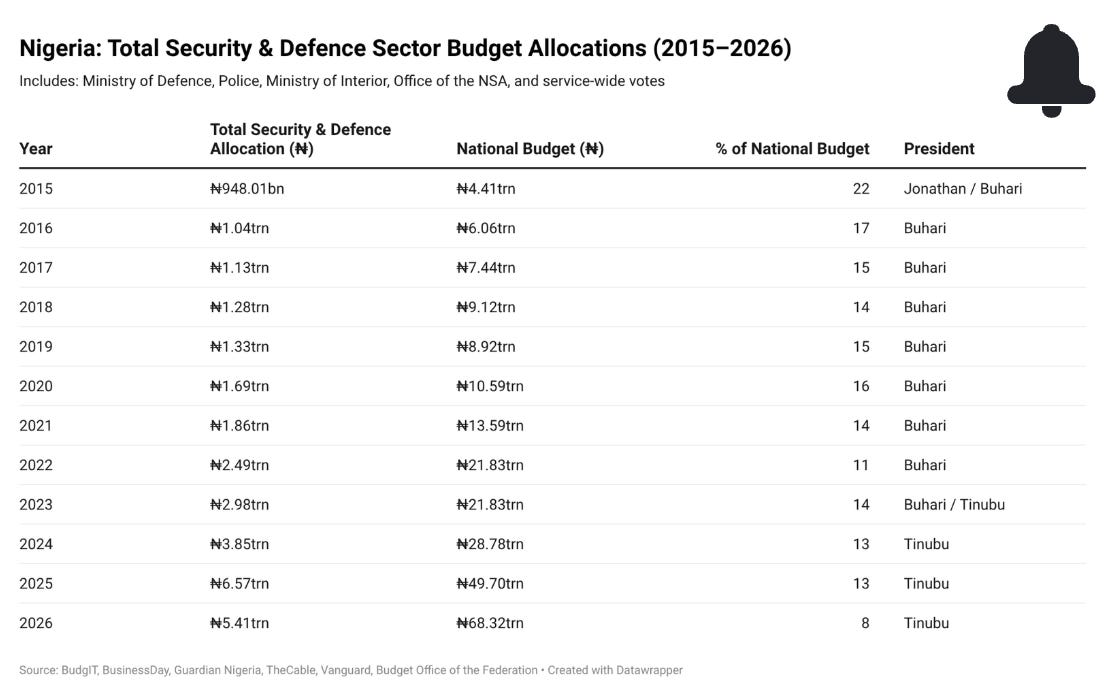
BudgIT’s breakdown of the 2025 security budget is revealing. Of the ₦6.57 trillion total, ₦4.07 trillion—roughly 62 per cent—went to personnel costs. Capital expenditure accounted for ₦1.50 trillion, and overhead expenses amounted to ₦642 billion. The 2026 defence allocation follows the same pattern: of the Ministry of Defence’s ₦3.15 trillion, ₦2.39 trillion is for personnel and ₦464 billion for capital expenditure. The Nigerian Army alone receives ₦1.504 trillion, of which the overwhelming majority goes to salaries and allowances. Over the last 11 years, 2026 marked the first time the defence and security budget allocation did not increase, and even then, the raw amount was higher than it was in 2024, with a higher budget percentage. But citizens cannot tangibly point to the impact of such investments.
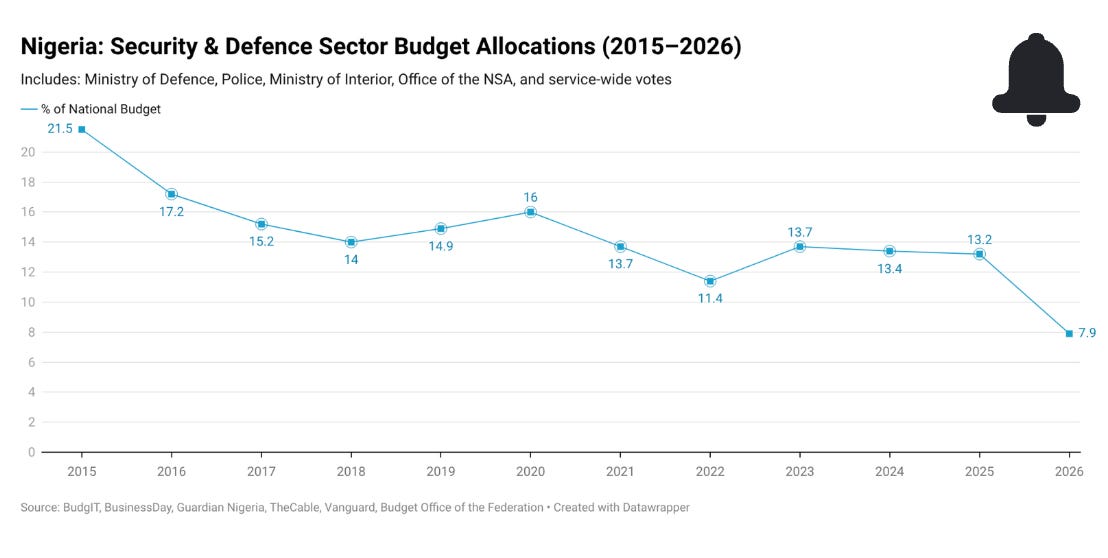
This budget structure tells a story. It is a budget which prioritises maintaining a large standing force rather than building preventive capacity: intelligence networks, rapid-response capabilities, and community-level presence. Capital expenditure—which covers equipment, technology, and operational infrastructure—is consistently dwarfed by recurrent spending. The money sustains the apparatus; it does not redirect it. Nigeria’s Chief of Defence Staff, General Olufemi Oluyede, said as much: ‘The armed forces alone cannot address all security challenges, and if civilian institutions are not strengthened, military gains in conflict areas cannot be held.’ He is, in effect, describing a system that allocates most of its resources to a hammer while acknowledging that the problem is not a nail.
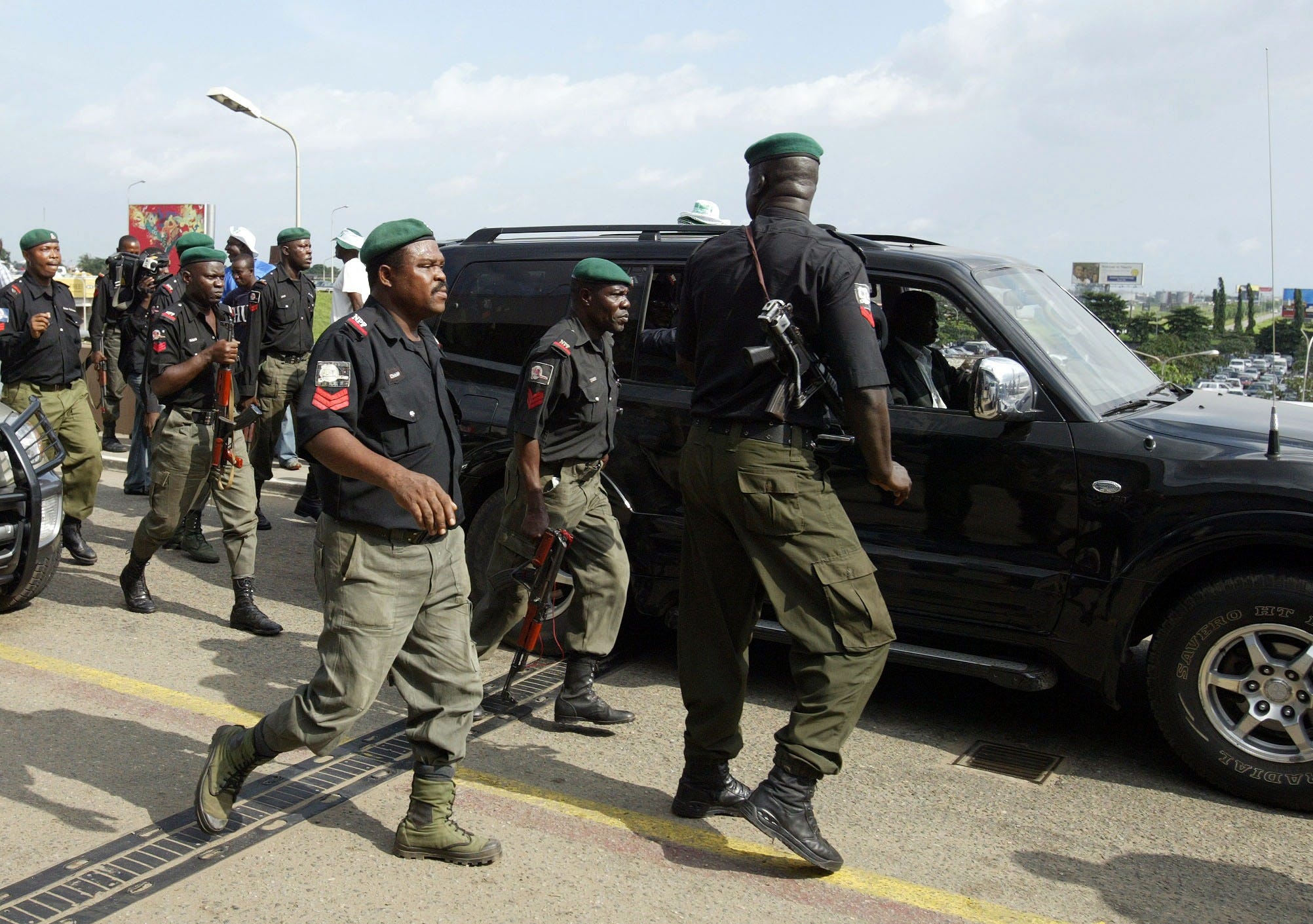
Meanwhile, the Africa Center for Strategic Studies has documented the diversion of police officers to guard political elites and VIPs—over 100,000 by some estimates—reducing the force available for public safety. The Inspector General of Police, Mohammed Abubakar, acknowledged in 2012 that police duties had become “commercialised,” with officers deployed to rich individuals and corporate entities while lacking manpower to provide security for ordinary citizens. The budget feeds the apparatus; the apparatus serves the elite.
What is the Machine used for?
There are arguments that Nigeria’s low revenue, high population density, and significant challenges make it difficult to carry out proactive, decisive security measures. But the evidence supports the contrary. Nigeria has repeatedly demonstrated that, when motivated, it can and will work for whom it wants to work for. The sad, unstated truth is that this system does not often serve the citizens it is meant to protect.
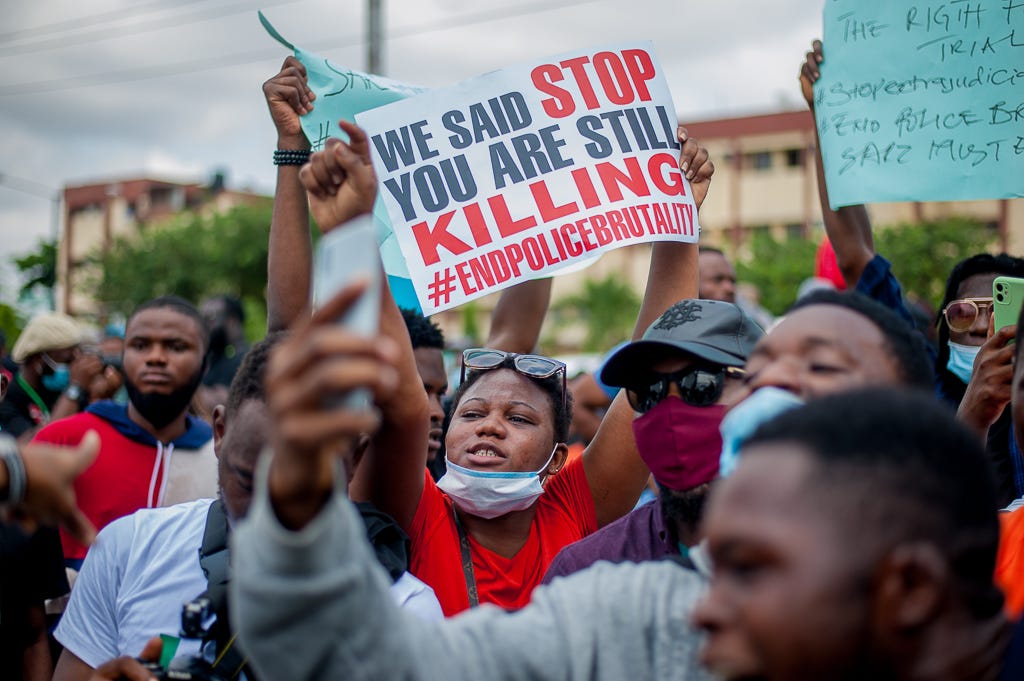
No recent event best exemplifies this more than the Lekki Toll Gate shooting on 20 October 2020. Young Nigerians, gathering peacefully to protest police brutality under #EndSARS, were attacked by the state’s swift, coordinated and lethal response. CCTV cameras were dismantled in advance, electricity was cut, and the Nigerian Army opened fire on unarmed protesters, according to multiple eyewitness accounts and investigations. Amnesty International confirmed at least 12 deaths at two locations in Lagos. The Army denied involvement and then, 34 days later, acknowledged it had deployed servicemen with live and blank ammunition. The ECOWAS Court of Justice ruled against the government in 2024, and several state commissions of inquiry ruled in favour of victims. No one has been prosecuted, and no one has been remotely compensated.
More recently, Nigeria’s most documented intelligence win was stymying the attempted coup of October 2025. This was done as a result of effective coordination between different intelligence services, despite not knowing which officers or departments could be trusted. Service chiefs were reassigned, and suspects were detained swiftly. Information was only confirmed months later, and the services involved have been on a belated celebratory tour in the media. But such ‘swift’ and ‘quick’ action was not applied to either Yelwata or Angwan Rukuba. No masterminds or groups have been detained or arrested months or weeks after. No one likely will.
This use of the machine also extends to the biggest advantage enjoyed by the democratic elite compared to their colonial and military counterparts—election management. Ebenezer Obadare has noted that a former state governor proudly recounted using his commissioner of police to manipulate elections. The police have been deployed during electoral processes not to secure them but to influence outcomes. In the Southeast, the military response to the IPOB/ESN crisis has produced its own cycle of violence, with Amnesty International documenting extrajudicial killings, torture, and extortion by the Tiger Base police unit in Imo State, a unit whose officers now collect bribes via point-of-sale machines. In the Northeast, over a decade of military operations against Boko Haram and ISWAP have consumed enormous resources while the insurgency persists. A pattern has emerged: the security apparatus is deployed where political interests demand it, and withdrawn or absent where only citizens are at risk.
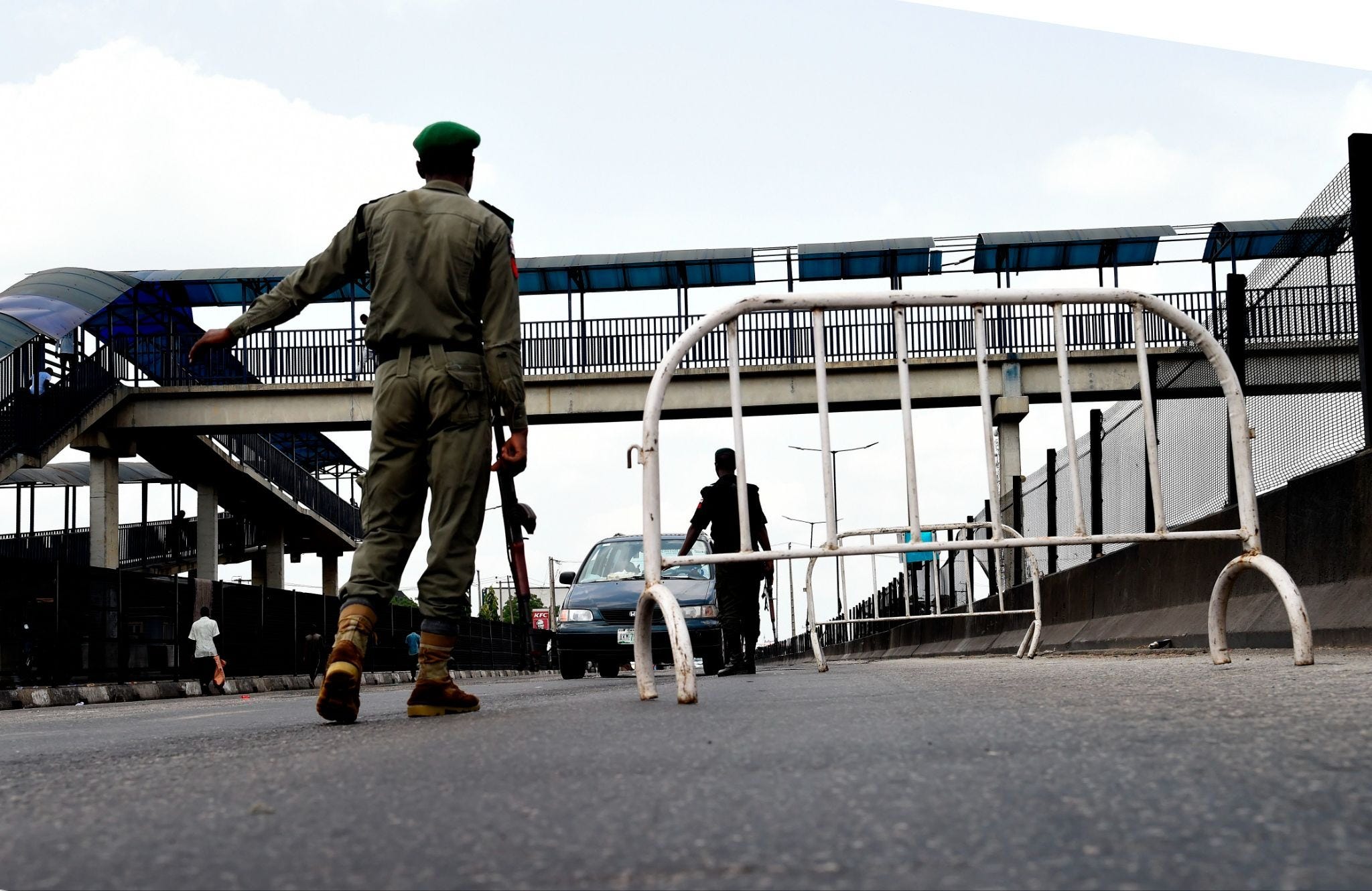
There is only one part where the machine is meant to ‘work for citizens’: the checkpoint. But for most Nigerians, encountering a security operative is not an experience of protection but of extraction. Human Rights Watch documented how police roadblocks, ostensibly established to combat crime, function in practice as toll stations—a “lucrative criminal venture” where officers demand bribes from drivers and passengers under threat of arrest, detention, and physical injury. One civil society group in Anambra State estimated that police collected approximately ₦540 million in illegal tolls from 70 checkpoints in a single year. Former Inspector General of Police, Olukayode Egbetokun, stated that the force “cannot vacate the checkpoints,” calling them a crucial part of “visibility policing.” But what does that say for many who do not trust those who man the checkpoints?
Can the Machine be changed?
A lingering question concerning the relationship between security and citizens is how the recent push for state police will affect the current state of insecurity. As we’ve traced, this is a return to the foundation elements of the Nigerian police. This is what Jimi Disu, Nigeria’s new top police officer, will be expected to deliver on.
The state police debate, which dominates the reform conversation, deserves scrutiny rather than quick endorsement or dismissal. Because security threats are local and nuanced, and communities understand their terrain better than distant command structures, there is merit in decentralising security management. Northern governors who historically opposed state police have reversed their position and called for the constitutional amendment. President Tinubu has publicly urged its passage. The case that an estimated 240 million people cannot be secured from the centre with fewer than 400,000 federal police officers is strong.
But Nigeria’s security has not suffered primarily from its centralised nature. It is because there is barely any accountability. Localisation without accountability replicates the same problem at a smaller scale and creates a space for more direct touchpoints. This is in the wake of what history has already shown us through their use of regional security outfits—Amotekun in the Southwest, Ebubeagu in the Southeast—as political tools. We have also seen community vigilante groups commit abuses. The O’odua People’s Congress, which emerged to challenge federal authority after the 1993 election annulment, became more feared than the criminals it was established to confront.
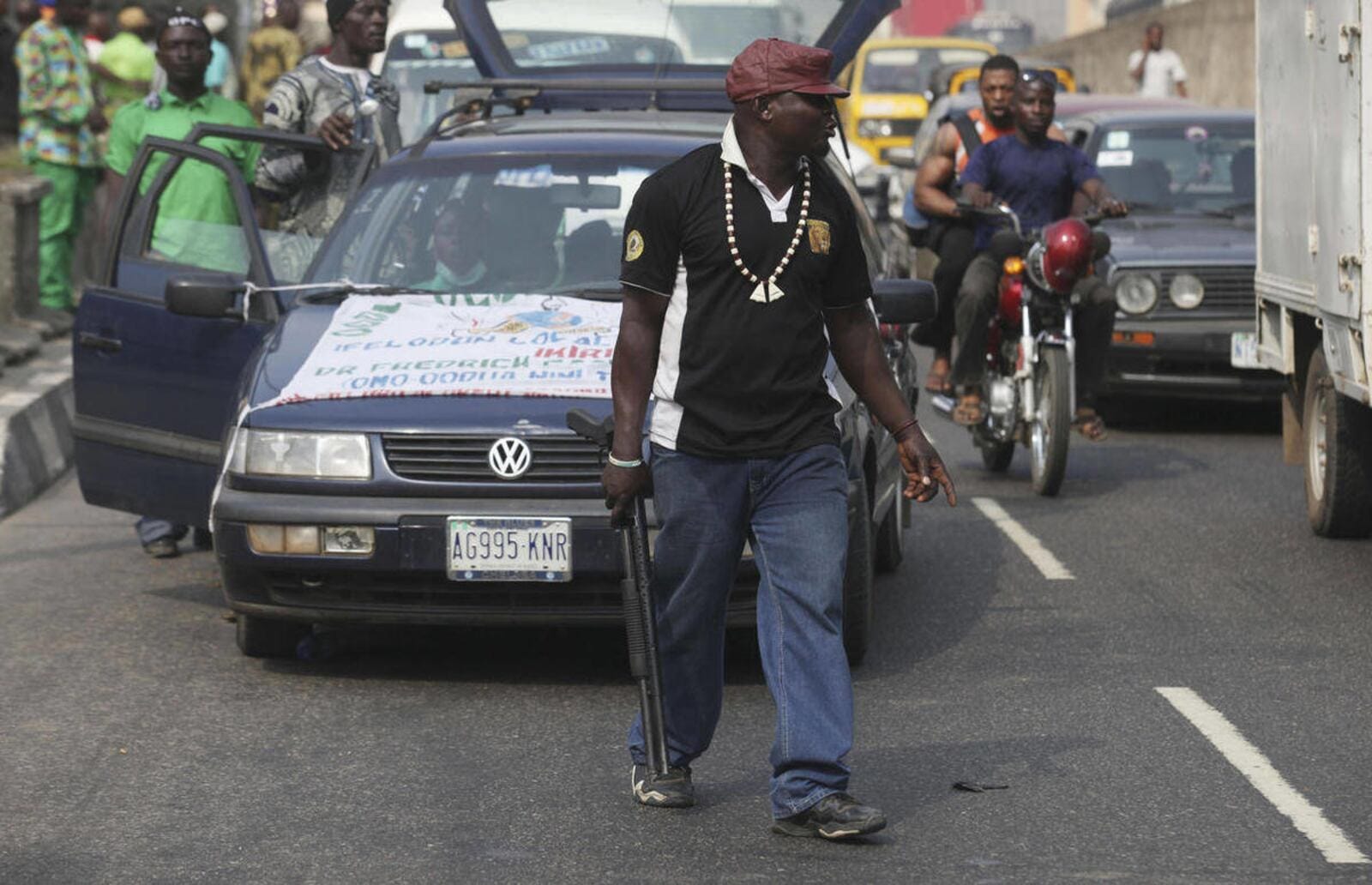
The concern, which security experts and civil society leaders have raised consistently, is that state police controlled by governors who already manipulate federal police commissioners will simply decentralise impunity rather than improve protection. There is a case of devolving beyond state police to local police at the local government level. Otherwise, there is the risk of replicating the same disconnect between federal and state and between state and local levels.
Who the Machine sees
Everything above flows towards a single endpoint—the earlier categorisation of what citizens are given in exchange for silence about the machine’s failure. Some receive the aforementioned social media posts from presidents and political leaders, decrying the mess and seeking a way out. Others see their dead ones become numbers that are contested because ‘31 freed is better than none’. And yes, some do get presidential condolence visits meant to show how ‘important’ this is to elected officials, not the worry of shoring up votes ahead of elections.
But the biggest issue remains where the messages do not arrive, where there is no contest and where the president or a representative might never visit. The Nigerian experience is filled with instances where security lapses and attacks do not even get documented, where deaths are seldom recorded and where killings do not make top-level news. A major consequence of this recent spate of insecurity is desensitisation to numbers, given how many there are and how often they occur. Numbers blur into one another, and cities become distant memories the farther they appear. But this situation is never truly far away. And the more these experiences become commonplace, the easier it is to affect more people. The easier it is for it to reach you.
Ultimately, this is a question of how the Nigerian state values human life, and the answer is structural rather than sentimental. If true security is reflective of proximity to power, then insecurity is not a bug in the system — it is the system telling you where you stand. It reinforces every division the country already carries: ethnicity, religion, region, and class. The further you are from the centre, the less your life is worth to the state. The condolence visit is not simply a failure of compassion. It is the only product a machine built for elite protection can offer to everyone else. The only variable is where next.
_____
Written by: Afolabi Adekaiyaoja
Edited by: Kunle Adewumi, Temitayo Akinyemi, ChiAmaka Dike and Hillary Essien