
A Country Running on Estimates
Nigeria budgets, fields votes, and plans—just not from the same set of facts

There is a basic promise embedded in large numbers. If there are enough of us, there should be enough to go around: enough resources, enough attention, enough collective will to plan for and protect the whole.
Being part of a population of over 200 million should carry some weight. It should have some assurance that the sheer scale of its population translates into the capacity to serve them. Nigeria’s relationship with its own numbers runs counter to this promise. The country does not know, with any reliable precision, how many people it contains. And it has learned to govern as if this does not matter.
Worldometer estimated Nigeria’s population, as of Sunday, 19 April 2026, was 241,478,864. But this figure is not a direct count of people living within Nigeria’s borders. It is a modelled estimate drawn from the UN Department of Economic and Social Affairs, Population Division’s World Population Prospects (2024 Revision), a dataset that builds its projections from layered demographic evidence. For Nigeria, those gaps are particularly wide.
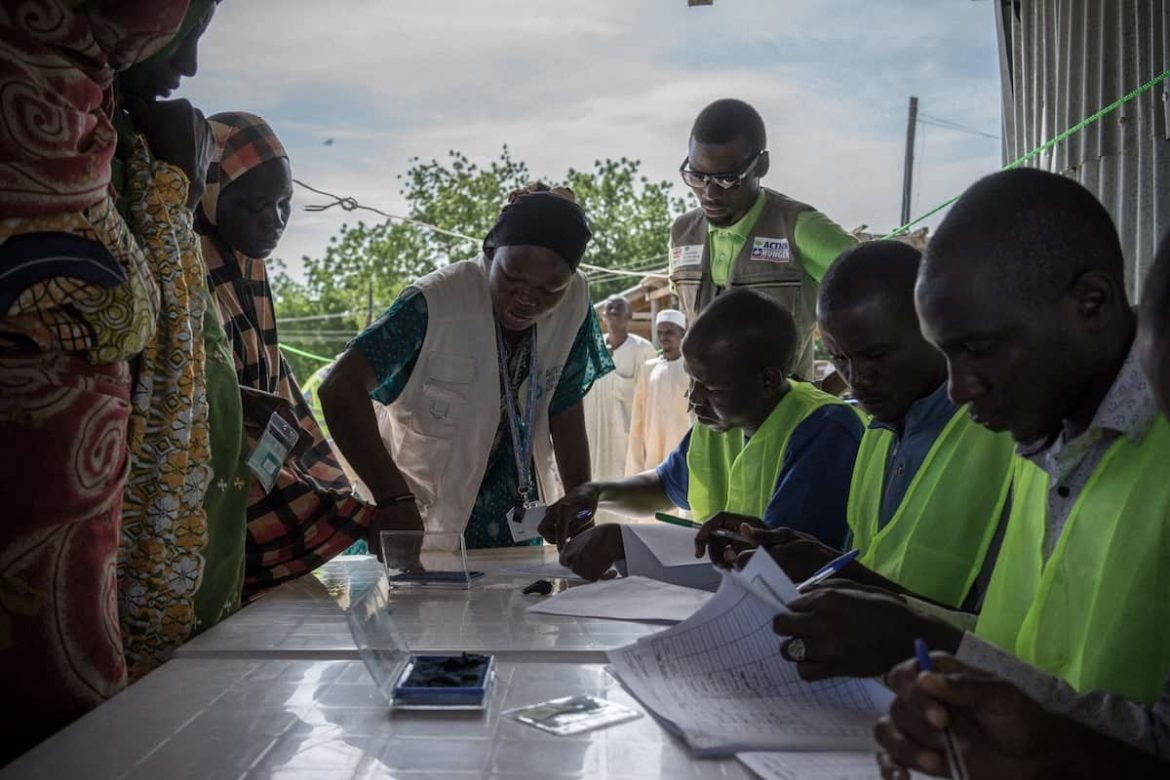
Nigeria’s last population census was conducted in 2006. I remember people decked in green vests coming into my home, asking my father how many children he had and asking him to present those who were home. This writer remembers them filling out the forms and watching them stop at her neighbours’ homes to do the same. A literal headcount.
Two decades later, Nigeria still has no official data from its population commission about how many people live within its borders. Nigeria is heading into another election cycle, with campaigns and promises made by people who cannot know how many people they seek to govern.
A Number We Have Never Agreed On
Census-taking makes sense on a basic level. If we know enough about ourselves, we can plan enough for ourselves. According to the United Nations, the population and housing census exercise rests on four core principles: that individuals are counted separately, that the entire population within a clearly defined territory is included, that the count reflects a specific point in time, and that the exercise is conducted at regular intervals, typically every ten years.
Since independence, Nigeria’s census attempts have been marred by controversy, political interference, and logistical challenges. Censuses are important for public planning and allocating resources. Yet, Nigeria’s leaders, past and present, have failed to effectively leverage it as a reliable tool for governance.
In 1962, the Tafawa Balewa government conducted the first post-independence census, counting 45.26 million people. It was accused of manipulation, leading to its cancellation. A second attempt in 1963 put the population at 55.6 million people. Again, southern leaders accused the North of inflating numbers to gain political advantage in the federal system.
General Yakubu Gowon’s military regime attempted the next census in 1973. It counted 79.8 million Nigerians. Once again, the results were cancelled amid allegations of inflation, particularly in northern states. In 1991, under General Ibrahim Babangida, Nigeria recorded a population of 88.9 million. While not free of criticism, this was officially accepted and served as the baseline for national planning until 2006.
The 2006 census, conducted under President Olusegun Obasanjo, recorded 140.4 million people. For the first time, this census incorporated biometric data and gender breakdowns, but it still faced criticism over its methodology and even accusations of undercounting in Lagos and the South East.
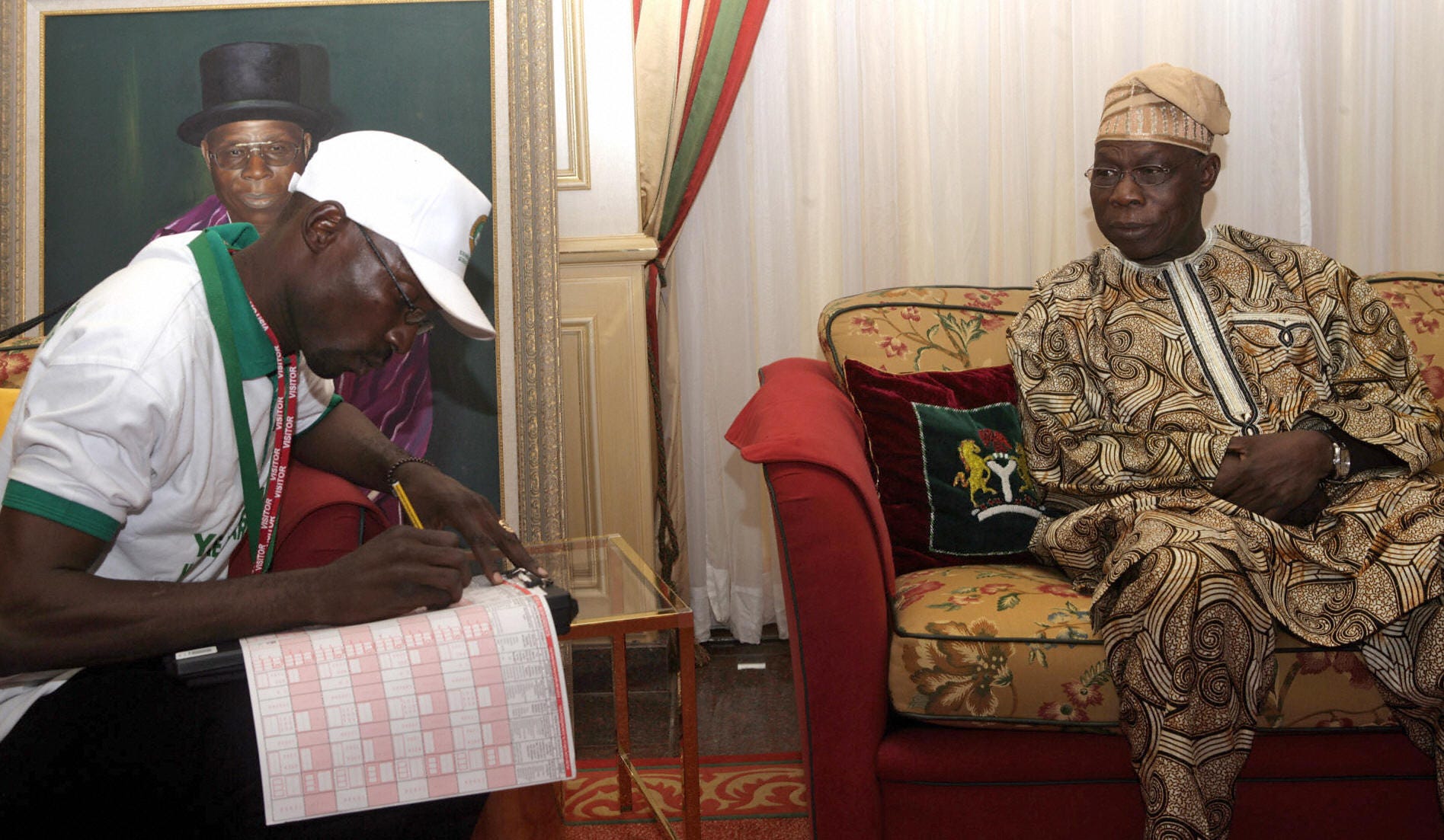
Festus Odimegwu, then-chairman of the population commission, publicly declared the 2006 count not credible and warned that the planned 2016 exercise would fail. In the end, the censuses slated for 2016 and 2022 did not take place due to funding issues, insecurity, and political delays. The next census, initially scheduled for March 2023, was rescheduled to 3-7 May 2023, and then postponed indefinitely in April 2023 to allow the incoming Tinubu administration to set a new date.
In short, Tinubu led the third successive administration to operate without an updated census, and governance continued without a clear, authoritative denominator. Election campaigns, contests of policy and promise, had been run on projections built on estimates.
The 2025 inauguration of an eight-member committee to prepare for a national census, alongside the admission that financing remains a major constraint requiring domestic and international support, drives home the institutional fragility and the lack of political will to resolve this.
A Budget Built on Guesswork
A census tells a government how many people live in a given area, and what they need. That information becomes the baseline for everything that follows. A national budget, in turn, is the government’s attempt to translate those realities into numbers: how much to spend, where to spend it, and who that spending is meant to serve. A budget is, ultimately, a plan for the people. If the number of people is uncertain, that plan is guesswork.
On 31 March 2026, the National Assembly passed a ₦68.3 trillion budget—the largest in Nigeria’s history. However, for three consecutive years, Nigeria’s capital budget has outlived its own timeline, with the House of Representatives most recently extending the implementation of the 2025 capital budget to 30 June.
The 2024 capital budget was similarly first extended to mid-year and then pushed further to 31 December 2025. Before that, the 2023 budget also moved from an initial March deadline to June and eventually to the end of the year. Nigeria’s budgetary cycle has effectively shifted from clear, enforceable timelines to operate on a rolling basis.
However, the sheer scale of these figures sits alongside the country’s abysmal record of implementation. By Q3 2025, federal revenue stood at just 61% of the target; only 18% of the capital budget had been spent. These are the funds meant to deliver infrastructure, healthcare, and core development projects.
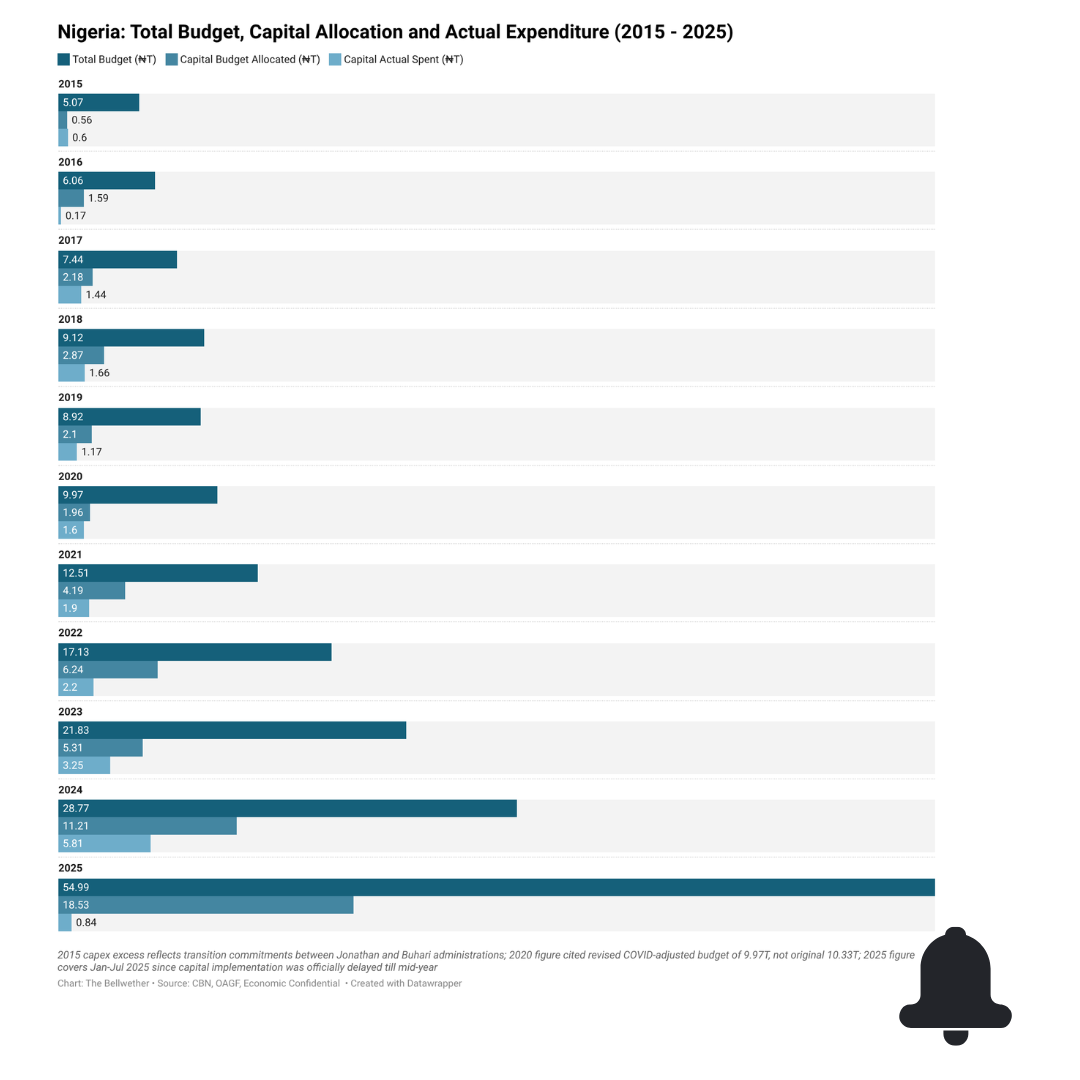
During the 2026 appropriation hearings, agency heads reported that noted fund releases were so low that they had forced projects into delay, debt, and quiet suspension. The Ministry of Interior told lawmakers it had received minimal to no capital funding in recent cycles, leaving infrastructure upgrades across its agencies stalled. The Ministry of Health and Social Welfare echoed this, reporting that only a fraction of its capital allocation had been accessed, weakening hospital upgrades, equipment procurement, and ongoing public health interventions. In one of the most striking disclosures, Minister Ali Pate revealed that of the ₦218 billion set aside for capital projects in 2025, only ₦36 million—about 0.02 per cent—had been released.
The argument for budget flexibility sets it up as a safeguard against stalled federal projects; the argument against it masks how inefficiently budgets are conceived and executed in the first place. One could also ask whether initial allocations, timelines, and priorities are grounded in realistic data-backed assessments. The likely reality is that they are, from the outset, built on estimates and instead absorb their failure by rolling it forward without resolving the underlying causes.
Nigeria’s budget design is shaped by estimates that are both outdated and inflated in different directions, creating a mismatch between planned scale and implementation capacity.
When it comes to counting people, the cost of not doing so is already measurable. ₦129.5 billion was reportedly already paid to contractors and service providers linked to preparations for the suspended 2023 census. In addition to an unfinished statistical exercise, we are left with significant public expenditure without its intended outcome: no updated population data, no published results, and no clear public accounting of what was achieved beyond preparatory work.
The abandoned 2023 census has become another example of how even the most fundamental governance tools—like knowing how many people are being governed—can be rolled over and absorbed into this broader pattern of incomplete delivery.
Consider the arithmetic. The government spent more money preparing for a census that never happened—₦129.5 billion—than it released to the Ministry of Health for capital projects in an entire fiscal year: ₦36 million, or 0.02 per cent of what was allocated. Nigeria invested more in trying to count its people than in keeping them alive. This is not a gap in governance. It is a portrait of a state that has absorbed the absence of data into how it functions, and found that functioning without a denominator is, for those in power, not a crisis but a condition.
A Population That Moves Faster than the State Can See
Nigeria’s population story is also uneven across the country’s geography. Movement across porous borders, rapid urban migration, and the largely untracked demographics, including the displaced, all mean that population figures shift quickly. At the same time, deaths—road crashes, industry-specific fatalities, natural disasters, violent conflict and insecurity—are recorded unevenly, often fragmented across agencies or underreported entirely.
When population figures are uncertain, planning becomes an exercise in approximation. Schools are built without clear catchment realities. Not that this is a pressing concern for the Nigerian government, as UNICEF estimates 18.3 million to 20 million Nigerian children are currently excluded from formal education. Likewise, hospitals are underfunded, and demand forecasts are inaccurate; infrastructure is designed for populations that may no longer match the numbers on record, as in Nigeria’s 14.9 million-unit housing deficit.
While discussions often focus on federal planning, the same data limitations flow downwards. State governments and local government areas often use the same outdated or estimated population figures, resulting in inefficiencies that are replicated across multiple layers of governance. This multiplies the problem: misallocation is not isolated to Abuja, but embedded across subnational planning systems that all rely on these baselines.
The consequences are unevenly distributed. Fast-growing urban centres—particularly Lagos and Abuja—believed to be undercounted in official planning frameworks, see their populations outpacing infrastructure in the day-to-day realities of these cities.
In urban centres, residents can compensate imperfectly through private transport and expensive housing, informal networks, and a higher concentration of hospitals and services. But in areas with weaker infrastructure and limited governance capacity, these gaps become more severe, as they are overrepresented in projections that no longer reflect migration realities. Clinics are sparsely distributed, transportation is unreliable or unsafe, and health systems operate with little. This makes even routine care difficult to access, let alone coordinated responses to public health emergencies.
In Abuja, the rapid spread of informal settlements on the city’s outskirts, often without water, sanitation, or road access, contrasts with official population figures that underestimate the scale of urban movement.
In 2022, President Buhari noted that the absence of a credible census for over 16 years had created an “information vacuum,” weakening the country’s ability to plan effectively. He described population data as central not only to development planning, but also to targeting social interventions, managing security challenges, and implementing national policy.
One possible counterargument is that modern states rarely rely on a single census as their primary demographic tool; instead, they operate through “administrative data ecosystems” that are continuously updated. Modern census reforms advocate a shift from the decennial exercise to a continuous, data-driven infrastructure, with institutions like INEC, the National Population Commission, the central bank, and other identity management agencies each contributing partial but functional datasets.
But Nigeria is not operating in a complete data vacuum. It holds fragments of population intelligence within existing systems, digital identity frameworks, and banking records such as the Bank Verification Number, Voter Identification Number, and National Identification Number (NIN) databases.
Estimates are not a substitute for a credible, updated census. They may guide policy direction, but they cannot fully resolve questions of precision, distribution, or rapid demographic change at the local level. Why these datasets have not been integrated into a coherent, real-time population model in Nigeria remains an open question.
How Many People is Power Worth?
From population size to revenue assumptions, and from population distribution to expenditure planning, the connection between census and budgeting is direct. One defines the scale of need; the other attempts to respond to it. When the first is missing or outdated, the second becomes less a reflection of reality and more a negotiated approximation.
The same logic extends into elections. In both cases, the state is assuming it knows who it is serving and who it is choosing. Voting presumes a known electorate: how many people there are, where they are, and how they are distributed.
Per the 1999 Constitution of Nigeria (as amended), the 360 seats in the House of Representatives are allocated based on population, with each federal constituency designed to represent roughly equal numbers of people. The constitutional principle places the responsibility on the Independent National Electoral Commission (INEC) to delineate constituencies that reflect demographic realities across the federation.
In practice, this system would rely on accurate and up-to-date population data to determine how representation is distributed across states and regions.
As of 2026, these allocations are still effectively anchored to the 2006 census, meaning that constituency boundaries and seat distribution have not been recalibrated to reflect two decades of change. As a result? Representation imbalances have shaped and will continue to shape long-standing assumptions about the country. In the absence of current, verifiable data, ideas like the North’s “strength” or the scale and urban density of the South remain inherited truths.
Northern Nigeria, often portrayed as the country’s largest voting bloc, is both a demographic and a strategic category. Recent statements, like Atiku Abubakar’s claim that no northern politician commands more votes than he does, reflect how electoral power is imagined and negotiated through assumed population strength rather than through updated population clarity. In this sense, the “North as voting mass” becomes both an electoral asset and a governing assumption; one that shapes appointments, campaign messaging, and even federal attention to infrastructure and distribution.
We are being unfair to ourselves by not engaging with this directly. Is the Northwest really three times the population of the South-South? Does that ratio justify the allocation of more states, more local governments, and more federal resources flowing in one direction? Or should a region’s political weight rest on figures no one has verified in two decades? These are not abstract questions. They shape how revenue is shared, how constituencies are drawn, and how political power is distributed across the federation.
Taken together, these gaps create a system where, when population figures are uncertain, decisions about who gets what can be adjusted more easily to suit the status quo. At the same time, unclear numbers make it harder to hold the government accountable; if you don’t know exactly how many people should be served, it becomes difficult to say whether enough has been done.
It also raises the question of whether this uncertainty is simply a condition Nigeria is dealing with or something that, over time, has become convenient for the political class to maintain.
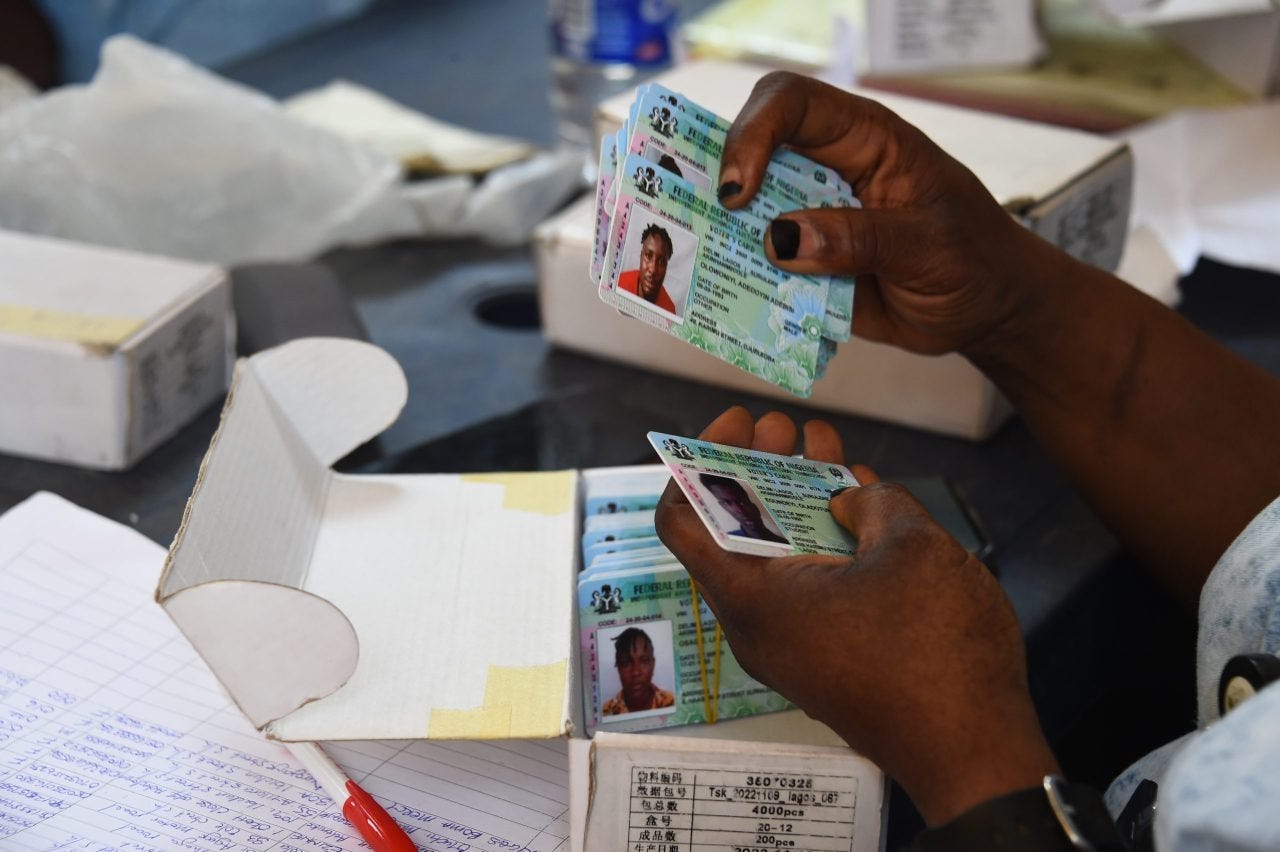
Electoral planning in Nigeria rests on a set of numbers that, in themselves, are incomplete reflections of the wider population. In 2023, INEC reported about 93.4 million registered voters, a figure that represents only a portion of Nigeria’s estimated population of over 200 million at the time.
Ahead of the next election cycle, the expectation is that new registrations will further expand this electorate, yet even that growth is difficult to situate within a clear national denominator. Parallel datasets such as the National Identification Number (NIN) enrolment—now at about 127 million records—and the Bank Verification Number (BVN) database (at 68 million) also offer glimpses into the count, but these systems were not designed to function as a unified electoral register or a substitute for a census-based population baseline.
When Migration Outruns Measurement
No census—or any single enumeration exercise—can fully resolve the complexities of a rapidly changing population. A census, even when conducted, is never a perfectly precise account of a society; it is a snapshot in time, subject to undercounting, classification error, and political negotiation. That is a valid methodological limitation in principle. However, the issue in Nigeria’s case is not the absence of perfection, but the absence of update.
That gap does not stop at the border. An estimated 17 million Nigerians live in the diaspora, from the UK and US to Canada, the UAE, and South Africa—though even this figure largely excludes second- and third-generation communities who remain socially and economically tied to Nigeria. These numbers themselves are increasingly fluid, shaped by shifting visa regimes, secondary relocations, and rapidly changing destination patterns, making any fixed count quickly outdated.
In October 2025, the Federal Government announced plans to advance the Diaspora Voting Bill. On paper, it signals a recognition of a population long acknowledged in estimates but structurally excluded from formal political participation. As of now, the bill’s progress through the National Assembly remains stalled—a familiar trajectory for legislation affecting constituencies that cannot yet vote.
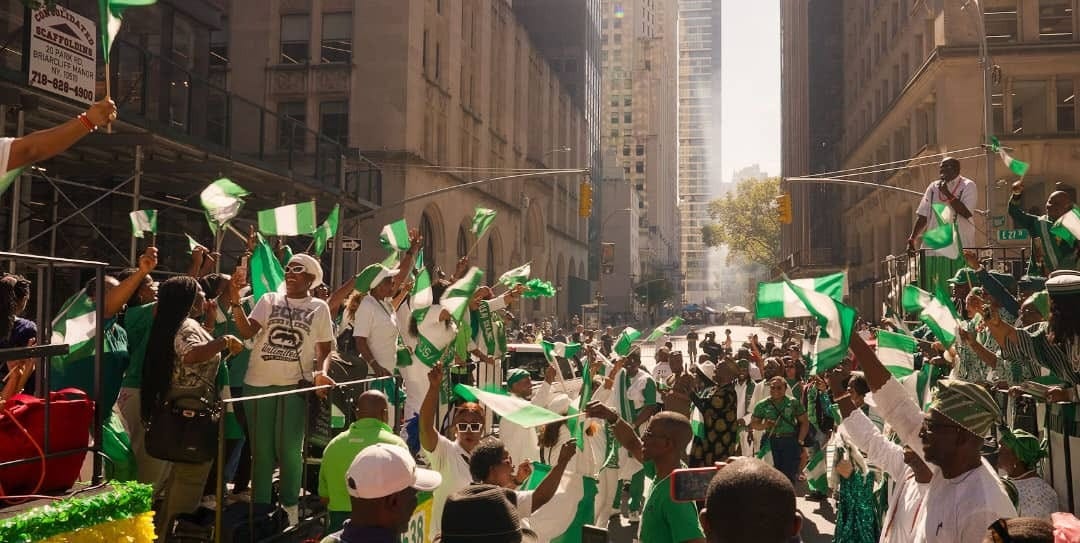
This raises a question the data alone cannot answer: what does it mean to be Nigerian when the category itself is both massive and undefined? Nigeria may account for roughly one in every six or seven Africans, but that scale has not produced a coherent national identity so much as a set of overlapping, sometimes competing ones. The diaspora exists in part because the centre could not hold—because japa is not simply emigration but an answer to a country that could not cater to what it contained. And those who remain are not a monolith either.
With over 250 ethnic groups, regional disparities that function almost as separate countries, and a political system that distributes power along lines no one has verified in twenty years, “Nigerian” is less a settled identity than an ongoing negotiation. The number matters not because it would resolve these tensions, but because, without it, even the negotiation lacks a common frame.
Nigeria’s population is scattered across systems, borders, and timeframes that don’t fully align, yet it is still trying to govern it as if they did.
As Nigeria approaches another election cycle, the campaigns will once again be built on promises untethered from verifiable fact. Candidates will speak of constituencies whose boundaries were drawn from a count taken when many of their voters were children or not yet born. Budgets will be proposed for populations that exist only in projections. And a generation that has grown up watching this pattern—watching the state fail to count them, fail to plan for them, and in many cases fail to keep them—will be asked, again, to participate in a system that does not know they are there.
The question is no longer whether Nigeria can afford to conduct a census. It is whether Nigeria’s political class can afford for one to succeed. A credible count would not just update a number. It would disturb the arrangements—the inherited truths about regional strength, the unchallenged allocations, the convenient vagueness—that have allowed governance to operate without accountability for what it delivers. Being one of many should mean something. In Nigeria, it remains an open question what that something is.
___
Written by: Hillary Essien
Edited by: Afolabi Adekaiyaoja and ChiAmaka Dike
Whatever numbers you see in Nigeria, or about Nigeria, take it with a huge lump of salt. The politicians are interested in extractive rulership and has no need for those numbers except where it supports extractive activities.