
Right Answer, Wrong Question
Some say Nigeria needs a parliamentary system of government as a solution, but are we asking the right questions?

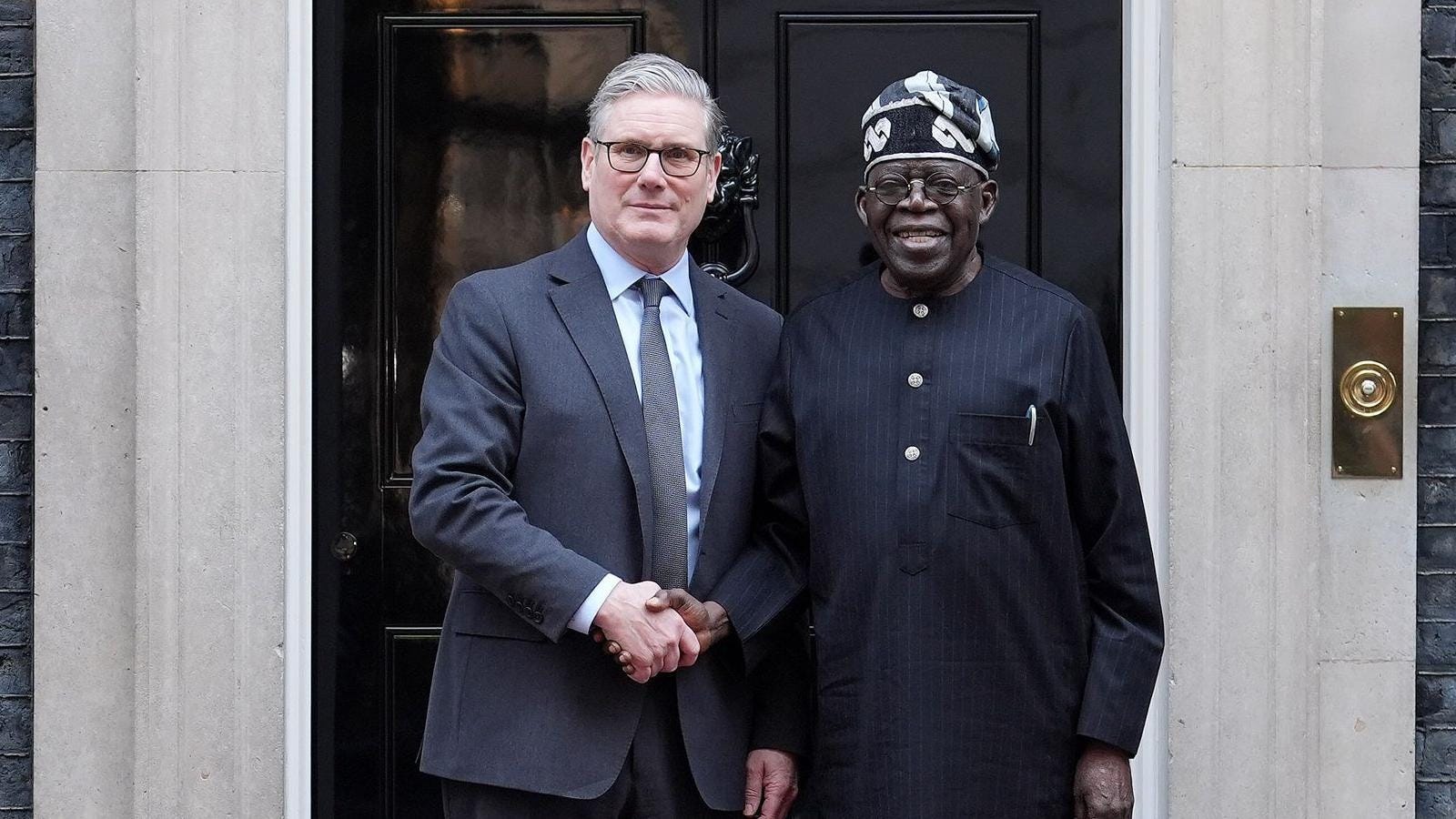
On 22 June 2026, U.K. Prime Minister Sir Keir Starmer was forced by his party to resign as leader and will leave office in July 2026. His troubled term was bookended by his ill-judged pick of Peter Mandelson as Ambassador to the United States and his party’s weak performance in local elections, which contributed to his poor approval rating of 23%. This meant fellow Labour MPs were keen to replace him with a leader who would inspire voters and strengthen their bids for re-election.
The immediate comparison for Nigerians is that there is no similar mechanism to replace a leader with low approval ratings—Tinubu’s own rating dropped to 30% as of May 2026. The only options are impeachment, which has never worked at the federal level, and a coup, which reportedly failed recently. The constitutional provisions for impeaching a president are notoriously so prohibitive that they function less as accountability mechanisms than as a leader’s last line of defence.
There is a similar Nigerian comparison for this Starmer moment. In 2015, Nigeria removed Goodluck Jonathan via the ballot box when he lost his bid for re-election. There is an argument that neither was an accountability mechanism so much as a concerted display of elite consensus moving against elected leaders. While Starmer saw a cabinet minister resign from his government and allies move towards supporting an alternative, Jonathan’s defeat was driven by a growing coalition that included the APC, defecting PDP governors, and Obasanjo’s active endorsement of Buhari’s presidency. His biggest sin was less the rising insecurity or corruption than his decision to move against the informal zoning agreement.
Ahead of 2027, the consolidation of governors and leaders within the APC gives the impression that Tinubu’s re-election is a given. The opposition’s struggles also reflect the APC’s effective use of state resources in securing this. The easy question is whether Nigeria should consider a return to parliamentary governance, one that federal lawmakers considered as recently as 2025. The appeal is obvious: parliamentary systems afford swift correction when a leader loses confidence.
The real question is whether the power to select and remove leaders can ever be transferred from the elite that currently holds it to the electorate.
Forward Going Backward
The argument that Nigeria is not culturally suited to the accountability mechanisms required by effective governance systems usually runs in one direction. This “forward” direction presupposes what we expect in politics: ethnic cleavages, the dominance of patronage-driven strongmen over systems and the lack of ideological discipline to function. But this argument has no cultural evidence going “backwards.”
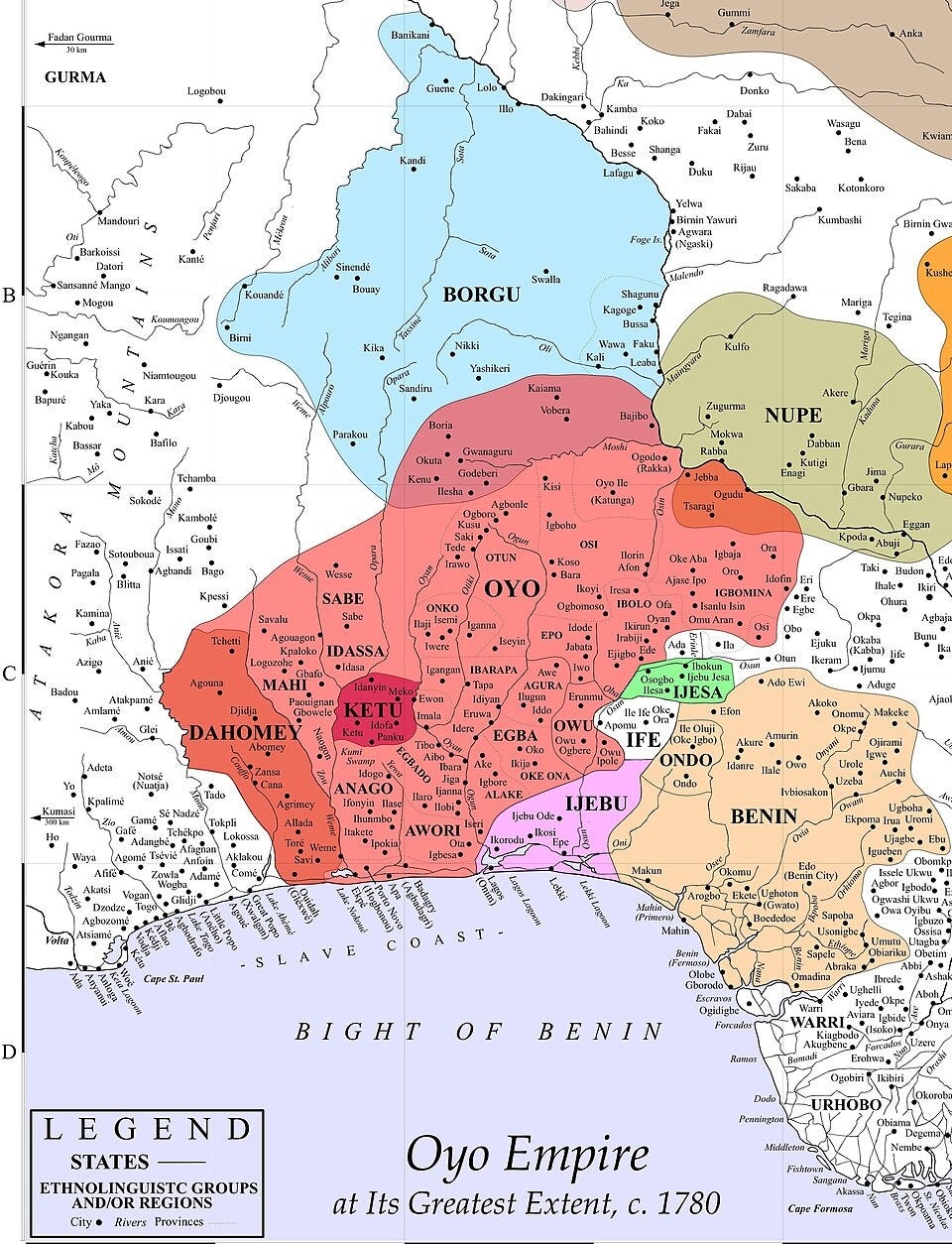
Long before colonial incursion, different cultures embraced ways of holding leaders to account. The Oyo Mesi, a seven-member council of nobles that ruled alongside the Alaafin of the Oyo Empire, held both the power to crown the Alaafin and the power to end his reign. When the council determined that an Alaafin had become tyrannical or unfit, the council’s leader, the Bashorun, would present the king with an empty calabash. The gesture meant ‘the gods reject you, the people reject you, the earth rejects you’. This vote of no confidence resulted in an Alaafin committing suicide and a successor being crowned.
The Oyo Mesi also selected the Alaafin. Selection and removal were therefore practised by the same body that was required to represent interests broader than any single faction. The Ogboni, a separate council of elders sworn to the earth goddess, served as a check on the Oyo Mesi itself. This represented an institutional architecture for distributing power and maintaining accountability that predates, by centuries, the current constitutional arrangements Nigeria has been asked to choose between.
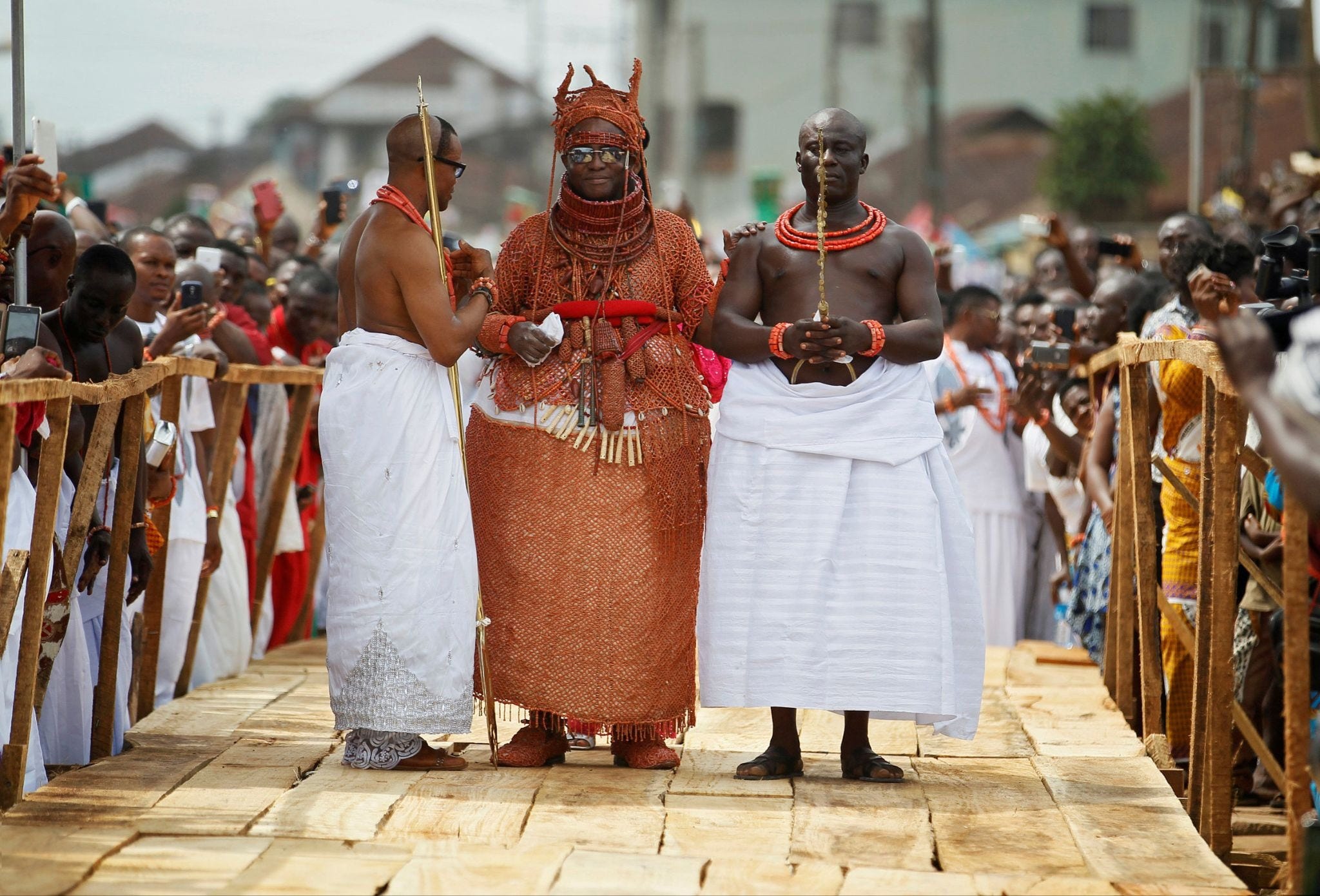
The Benin Kingdom operated on the same logic through a different institutional architecture. The Uzama Nihiron, the hereditary kingmakers of Benin led by the Oliha, held both the authority to crown a new Oba and the institutional standing to check his rule. Alongside them sat two further chief groupings: the Eghaevbo N’Ore, the town chiefs who served as state councillors and political leaders, and the Eghaevbo N’Ogbe, the palace chiefs who managed court administration.
The Nupe tradition, shaped by Islam and geographically centred in what is now Niger State, produced the same structural arrangement through a different cultural vocabulary. The Etsu-Nupe combined political, military, and spiritual authority, but his powers were not absolute. Titled nobles, including the Maku, the Kpotuh, and the Shabi, held formal accountability functions over the Etsu, while provincial heads administered territories downward and answered upward to the same noble hierarchy. A vertical accountability chain ran through the Etsu, who answered to the council; the council answered to established norms of governance; and the provincial chiefs answered to the Etsu.
In the northeast, the Kanem-Bornu Empire—one of the longest-lasting states in African history, spanning nearly a millennium—governed through a council of state known as the nokuna or majilis, typically composed of twelve royal, religious, and military notables. The Islamic tradition of shura, consultative governance, reinforced an already indigenous norm. The nineteenth-century history of Bornu contains its own cautionary instance: al-Kanami, the era’s dominant power, ruled with the help of a council of six but declined to be installed as Mai, knowing that the position required accountability. The official Mai became a puppet; the real power operated informally.
On the Niger Delta coast, the Itsekiri Olu governed alongside the Ojoyes, a council of chiefs led by the Ologbotsere, a hereditary kingmaker whose holder crowned each new Olu and convened the Ojoye council to confirm succession.
The pattern across five distinct Nigerian political traditions is not coincidental; it reflects a convergent solution to the problem of executive power: a vest selection and removal in a constituted council, creation of an effective accountability mechanism and then the establishment of a leader’s legitimacy through council consent and enforced mechanisms rather than through personal mandate alone. This is closer in principle to parliamentary confidence than to fixed-term presidential tenure.
There is another pattern here: these accountability structures were also carried within elites themselves. Most of these positions and titles were hereditary, which meant commoners rarely had access to them. This suggests that, culturally, we have always deferred leadership and accountability to a governing elite. This is evidently something that has been weaponised by elites to manage their evolving relationship with the masses.
These strong accountability mechanisms reinforce the argument that Nigeria’s precolonial traditions have consistently checked poorly performing executives. However, the power to check them has been exercised at the behest of an elite expected to uphold these standards. Even Nigerian military coups followed similar patterns, with heads of state emerging only from the most senior ranks. Protection of the executive from this kind of accountability is a recent invention. It is the newest thing in Nigerian governance despite being treated as the most natural.
The Selection Conduit
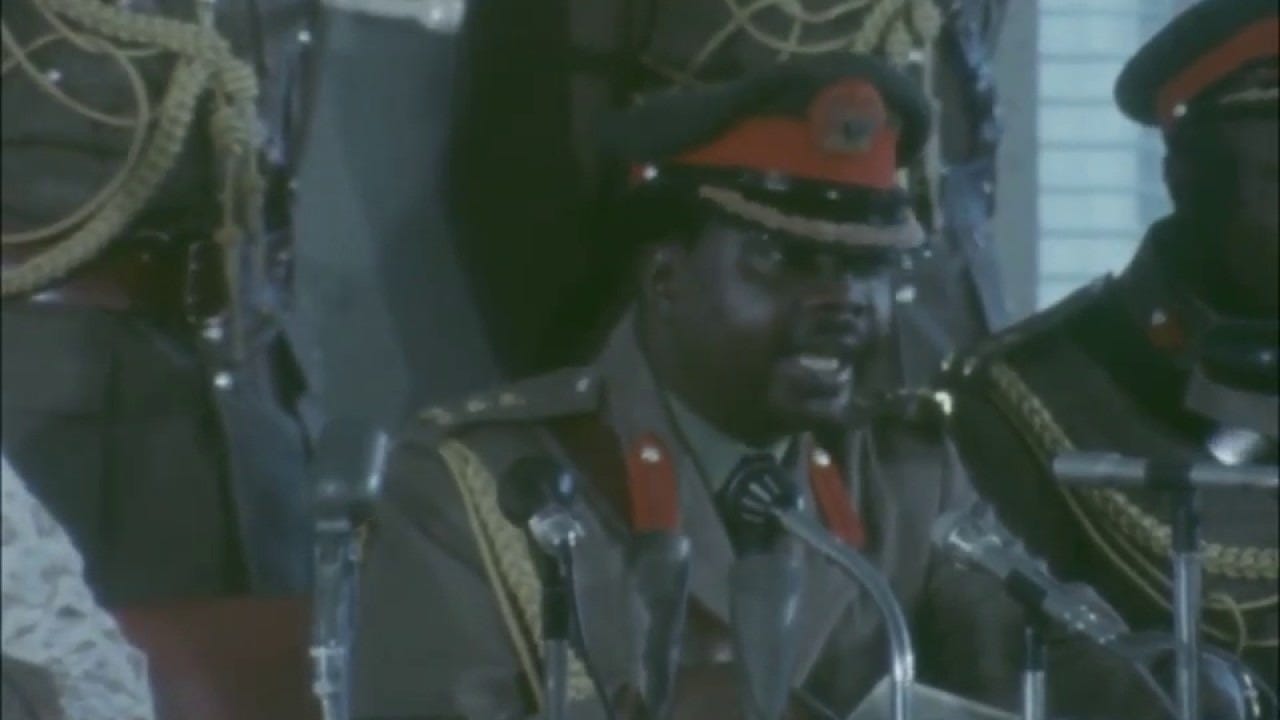
To understand how Nigeria’s current selection architecture works, we need to go back to October 1975. Then Head of State, General Murtala Muhammed, inaugurated the 50-member Constitution Drafting Committee that would design the return to civilian rule. His instructions were that the new constitution should “eliminate cut-throat political competition based on a system of winner-takes-all.” Murtala’s demand was that this democracy was not meant to include accountability through a political opposition, but rather to subsume or overwhelm it. The presidential model that came into effect in 1979 was chosen because the lesson military leaders took from the First Republic (1960-66) was to avoid a situation in which a loyal opposition could work to unseat the government at the centre, regardless of the role it played in holding the government to account.
The result was what Rotimi Suberu calls a “hypercentralised” government and one that ensured an elected executive was powerful enough to govern without any real checks. Borrowing from military control, subsequent civilian governments have exploited these powers at their discretion to devastating effect. It gives the impression that Nigerian political culture requires strong leaders to wield such powers at the expense of strong institutions.
The strongest case for parliamentary democracy is that it is akin to our cultural traditions and best exemplifies what we have always done. But there is an equally strong case to be made that the relationship between our cultural and political identities has led to a situation where poor accountability was an eventual outcome.
Ekeh makes this argument in his famous ‘Colonialism and the Two Publics in Africa’ paper. Here, he makes the case that because Africans have a stronger link to cultural traditions and practice, which he groups as the ‘primordial public,’ the foreign-imposed ‘civic public’ is always going to come second. The values of the civic public’s institutions and laws are only as effective as they work to serve the cultural values we are used to. As such, whatever external form of government adopted will bend to the will and direction of a cultural position.
To bring in the elite consensus, and understand how poor accountability comes about, we can use Richard Joseph’s theory of prebendalism. He argues that state offices in Nigeria are treated as prizes or revenue sources for the benefit of officeholders and their networks. In other words, elites are able to use these structures to perpetuate their control over managing governance and society. Historically, they might have catered to their own base. But, to adapt to changing times, they have come to form a cross-cultural coalition that preserves their status. They ensure that, despite shifting coalitions, they abide by the same rules and maintain the status quo. It is why disciplining Jonathan, who threatened these arrangements, was necessary but empowering a mass movement for change is not a priority.
The question of which form of governance works well for Nigeria cannot be separated from the original question of if actual power will be wielded by the elite. Because, whatever is practised, whether presidential or parliamentary, will still be operated by these elites. The patronage network that organises around an elected president will also overwhelm a prime minister. If citizens criticise a prime minister, but that choice is convenient for the elite, that person will not leave power. Joseph’s point survives unless we change the underlying selection architecture.
The Translation Conundrum
The throughline from precolonial hierarchies to modern Nigerian political structures places an outsized emphasis on elite management and engagement. It is not uniquely Nigerian, but it lends credence to an evolving focus on a politics organised around governing coalitions rather than on actual mass mobilisation. Few instances, if any, have moved the needle in Nigerian history. None, to date, has resulted in actual leadership change. The evidence for this in Nigerian democracy is even starker.
The 2023 presidential election recorded a voter turnout of 26.72%: the lowest since the return to civilian rule in 1999. Tinubu’s winning mandate, confirmed by the courts, flowed from less than 10% of the electorate and reinforces a consistent decline in voter turnout. But the election also showed what participation failure looks like in practice: the Obidient movement, a mass movement coalesced around Peter Obi’s Labour Party candidacy. It won six million votes nationwide, sent roughly 40 members to the federal legislature, and elected a governor. But it did not produce a president, and the distance between what it generated and what it converted into selection power illuminates the problem precisely.
This situation would not have changed if Nigeria practised a presidential or parliamentary system. What would have been required was active political consciousness that translated to political energy. The infrastructure required to convert momentum and energy into ward-level organisation and ballot box protection does not yet exist at sufficient scale to challenge an elite-oiled machine that has maintained a local presence for decades.
2027 is on track to validate elite alignment. Governors and party leaders that have consolidated around the APC’s hold are pushing the argument against zoning and actively trying to preserve the status quo ahead of an expected transition in 2031. The conditions that made 2015 possible—a unified opposition platform, elite consensus against the incumbent, a candidate with cross-regional appeal, and a northern establishment sufficiently aggrieved to coordinate—are not present. That alone shows the limitation of the contest, especially one that has been reframed as elite alignment, given the overwhelming number of governors who belong to the ruling party. The perfect storm needed to remove a sitting president today requires elite engagement. By current indications, the compact is holding, and the conditions for elite-driven change are not present.
Claude Ake argued in Democracy and Development in Africa that the failure of African democracy was not that the wrong systems had been chosen but that institutional forms had been installed without the political conditions that give those forms their substance. The presidential system protects incumbents and rewards control, while a parliamentary system imposed on the current political economy would be operated by the same elite compact, resulting in parliamentary elite capture. This is not an argument against parliamentary governance in principle, but rather identifies the conditions that the reform debate has consistently refused to address.
The Revolution Will Not Be Televised
The debate about presidential versus parliamentary governance in Nigeria is worth having. There are cases to be made for a return to parliamentary governance, including faster leadership correction, stronger incentives for party coherence, and better accommodation of Nigeria’s genuine regional diversity. If Nigeria’s political conditions were different, if parties had internal discipline, if voters exercised consistent selection power, and if the infrastructure of mass participation functioned as both systems assume it does, then the case for parliamentary governance would be considerably stronger.
But the debate is being conducted on a premise that the evidence does not support: that the form of government is the primary variable determining political outcomes. In Nigeria, the primary variable is who controls the selection process, and that question has not changed across constitutional arrangements, parties, administrations, or the quarter-century of civilian rule the reform debate seeks to improve upon. The elite compact that managed succession in 1999 is managing it in 2026. It has survived two parties, five presidents, and seven elections. It will definitely survive a change of constitutional model unless the change is accompanied by conditions that make the model’s accountability mechanisms actually function. These conditions are political and organisational, not constitutional.
The pre-colonial traditions of governance across this territory understood something that the current constitutional settlement was designed to suppress: that legitimate authority requires accountability to a defined community, that the chain of accountability must run both up and down, and that the power to select and remove leaders is not just a technical question about institutional design but also a political question about where power actually lives. The Oyo Mesi, the Uzama Nihiron, the Nupe nobility, the Kanem-Bornu majilis, and the Itsekiri council of chiefs did not produce a ruler whose tenure was protected regardless of performance. What they produced, and what Nigeria has not yet produced through any of its constitutional arrangements, is a genuine accountability relationship between the ruler and the community being ruled.
Whether the transfer of selection power from the elite compact to the electorate is possible within the current political economy, requires conditions that do not yet exist, or is structurally prevented by a constitutional design explicitly commissioned to suppress organised opposition are questions the evidence cannot yet answer. What it can answer, and what this essay has tried to demonstrate, is that the debate underway is not the one that is needed. Nigeria is arguing about which vehicle to drive when the questions of who holds the keys and whether they are even fit to drive have not been asked. Until those questions are asked, the argument about the vehicle is largely decorative.
—
The Village
This piece was originally meant to consider if Nigeria should change to parliamentary governance after Starmer resigned. After a call with ChiAmaka Dike, we concluded it was best to go even deeper and unpack the root of the issue: elite involvement in this form of accountability. Hillary Essien jumped on the document and helped with edits. Seyi beat it black and blue and fought with me on some of the cases. She and ChiAmaka Dike have formed a trade union of editors to force pieces under 3,000 words. The score is 1-0.
This is so brilliant. Looking forward to more of this.
Thank you.
‘He argues that state offices in Nigeria are treated as prizes or revenue sources for the benefit of officeholders and their networks.’ The system has completely failed to hold leaders accountable. The elites rule Nigeria as if it’s their birthright. Does our vote truly count if they pay their way into rigging elections? That simply means that the power of the electorate is an illusion."