
The Analyst's Dilemma
Writing about Nigeria's politics can be disillusioning and poses a question about the why

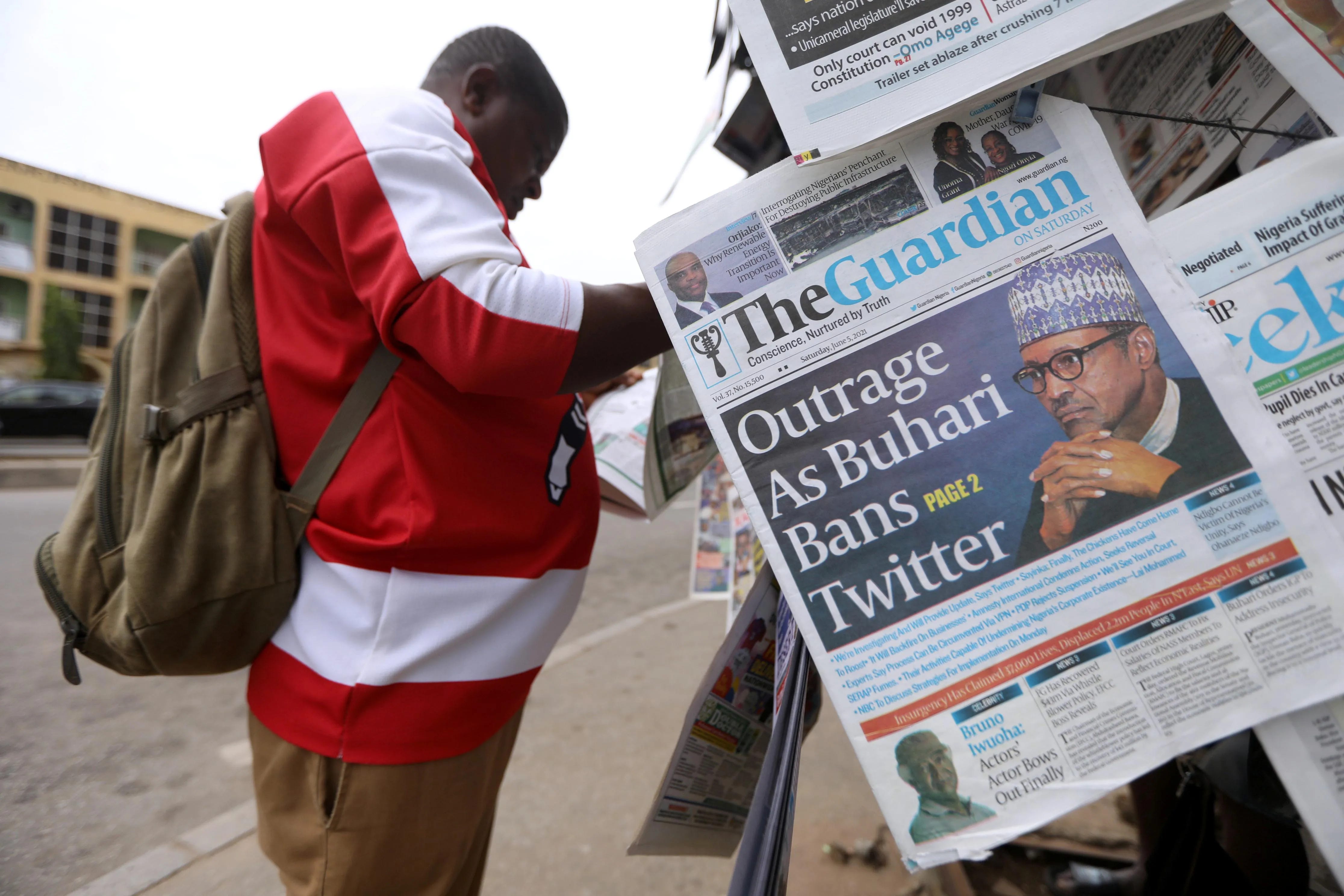
The 2027 elections do not carry the same raw energy as 2023. There is an incumbent widely expected to be returned, an opposition too fractured to mount a credible alternative, and an elite consolidated enough that the outcome, to most serious observers, already feels roughly visible. Fewer citizens seem drawn to the pageantry of a process that has not yet given them reason for confidence. The atmosphere is different, and it is affecting the people who write about it.
An ongoing battle I have not fully resolved is how to manage the looming fear of disillusionment and cynicism that sustained engagement with Nigerian politics produces. I worry it comes across in my writing. I fear it comes across in my speech. I wince when I have to perform some optimism I do not entirely feel. This cycle has only just begun, so what does that mean for the remaining months? And, if I maintain a career in this space, what does it look like over the long run? These are not rhetorical questions. They are the questions that sit underneath every piece written about a political moment whose direction appears already largely set.
Nigeria approaches its 2027 general elections amid conditions more hostile to serious analysis than at any previous point in its democratic history. This is not a Bellwether essay about who will win in 2027, or a post-mortem on 2023. It is an essay about the act of witnessing: what it means to document a political moment when the audience is fragmenting, the information environment is hostile to complexity, and the structural outcome is already roughly visible. The question is not whether to write. It is what writing is actually for.
The Permanent Campaign
In 1976, Patrick Caddell, a young pollster for then U.S President Jimmy Carter, wrote a memo titled ‘Initial Working Paper on Political Strategy’. This document identified a phenomenon that American politicians were reconciling with at the time, the idea of a ‘permanent campaign’. It argues that because governing was now evaluated alongside public approval, politicians and leaders were subjected to a continuing political campaign.
This idea is not particularly novel. In 1933, Franklin D. Roosevelt implemented a wide range of legislative and executive actions upon taking office as U.S. President amid the Great Depression. His work rate spanned the concept of a leader’s ‘first hundred days’, and has been used as a benchmark for presidents since. The idea of a leader hitting the ground running and performing has become standard, despite acknowledgements that leaders are often less experienced when they come into power.
The permanent campaign presumes an accountability loop. Leaders lead, an electorate evaluates, and the cycle corrects. But that loop requires two things Nigeria’s political history has repeatedly broken. One is a professional bureaucracy capable of measuring performance, and the other is an information environment in which citizens can distinguish what actually happened from what they were told happened. This is largely a symptom of Nigeria’s military regime and its legacy on society, which saw these two things systematically dismantled.
From 1966 to 1979, and then from 1983 to 1999, Nigeria was led by military regimes. Most officers were trained for command and security, and each successive regime weakened the professional civil service. As experienced civil servants were purged and retired, these governments became increasingly dependent on informal networks and patronage. Some military regimes were able to balance the need for technocratic expertise with their authoritarian rule, but for the most part, this created a relationship contract in which leaders were somewhat removed from governance and popular opinion.
Platform By Platform
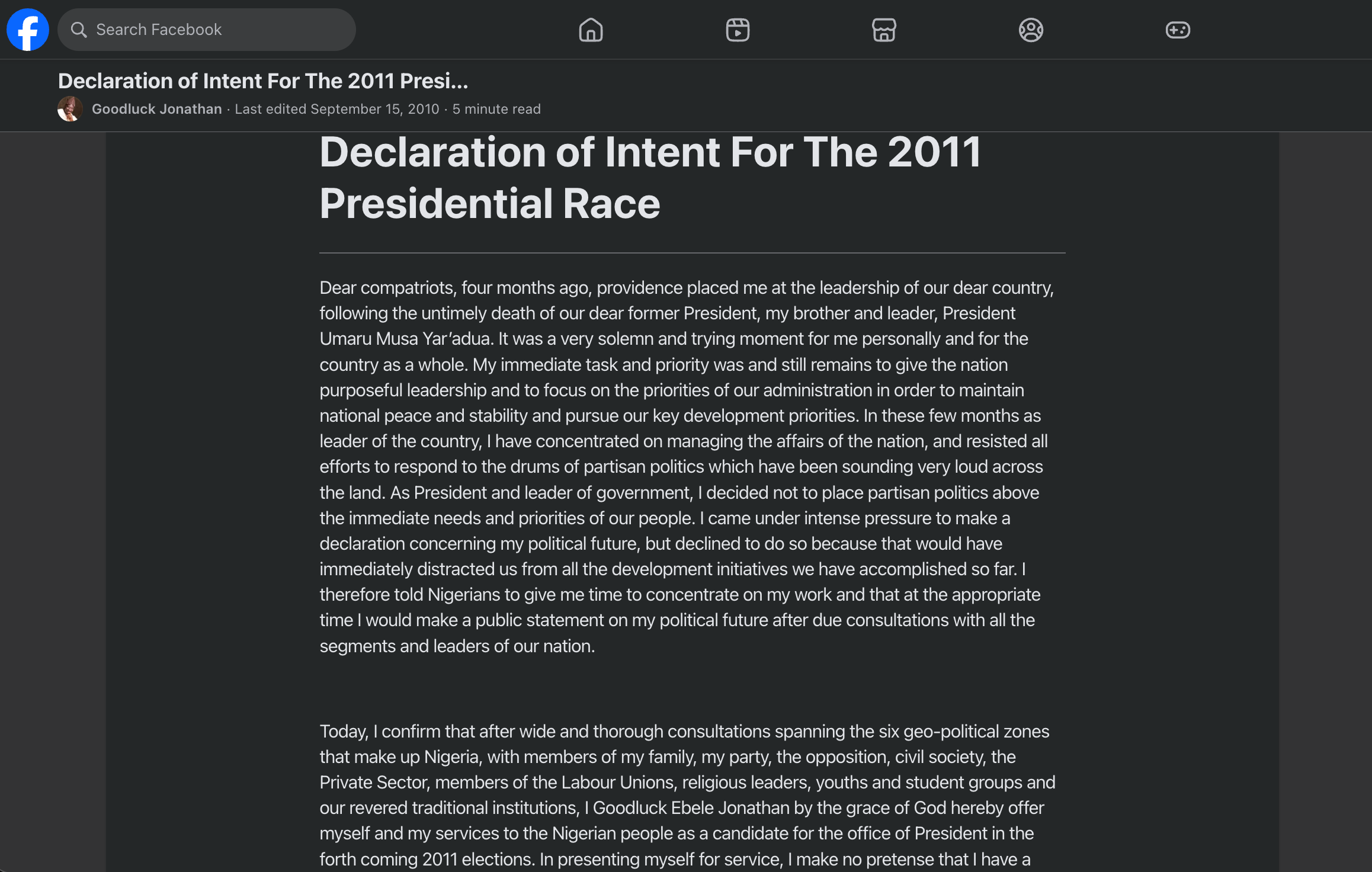
Widespread access to the internet has changed this, and not uniformly. Each Nigerian election since 2011 has been shaped by whichever platform was at the time reaching critical mass. Jonathan declared his candidacy on Facebook; 2011 became the Facebook election, the first-time citizens felt they were watching results in near real time. By 2015, it was Twitter, and the mood was different. It was sharper, more suspicious, more focused on outcomes than on personalities. Buhari’s win was tracked obsessively across feeds, and there were active efforts to expect and counter manipulation. In 2019, Instagram acquired a political function it was not quite designed for: the visual economy of candidacy, rallies, face time, and the aesthetics of power. At this point, almost every politician had a senior or special assistant on new media or photography. By 2023, TikTok had reorganised the campaign entirely. Those elections were short-form, decentralised, and genuinely grassroots in ways that neither party machinery nor the established commentariat had mapped.
2023 is especially adept because of how it shaped the outcomes of that election. Peter Obi’s Obidient movement was not built on press conferences or mass rallies, but on comment sections and shared video clips that older analytical frameworks struggled to process in time. What the pattern shows is not just that technology might mediate politics, but that each new platform changes what kind of political claims are true.
The question for 2027 is which platform rewards the most, and the early signs are troubling. The platform currently gaining the fastest ground among the relevant demographics is one that rewards virality above all else, and, in Nigerian political culture, virality has become indistinguishable from disinformation.
What does this mean? Well, at its least disruptive, it can be relatively harmless. It can be ‘parody’ or ‘satirical’ accounts reposting that footballers made fun of opponents who lost a Final. Or it can be attempts to associate some popular figures with some unnecessary news items. These can and should easily be subjected to cursory online searches to clarify what is going on. But, in some cases, it is not as easy to conclude. Disinformation about ethnicity-related campaign content, candidate-related rhetoric and even news about policies can be incendiary and lead to violence. And it is often hard to hold someone to account because we saw it on a WhatsApp group chat.
Nigerian politicians are not innocent of these actions. Many have and will use ethnicity, religion and region to divide and conquer in the coming elections. This will distract from the necessary and overdue conversations on economic and foreign policies, on strategies to address rising insecurity and even long-term plans for an impatient and worried young generation. They will weaponise this to market vote-trading practices that help create the illusion of a mandate. Some of these results might even be fraudulently inflated or deflated, depending on the needs of the parties involved. The cycle will continue because it serves those it needs to at any given time.
This is the structural condition the witness writes into. The permanent campaign, transplanted into a context without the accountability infrastructure it requires, produces something specific: an elaborate performance of democratic contest in which the broad outcome is ‘obvious’ to most ‘serious observers’ long before the votes are counted. Some politicians are genuinely trying to offer something different. But the architecture of Nigeria’s politics—the defection patterns, the patronage networks, the party financing, the electoral management—bends reliably toward a small set of possible outcomes. To write analytically about Nigerian politics in 2026 is to document, in careful detail, a system whose direction you can already roughly see. It requires a reckoning with what the writing is actually doing.
The Witness
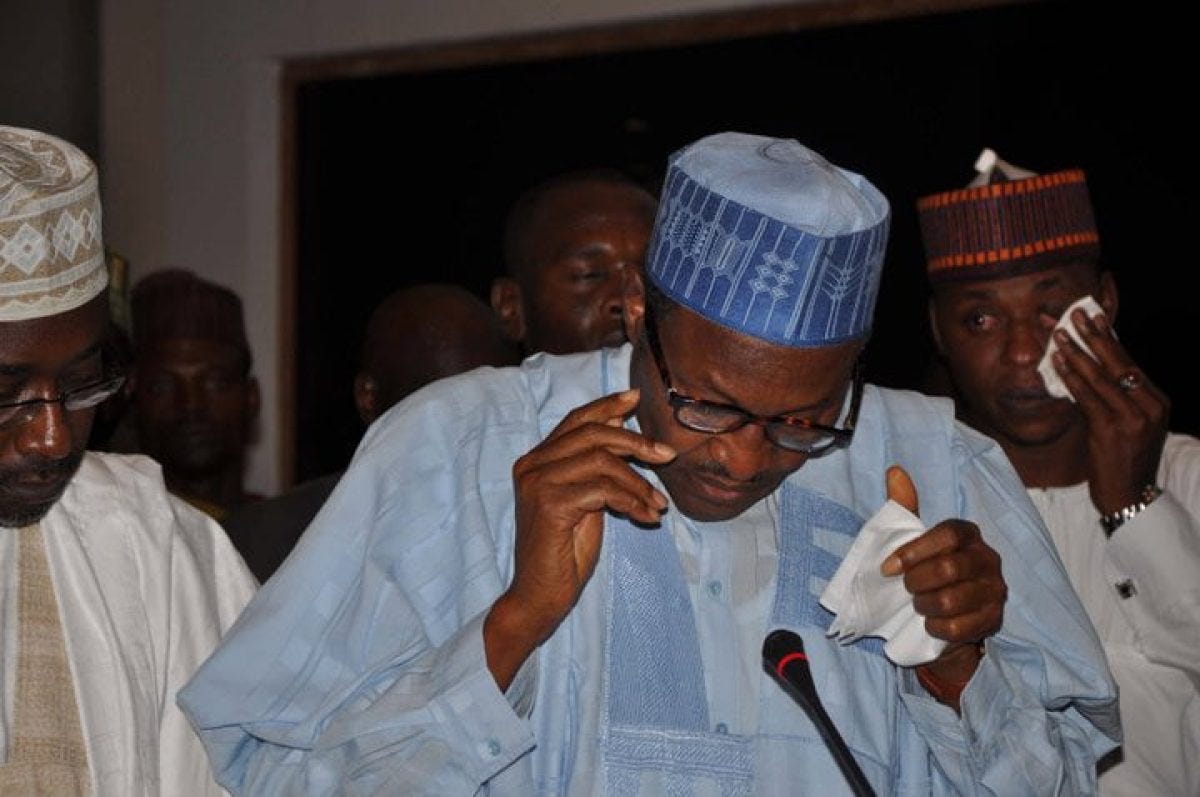
A Nigerian pastime is whinging about governance and complaining about leaders. The evolved, modern version is ranting and posting online. Many of us are experienced and seasoned; this does not require the expertise or experience that being published in a foreign publication often confers. But it does require introspection about the audience, especially when there is a divide between local and international audiences. For some, there is even a further bifurcation between those informed and those uninformed, often a misnomer for those with easy access to online arguments and those without.
There is a version of Nigerian political engagement that resembles football club loyalty, and it is worth being precise about how. It is not simply partisanship. It is the particular logic of the rival’s failure as its own category of win. When the candidate your group opposes performs poorly, this is registered not as national misfortune but as vindication. This can be seen in how Buharists highlighted Tinubu’s difficulties, Obidients circulated APC failings, and Atiku supporters watched Obi and Labour’s travails and laughed because they felt Obi was a spoiler in their bid for victory in 2023.
This is, to borrow from football, the pleasure of the derby result. It is doing serious damage to the information environment because it means that a significant portion of the audience for political analysis is not actually trying to understand what is happening. They are trying to confirm that the other side is losing.
These forms of loyalty are often unrequited and, in most cases, not even properly acknowledged. These are part of the audiences we write for today, but they are now being trained to filter information through the lens of support and opposition. Sadly, we no longer maintain a balanced media diet but are afflicted by the anaemic tendency to stick to a single source. We are either entirely angry or palatable, defensive or attacking, and worse, invested or switched off. And it is in this context that someone is meant to witness this moment.
This brings the question of how to write in this environment. The practical problem is not access to information; there is more of that than anyone can process, but the collapse of the ‘accepted’ shared ground on which analytical argument depends. A piece that does not confirm an existing view is not wrong, in the partisan reading; it is suspect. It is asking the reader to hold complexity at the exact moment the information environment has organised itself around simplification. Audiences are grouped into camps: those seeking validation, sceptics who have switched off, and an increasingly diaspora audience still unpacking its relationship with Nigeria. Writing across all of these simultaneously is not possible. But writing without acknowledging they all exist is a kind of dishonesty.
Most analysts would have scoffed at the level of support that Obi received in 2023. But most would have also ruled out a Buhari presidency in their lifetime after the 2011 elections. Fewer still would have held out hope for an opposition coalition; even fewer would have bet on a president outside the three main ethnicities; and, 16 years removed from his last elected office, a Tinubu presidency would have been possible only to the most die-hard devotees. Anyone who tells you with certainty that they know who Nigerians will contrive to hand the presidency to in 2031 is either mad or a soothsayer—and the latter group mostly resorts to running their own church.
The temptation, of course, is to stop. To find pockets of joy elsewhere, to japa, to let the situation demand attention from someone less tired of it. The problem is that disengagement is also a choice with consequences—for the writer and for the readers who have not yet checked out but are looking for reasons to do so. Every piece written carefully is, by example, an argument that careful writing is still possible. That is a thin justification. It is also, most days, enough.
The witness’s job, as we understand it, is not to tell people what to think. It is to do the slower work of establishing what actually happened, in enough structural detail that the reader can think more clearly about what is likely to happen next. This sounds modest. In practice, in this environment, it is the most contested act available. To say that the 2027 outcome is largely structurally determined is not defeatism; the strength of the ruling party is obvious from documented patterns of party financing, incumbency advantage, and electoral management. Likewise, to say that the Obidient movement revealed a genuine generational fracture that the established parties have not resolved is not cheerleading but simply a way of highlighting what six million votes told us in 2023. These claims will be received as partisan regardless. The witness writes them anyway, attributes them, shows the work, and accepts that this will not satisfy anyone whose primary need is confirmation. But they also do so because it helps provide greater self-awareness, which is the only way a society can actually self-govern.
Consider what the disinformation environment has already produced. A sitting president accused of being a clone. Another president’s voice was convincingly replicated and circulated as genuine. These are not fringe rumours that the evidence quickly corrected. They persisted, and a significant portion of the population continues to believe them. Every election cycle promises a crossroads; what we have instead is a roundabout, and each lap deposits another layer of sediment over what actually happened. The witness cannot stop the loop. The job is to keep recording what is in the sediment, carefully enough that someone who comes later can work out what was true. That is not a hopeful argument. It is an honest one. And in a country where the capacity to distinguish between the two has become a political act, honesty may be the only form of optimism still available.
__
Written by: Afolabi Adekaiyaoja
I loved reading this — it filled me with angst and hope all at the same time. I wonder, in your opinion, whether the continued siloing of groups — the skeptics and those seeking confirmation — will persist and weaken even the strongest witnesses ability to share truth and thorough analysis in hopes of a ready audience