
We Mistake Celebrity for Power
Have we appointed celebrities as necessary advocates, or are they filling the silence left by failing institutions?

Whenever injustice persists, people turn to celebrities. Someone with millions of followers has to condemn the government, call for justice, or boycott an event. Beneath this expectation, it’s assumed that fame gives a person’s voice great authority. Why do we treat celebrity as a source of moral and even political authority?
The latest episode is unfolding around renewed xenophobic violence in South Africa. There have been recurring attacks on foreign nationals in South Africa since the nationwide violence of 2008, where 11 Mozambicans, 5 Zimbabweans, 21 South Africans and 3 Somalis were killed. The current escalation, however, is driven by anti-immigration vigilante groups such as Operation Dudula and Jacinta Ngobese-Zuma-led March and March.
These groups scapegoat foreign nationals for South Africa’s economic woes and high crime rates, despite research showing that these problems are rooted in structural issues like high unemployment and inequality.
In April, cities like Pretoria, Johannesburg and Durban saw attacks on foreign nationals in the country, including refugees, asylum seekers, and documented and undocumented migrants. Among them were Nigerians. Nnaemeka Matthew and Andrew Ekpeyong died on 21 April while in the custody of South African law enforcement agencies.
Ghana has repatriated hundreds of its citizens and organised the return of a thousand more. According to an AFP tally, over 160,000 foreign nationals have fled the country in the last two months, including citizens of Zimbabwe, Malawi, Mozambique, Ghana, Kenya, Lesotho, Uganda and Nigeria.
Nigeria’s Ministry of Foreign Affairs says 1,490 citizens have been repatriated in seven batches between 10 June and mid-July, making it the largest evacuation since the 2019 riots, and at least 98 Nigerians have been killed in xenophobic attacks since 2022.
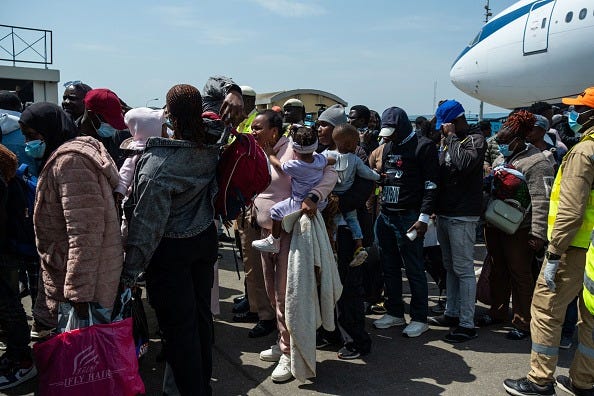
As news reports and videos of attacks against African migrants circulated online, outrage spread quickly among Nigerians. This wasn’t the first time. Earlier in the year, Lagos’ party organisers, PURPLE Lagos, were criticised for headlining South African acts DJ Maphorisa, Jazzwrld, and Thukuthela. The backlash it received did not lead to cancellations or public response from the organisers.
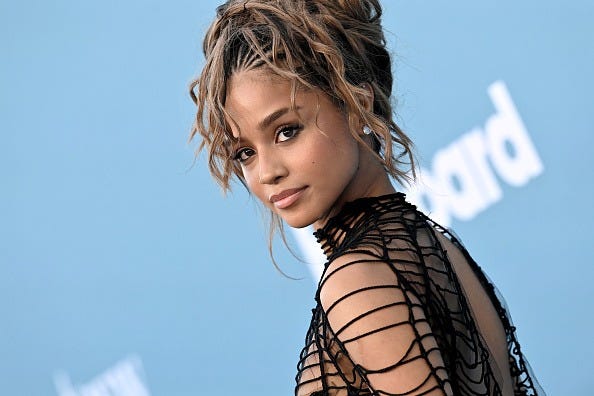
Tyla, who won the inaugural Grammy for Best African Music Performance in 2024, is the most recent target of this outrage. On 27 July, the South African singer had announced a Lagos stop on her A*POP world tour. It would have been her first headline concert in Nigeria, slotted for 22 December. In response, calls for her to cancel the show grew across social media, with many arguing that no South African artist should profit from Nigerian audiences while renewed xenophobic attacks against African migrants continued.
An online petition calling for her to be barred from Nigeria gathered thousands of signatures, and reported threats of physical harm if she flew into the country. Four days after the Lagos date appeared on the official tour website, it was removed from the schedule. Neither the singer nor her management have released statements addressing the incident.
For many Nigerians, it’s a quick win. It is difficult to escape the question of how reasonable it is for those whose people are killing and displacing foreign nationals to visit their country, make a profit, and widen their audience while remaining silent about the attacks.
Asking Celebrities to Save Us
It is understandable that Nigerians look to celebrities during moments of state failure. They can rouse millions with a post, a song or a public statement in ways that ordinary citizens often cannot. It’s a way of asking the world to look.
From Afrobeat’s resistance politics to contemporary protest music, musicians have often served as unofficial chroniclers of public sentiment. Music, collective memory and political expression tend to overlap; it makes it easier for the public to see them as voices of conscience. It’s also what sets them apart from every other sort of celebrity.
During the 2019 attacks, which strained relations between Nigeria and South Africa, artists like Tiwa Savage cancelled performances in South Africa in solidarity with victims; Burna Boy said he would not return to the country following the violence, setting a precedent Nigerians expect entertainers to follow.
A planned Africans Unite concert series featuring Burna Boy and Jidenna was cancelled over security concerns, Nigeria withdrew from the World Economic Forum on Africa, while South African-owned businesses including MTN and Shoprite became targets of retaliatory anger at home.
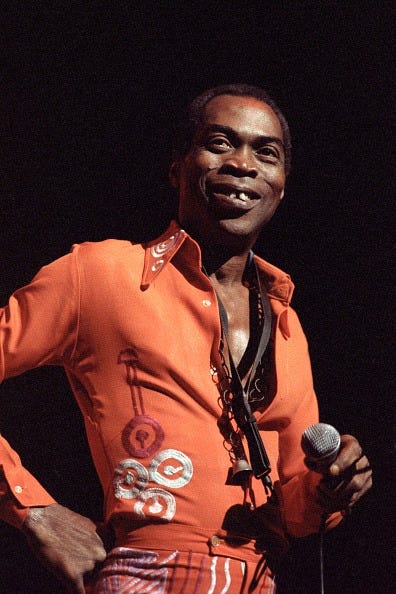
Post #ENDSARS, much has been written about the disappearance of political commentary from Nigerian music. The call back to that time is almost always Fela Anikulapo-Kuti, whose music was almost inseparable from his politics. Songs like Zombie and Sorrow, Tears and Blood chronicled state violence, while Coffin for Head of State responded to the 1977 Kalakuta Republic raid, an assault that ultimately led to the death of his mother, Funmilayo Ransome-Kuti.
The tradition continued through artists such as Eedris Abdulkareem, whose 2004 anthem Jaga Jaga became one of the defining political songs of the Fourth Republic, drawing criticism from former president Olusegun Obasanjo, who said it presented a negative image of the country.
This singular piece of popular culture compelled the highest levels of government to address it. But it did not necessarily produce structural change. Jaga Jaga remains an indictment of how Nigeria has been governed, but two decades later, poverty, unemployment, corruption and state neglect remain. A musician may persuade millions to care about police brutality, but cannot compel the government to reform the police if it does not want to.
Fela showed what celebrity courage looks like, but even his extraordinary influence could not dismantle military rule.
Fela accepted the cost that speaking truth to power often demands. Few artists are willing to make that bargain today. And even if they were, do today’s celebrities actually have the power we think they do?
All the attempts by Nigeria’s most politically engaged celebrities show the limits of their influence. Eedris Abdulkareem, Falz, Mr Macaroni, Charly Boy, Femi Kuti and Seun Kuti, among others, have spoken up and contributed to topical political issues. Major protests in Nigeria have seen celebrity involvement, most recently visible at the #ENDSARS and #OccupyNigeria protests.
They might top streaming charts and send the internet into a frenzy with a tweet or a photo, but has any of that attention ever translated into durable institutional pressure, legislative change, or sustained public action?
Even Banky W’s foray into politics proves this further: celebrity can open doors and command attention, but it does not, by itself, generate political power or guarantee meaningful change.
Political scientist Joseph Nye described this distinction as “soft power”, which sees the entertaining class shape behaviour and consumption through attraction, persuasion and culture in place of formal authority. Celebrities influence fashion, language, music, aspiration and public sentiment in their favour. Governments, on the other hand, wield institutional power. These are not interchangeable forms of influence.
The Burden of Celebrity Conscience
More and more, audiences expect entertainers not only to declare their values, but for those values to align with ours. The love, loyalty and support of fans make or mar a celebrity, and if they want to stay on that path of fame, the least they can do is say something about what is happening.
The celebrity is no longer defined by proximity to entertainment industries alone, but by the ability to shape attention. A rapper, influencer, athlete, or creator with millions of engaged followers can move a conversation faster than many established institutions. As such, we’ve seen red carpets, football pitches, award show performances and acceptance speeches in the West become platforms for speaking against oppression, corruption and injustice.
It’s also built on a complicated social exchange, where audiences provide attention, money and relevance in exchange for aspiration, humour and escape. The question is whether that collective investment creates an obligation beyond entertainment.
Nigeria’s celebrity ecosystem is built differently from Hollywood, a $10.8 billion industry with increasingly global ambitions. These days, a successful Nigerian musician is less likely to live in Surulere than in London, Atlanta or Los Angeles. In fact, we celebrate musicians when they “blow,” applaud online when they relocate, because the Nigerian dream is to leave. We see actors leave for careers abroad, even joining foreign institutions like the U.S. Army or Navy, most recently Tinsel actor Joseph Momodu. Success often means creating as much distance from Nigeria’s dysfunction as possible.
Success is no longer measured by domestic relevance but by Grammy nominations, streaming numbers and Billboard entries. The incentives of celebrity and activism are different. Where one path rewards with wealth and goodwill, the other threatens both.
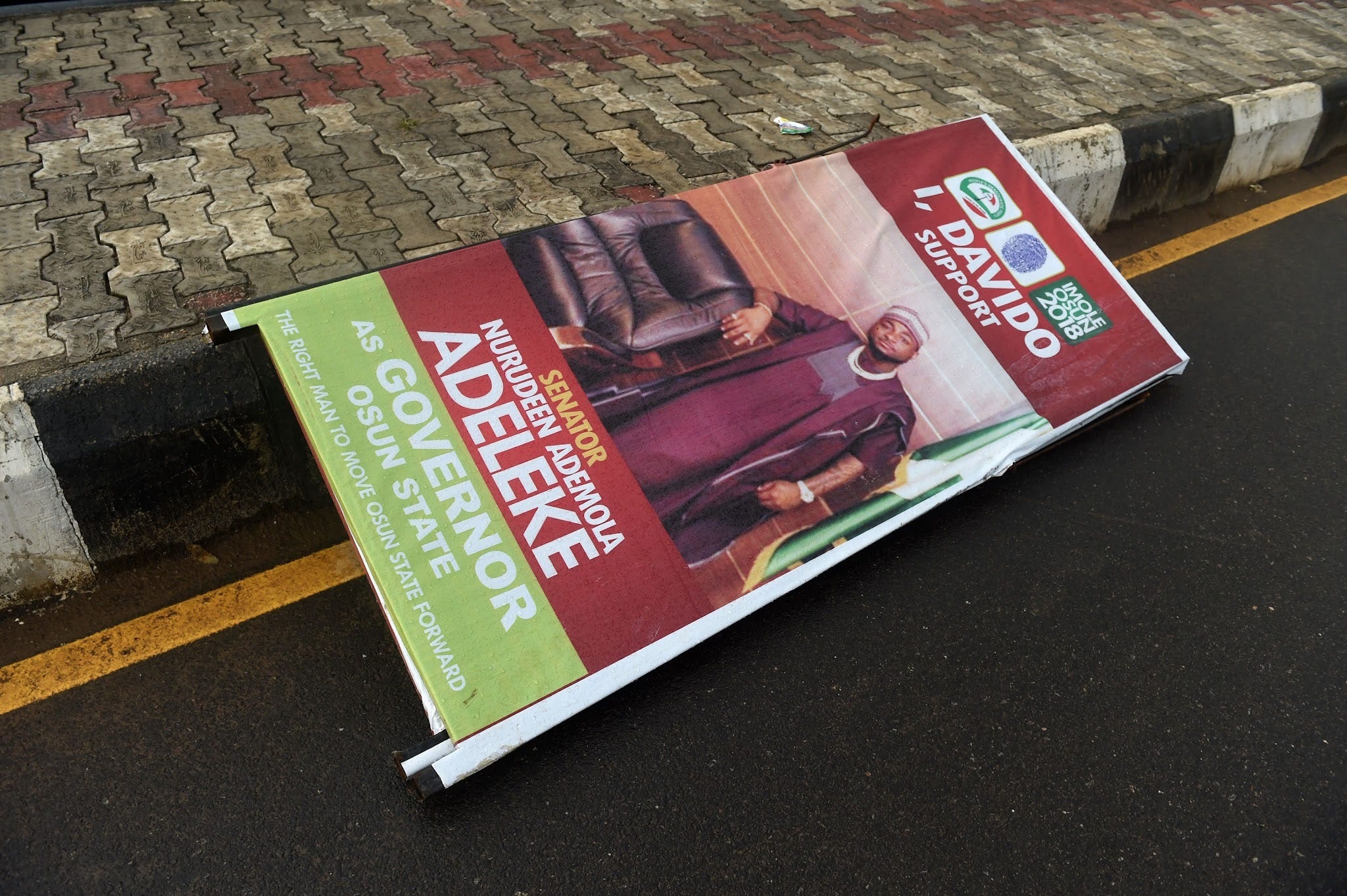
So when we ask Davido to condemn the political class (and he does), we overlook the fact that he comes from one of Nigeria’s wealthiest and most politically connected families. His success as a global Afrobeats star may be earned, but his world is inseparable from the establishment many Nigerians want challenged. Asking him to take on anti-elite politics ignores the reality that he is, in many ways, part of that elite.
The Wrong People
Nigeria’s politicians rarely respond to outrage, but when they do, it’s usually insulting or with responses that reveal the distance between power and citizens. In June, former senator and the current First Lady, Remi Tinubu, suggested that women, through government grants, start businesses such as frying akara, roasting corn and processing kuli-kuli. She also called on Afrobeats stars including Davido, Wizkid and Burna Boy to come together, establish a foundation and use their wealth to support citizens, as the demands on the government were overwhelming.
Our government, often insulated from this kind of pressure, does not see us, so we outsource moral leadership to entertainers, who are at least visible. It’s a crisis of accountability. Instead of confronting the institutions with the power to protect migrants, albeit with no guarantee of success, we focus on people who are easier to influence. It is easier to pressure Tyla into cancelling a concert than it is to pressure governments into protecting migrants.
Are Nigerians living in South Africa any safer? Has the South African government adopted a different position? Has diplomatic pressure intensified? Or has the public succeeded in having the singer alter her itinerary?
None of this means celebrities should never speak. When they choose to use their platforms against injustice, it matters. But we should stop treating their inaction or silence as the reason injustice persists. Nigeria’s problems have never been the result of too few celebrity tweets.
—
The Village
Big shout to ChiAmaka Dike, this piece would not exist without her getting a rant out of me. It is a Bellwether first of sorts, an opinion piece. Who would have thought?
I’d edited most of this piece before sending it in. Afolabi Adekaiyaoja immediately noticed that, accusing me of “holding back”. 70+ comments and multiple 3 am voice notes later, we arrived. We battled for the soul of this essay, and I couldn’t be more grateful that I have people willing to (further) ruin their sleep schedules just so I can leave rhetorical questions for you.