
All Politics (and Development) is Local
The answer to Nigeria's question of political decentralisation is not more states, but empowered cities.

On 13 June 2026, after 53 years, the New York Knicks won the NBA Championship. I cannot pretend to be a Knicks fan, though their shared fandom with famed American Arsenal supporters such as Spike Lee and Zohran Mamdani makes affiliation tempting. However, I was struck by how the city came alive and was unified around the achievement. People I know who knew nothing about the team sported orange-and-blue tops and belted iconic New York songs on their social media accounts because they felt drawn into the citywide euphoria. It reminded me of North London (some will say all of London, but I can be humble) turning red when Arsenal paraded their first championship trophy in 22 years. Sports play a big role in uniting people, but while we often assume it’s the nation, it is more often the city.
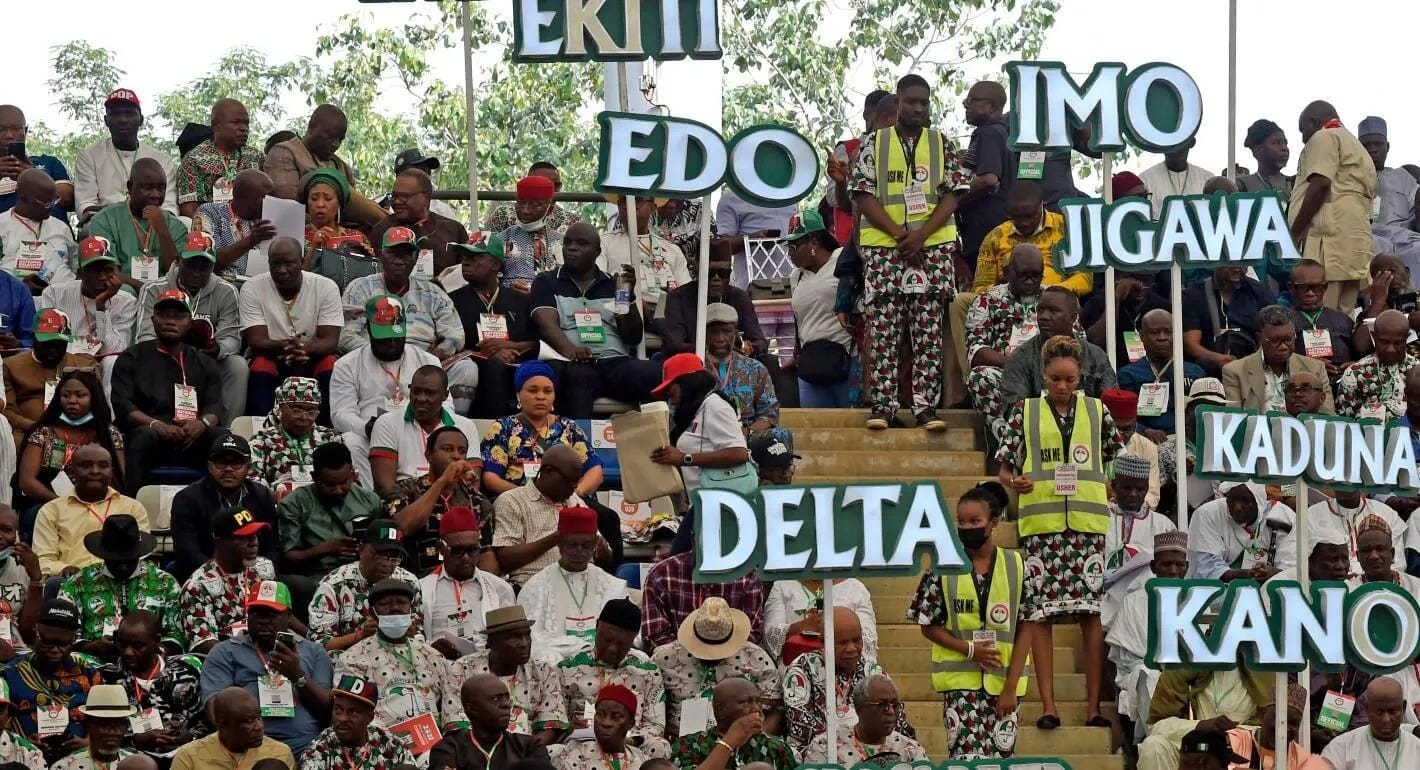
Nigerian politics and development metrics often preach the sentiment that ‘All politics is local’, but this usually refers to state-level politics and considerations. This is why local governance has often been poorly managed and why most citizens do not know their local government chairs or councillors. Ahead of the 2027 elections, some candidates have based their campaigns on state creation, believing it can lead to their election. The argument is that with direct resource allocation from oil and federal funds, they can ensure proper development is carried out. The truth, however, is that these assumptions are often flawed and overlook a simpler, more straightforward solution—cities, not states, are better vehicles for Nigeria’s political and socio-cultural development. This essay asks why Nigerian governance has spent six decades refusing to acknowledge the unifying role cities can play in politics and development.
Drawn, Not Born
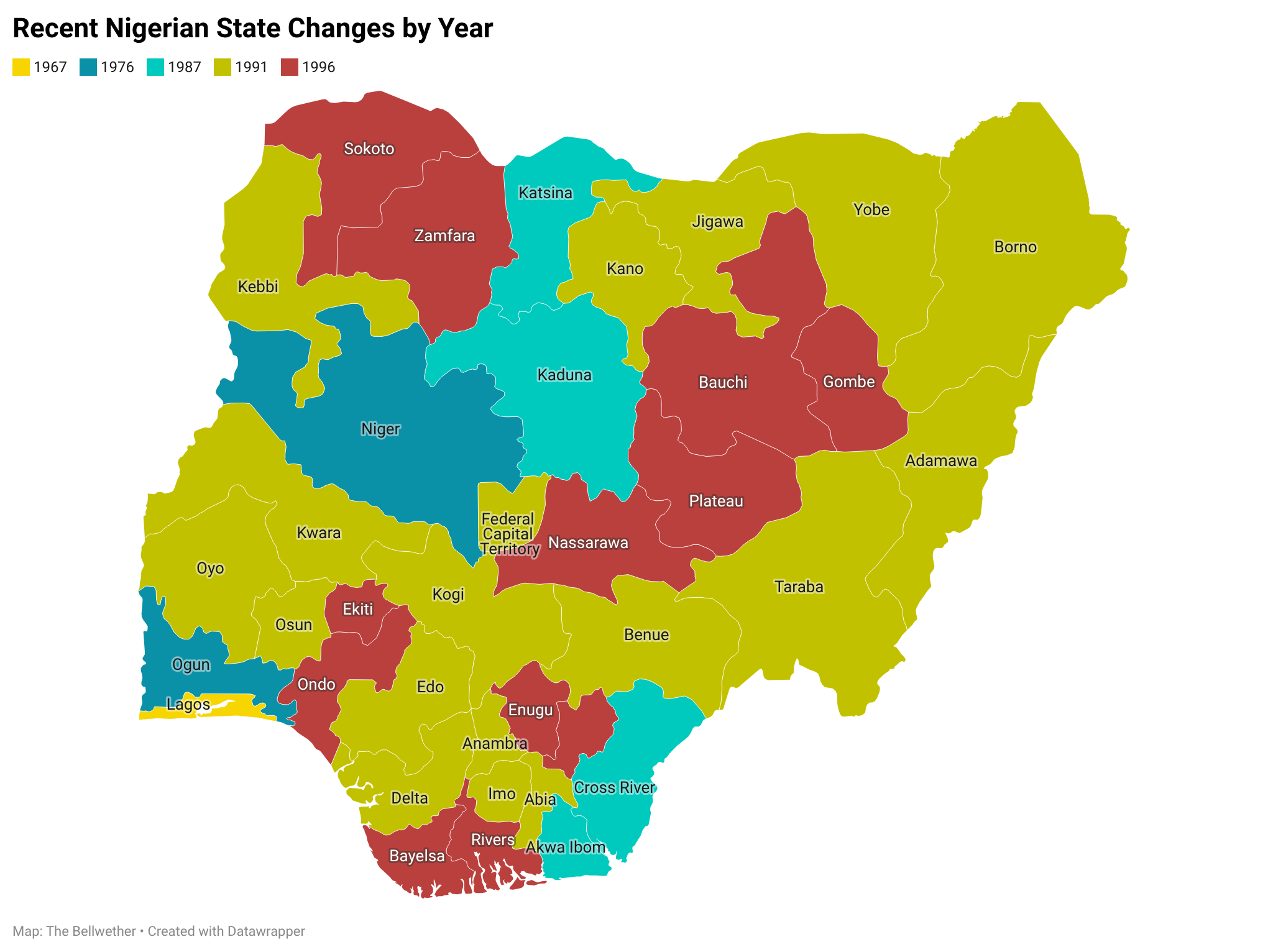
Nigeria’s state-creation saga has been widely covered and unpacked. Tellingly, the biggest issue with this arrangement is that these states were not created organically, but arbitrarily to fit into political narratives. If a military regime wanted to create a state for a new military governor or to allocate funds, it sought to ensure it maintained parity between the North and South. Even the last set of states created—Bayelsa, Ebonyi, Ekiti, Gombe, Nasarawa and Zamfara—reflect Nigeria’s geopolitical zones with one created from each area. But this also meant that some states were carved apart even if they had a clear community identity. For example, a citizen born in 1960 in the Eastern Region could have seen their ‘state of origin’ change to East-Central in 1967, Anambra in 1976, Enugu in 1991, and then Ebonyi in 1996. It’s hard to maintain these bonds when these changes have been rife.
States were meant to bring governance closer to the people, but they have instead cannibalised the third tier—local governments—leaving them defunded, subordinated and highly dysfunctional. The local government has become an extension of a governor’s political machinery rather than a unit of actual service delivery. For any evidence, look no further than the firm grip most governors have had on local government chair elections. Proper development requires proper devolution, and proper governance benefits from actual devotion to the area. This allows people to become more invested and more involved in ensuring its success. The solution has become more evident in recent years.
The Ground Beneath
There are theoretical arguments for city-led development. Jane Jacobs, in Cities and the Wealth of Nations (1984), argued that cities, not nation-states, are the real basic units of macroeconomic life. Economic expansion, she showed, is driven by what she called “import replacement”: the organic process by which cities begin to produce locally what they previously imported, building skills, infrastructure, and productive capacity from the ground up. The nation-state is too large and too internally diverse to be the unit at which this process operates, because it applies a single monetary and fiscal policy to what are in fact multiple city economies at different stages of development. Nigeria’s system similarly treats Lagos and Zamfara as instances of the same economic problem, applies the same allocation formula to both, and wonders why neither develops as it should.
Edward Glaeser‘s Triumph of the City (2011) extends the same insight into human capital: cities generate what economists call ‘spillovers’—the economic benefits of density, proximity, and the unplanned collision of skilled people—that rural areas and administrative units cannot replicate by decree. What Nigeria’s state architecture does, systematically, is route the revenue generated by city spillovers away from the cities that produced them, to states that did not.
While Nigeria was building states, its cities were generating coherent, functional, self-reinforcing identities that people actually organised their lives around. Lagos is the clearest example, because it predates every administrative boundary drawn around it—it was a settlement before it was a colony, a colony before it was a region, and a region before it was a state. Its identity as a commercial, cosmopolitan, and culturally influential city does not derive from any government’s decision to designate it as such; it derives from the accumulated decisions of millions of people who built lives there over generations. The city’s identity is large enough to absorb competing identities, which is why there is such vehement opposition to tying it to a single ethnicity.
Another example is Kano, which has been a centre of commerce, Islamic scholarship, and political organisation for centuries. Its character as a city, from its markets to its relationship with the emirate system, predates the colonial boundary, the Northern region, and now Kano State. Government debates about governance often reflect an urban-rural divide, even when they are not framed that way. This shows that the city is the actual political community, and the wider state was simply imposed around it.
Former regional capitals such as Enugu, Port Harcourt, Kaduna, and Calabar also tell the same story. These administrative centres developed strong colonial-era identities, became fixtures in Nigerian history and eventually shaped the territories around them. The boundaries have always been augmented around the city, but have never fully subsumed or replaced it. City politics and the dance with the rural are accidents of geography and not strictly by design.
These cities have now become subservient to state bureaucracies that are not accountable to their citizens, but to the governor. Nigeria can and should actively leverage these cities to build these economies and mobilise communal sentiments. Reform could begin by strengthening local government autonomy and by considering mayoralties for cities that can and should be further developed. Interestingly, this is not a novel idea.
Pre-independent Nigeria had functional mayoral systems in cities like Lagos and Enugu, with the latter notably electing a non-Igbo mayor, Umaru Altine, in 1952. He was returned to office in 1955 and served until 1958. The city’s electoral logic, of looking for someone who could govern Enugu well and understood its local economy and administration, overrode the ethnic calculations that now govern Nigerian politics. Nigerian cities produced civic identities that could elect strangers, but the states built later around manufactured identities have been unable to replicate this.
This emerged from strong town councils that represented different constituencies and helped ensure strong governance and accountability. In a situation where resources from prominent cities are often concentrated to subsidise other parts of the state, this can be reversed to allow cities to build and organically develop their own economic infrastructure, while also enabling other resources to actively build elsewhere in the state.
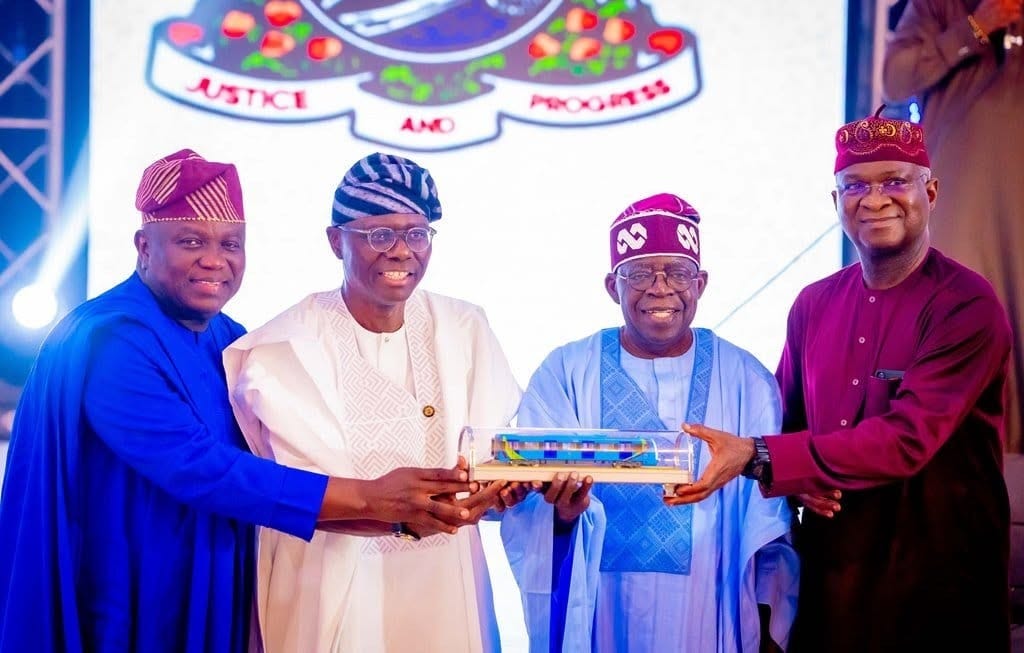
The case for city governance is not automatically a case for better governance. The same patron-client dynamics that distort Nigerian states can and do operate at the city level. Lagos under Bola Tinubu between 1999 and 2007 demonstrated what city-level machine politics looks like at its most concentrated: a governor who used Lagos’s exceptional internally generated revenue to build a political operation that outlasted his tenure, penetrated federal politics, and eventually took him to the presidency. During the 2023 elections, this structure was weaponised through discourse associating Lagos with a dominant ethnic group. That is city power, but it is not city governance in the sense this essay means.
Abuja offers the opposite cautionary tale: a purpose-built capital designed from scratch as an administrative centre with no organic city identity to anchor it. It is only just beginning to feel more organic as a city, but it is remains beholden to diverse influential stakeholders, such as the indigenous Gbagyi communities, who repeatedly complain when not considered for local positions; citizens who have migrated for work are more invested in their ‘home states’; and a minister who owes no loyalty to the capital works to endear themselves solely to their appointer—the president. Abuja is dealing with city power but is unable to exercise city governance.
The argument for city-led development is that the accountability that cities offer is structural. A city government answerable to the people who actually live, work, and pay taxes in that city is harder to capture entirely than a state government whose primary revenue source is a federal allocation formula designed by people who are not accountable to its recipients. It means there is a fast, clear feedback loop that makes cities work in a way that a cumbersome federal and state bureaucracy does not appear to have.
It also helps to address some of the arguments in the urban-rural divide binary, especially since not all citizens readily identify or live in a city. Much of Nigeria, and indeed the continent, has strong communal and ancestral ties to more rural enclaves than larger cities. This could seem like a case for elite-driven support to these structures, at the expense of rural development. But this is why city-led development is a tool, and not the only approach for actual national growth. It does not mean villages and hamlets are completely ignored, but it allows for federal or state focus on these areas, while cities build themselves. To go back to the Pentecostal church analogy from the Machinery of Ethnicity, in time, parishes grow large enough to plant others. Cities can help catalyse or establish functional developments in surrounding regions.
The Machinery of Ethnicity

The 2023 elections split Nigeria along its most familiar lines, ethnicity and religion, with each side claiming that its candidate represented the country’s diversity. Every argument about who should lead was, at bottom, an argument about where they were from and what they believed. But the last time Nigeria held a genuinely competitive presidential ele…
The current instinct is to create more states, but this often only creates a new metropolitan area and then creates new minorities and agitations that lead to the quest for…more states. The actual solution is not to create more states but to reform local-level governance and management to properly address grievances and foster accountability. It means situating city management within the current tiers of governance in a way that helps build accountability at the local government level, while absolving state governments of the need to focus on urban areas people are already familiar with. It also allows a new generation of citizens to feel more invested and to really identify with different areas in the country in ways that older Nigerians do not.
Rep Your City
The 2026 World Cup offers a useful, if uncomfortable, comparative frame. FIFA did not negotiate hosting agreements with states; it did with cities. New York Mayor Zohran Mamdani leveraged the city’s clout to secure discounted tickets for local residents. Chicago and Montreal declined to host matches altogether, not because they lacked stadiums or a fan base, but because their governance structures enabled them to calculate what the terms would cost, and their fiscal independence allowed them to act on that assessment.
Chicago can do this because it has an elected mayor accountable to city residents, the power to levy its own taxes, and institutional independence from the Illinois state government. Nigerian cities have none of these things. A Nigerian city cannot decline FIFA’s terms; it cannot accept them either. It has no seat at the table. Benjamin Barber, in If Mayors Ruled the World (2013), argued that cities share qualities—pragmatism, civic trust, indifference to ideological posturing—that make them structurally better at solving the problems that nation-states produce but cannot fix. His point was not that mayors are wiser than presidents, but that they are accountable to a constituency that exists in a specific place, with specific infrastructure and specific grievances. The World Cup host city framework illustrates exactly this: New York’s mayor is negotiating ticket prices because he is answerable to New Yorkers. A Nigerian governor negotiating a World Cup hosting deal would be answerable, primarily, to the federal allocation formula and the political patrons who got him elected.
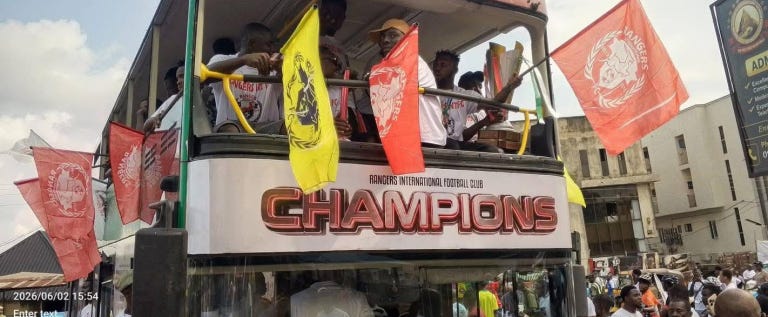
If we go back to the original analogy of the Knicks and Arsenal being victorious, Nigeria’s cities have the same cache that its states will never have. Nigeria’s football clubs also mirror this—its last African club champions were Enyimba of Aba, and the name is a nickname of the city itself. State-branded clubs have seldom held as much appeal or even ‘owned the streets’ as in the era when cities boasted clubs; those with active followership now also embrace their cities and hope to extend across the state. It is for the same reason that the Nigerian National Sports Festival, the country’s flagship multi-sport competition, held in the name of national unity, generates almost no national conversation. The readers of this essay, who follow Nigerian politics closely enough to have reached this paragraph, are unlikely to know which state is hosting the next edition or which topped the medals table at the last one. The answer is at the bottom of this piece; the fact that it requires a footnote is itself the argument.
But there is a cultural cachet and argument with how people from cities like Aba, Benin City, Calabar, Enugu, Ibadan, Jos, Kaduna, Kano, Maiduguri, Port Harcourt, Warri, and Lagos actively promote and defend their city’s bragging rights. It is in music and films, in literature and activities. Cultural moments point to Nigerian cities in ways that even artificial capitals like Asaba cannot match. People do not ‘rep’ their states, but they will for their city.
The empirical record confirms what the structural argument predicts. A landmark 2017 World Bank report, Africa’s Cities: Opening Doors to the World, found that African cities are ‘closed to the world’. They trade comparatively little with the global economy and are held back by institutional constraints, opaque land markets, and infrastructure bottlenecks. These are not natural conditions but the direct product of governance arrangements. The report identified the fragmentation of urban authority between national, state, and local tiers as a primary constraint on city productivity: when no single institution is responsible for the city as a whole, and when revenue flows upward to tiers that are not accountable to city residents, the investments that make cities productive do not get made. For a vivid example, neither Nigeria’s commercial nor its political capital has a competitively functional public transport system. Lagos generates a disproportionate share of Nigeria’s non-oil tax revenue and is simultaneously governed by a state bureaucracy responsible for Epe, Badagry, and Ikorodu as well, places with entirely different infrastructure needs and economic profiles.
The city subsidises the state, but the state governs the city. The city has no institutional voice of its own, and the data shows exactly what that arrangement produces: a megacity that punches well below its economic weight because its governance structure is designed to extract from it rather than invest in it.
Whose Land Is It Anyway?
The organic city is, in the end, ungovernable. It cannot be owned by the people who would govern it, because nobody made it. Lagos was not granted its identity by a military decree. Kano did not become a centre of commerce because a constitutional provision said so. The density, loyalty, and cultural productivity that Nigerian cities generate are products of accumulated human decisions over generations and precede every administrative boundary drawn around them. That is exactly why the political class finds cities threatening and exactly why the reform that would actually change Nigeria’s development trajectory has never been attempted.
The opportunity remains for Nigeria to build governance around the national identities that already exist, rather than around the identities it has spent six decades trying to manufacture. The irony is that Nigerian cities do more than anything else to forge legitimacy and a national identity. After all, for people to feel wedded to such cities, they must feel deeply about the entity it is a part of. The way to cater to people is not to create new states; it is to empower existing cities to provide the economic and political safety and accountability that people clearly want.
The reason it has not is not ignorance, because Nigeria’s political class understands perfectly well that cities are the real units of economic and social life. The reason is interest, driven by governing coalitions and economic allocations. A new state creates a new governor, legislature, bureaucracy, and federal character calculations. This new tier of political employment will be distributed among the people who lobbied for the state’s creation and will eventually result in the marginalisation of those unable to break into this new governing coalition. The existing states, for all their dysfunction, serve the class that controls them. Cities threaten that arrangement not because they are more efficient, though they are, but because nobody drew them.
As ‘problematic’ as this statement might be, no politician created Lagos, and no governor invented Kano. The organic city has a life of its own, formed by groups of people who have chosen to live there and united by a common interest that close proximity and city infrastructure afford. This means cities owe their existence to no single individual, so they are not answerable to any single person and therefore cannot be owned. That is precisely what makes it ungovernable under the current arrangement. But it is precisely what makes governing it, genuinely, the only reform that would actually change anything.
--
Written by Afolabi Adekaiyaoja
Edited by Seyi Adedoyin and ChiAmaka Dike
P.S – Enugu is expected to host the games later this year. Delta topped the last games in Ogun.
Brilliant piece. Well written
this was a refreshing read. i appreciate your perspective, truly. in all of this, i couldn't help wondering what the purpose of the local government then is, would be or could become if redefined strategically. because of the people-influenced nature of cities, arguments about where they start and end abound. with Abuja for instance, parts of Nasarawa are argued to be "still Abuja", whereas in Jos, the government's definition of the Jos metropolis exceeds the masses'. trust our country people to turn the mayor position into something you would not have anticipated--just another opportunity to disregard democracy and all that it is. long talk just to say your essay got me thinking thoughts of moves towards decentralization of power, and the need for less emphasis on ethnic factors in considerations for leadership positions. a man from Anambra who grew up in my hometown in Benue no doubt understands the terrain, the people and their needs better than I who grew up in Jos, just as I understand Jos better than an individual born and raised in Lagos whose certified LGA is the one I've lived my whole life in. i'm imagining instead LGA chairpersons accountable to the people, Governors accountable to the house of reps (which in turn caters to the people), and a presidency working international relations, and understanding the reports of the governors and their people just enough to represent them globally. don't wake me up