
The Rational Surrender
This is how the offices built to make the president effective became the measure of what the state cannot do

In December 2019, retired Major-General Babagana Monguno, then National Security Adviser, sent a confidential memo to President Muhammadu Buhari about his Chief of Staff, Abba Kyari. The memo, which became public in February 2020, accused Kyari of “unwarranted meddlesomeness”. Reportedly, Kyari had been convening and chairing meetings with the heads of defence, security, and intelligence agencies that should ordinarily have been organised by Monguno.
This was not the first time Abba Kyari’s influence had stretched into purviews beyond his control. Notably, his clash with Winifred Oyo-Ita, former Head of the Civil Service, involved the posting and retirement of permanent secretaries—a responsibility Oyo-Ita had as Head of the Civil Service. An investigation led to her retirement and removal from the administration. Neither Monguno nor Oyo-Ita were able to restrain Kyari’s excesses. Likewise, we are left only with anecdotes and thoughts about whether Buhari depended too much on him, or whether he was a ‘plant’ of the shadowy cabal that ran the government. In any case, Kyari’s influence could not outrun death when he passed on due to complications from the COVID-19 pandemic.
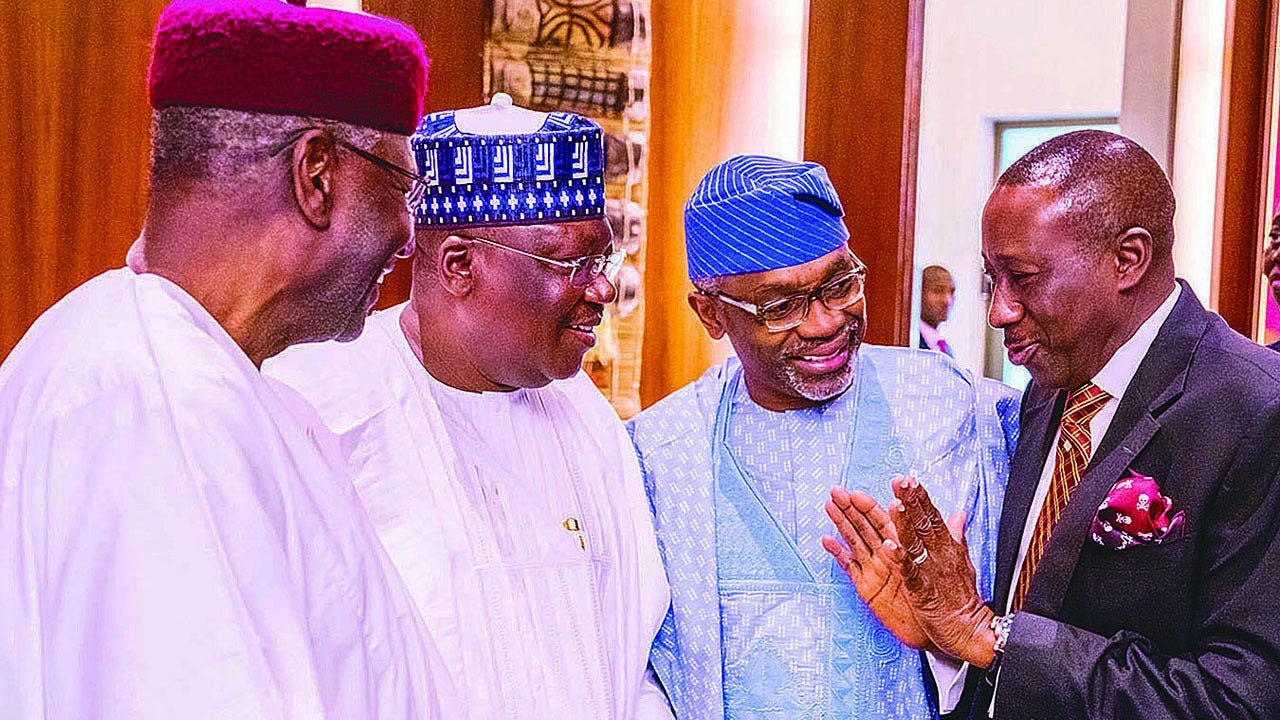
This is why President Bola Tinubu’s selection of Femi Gbajabiamila as his Chief of Staff was closely watched. To further beef up his senior team, Tinubu picked Nuhu Ribadu, a retired Assistant Inspector-General of police, former chair of the Economic and Financial Crimes Commission (EFCC), perennial Adamawa gubernatorial candidate, and 2011 presidential candidate, as his National Security Adviser. Finally, George Akume, a former governor, senator and minister, was named as Secretary to the Government of the Federation (SGF).
Comparatively, when Abdullahi Mohammed died on 5 November 2025, most obituaries reverted to a dated, black-and-white picture from his military days, and besides Tinubu and former President Olusegun Obasanjo, most tributes came from Kwara State, where he was from and called home. But Mohammed was no ordinary Nigerian—he was a military governor, the first director-general of the National Security Organisation, National Security Adviser to Abdulsalam Abubakar, and was chief of staff to Presidents Obasanjo and Yar’Adua.
These three positions serve at the president’s pleasure—without the need for Senate consent—and can wield as much power as a president allows. Previous occupants have been associated mostly with technocratic performance, but Tinubu’s have been tied to political interference. Gbajabiamila was reportedly in the frame to become Lagos Governor, and his office signed the memo conveying presidential approval for the ₦3 billion COVID-19 Fund release that became entangled in the scandals at Betta Edu’s Ministry of Humanitarian Affairs; he was also reported to have served as her referee during her Senate screening. Akume has been having run-ins with his home state governor and erstwhile protégé, Hyacinth Alia. Ribadu outmanoeuvred Adamawa Governor Umaru Fintiri to ensure his preferred candidate, Ahmadu Tijjani Galadima, emerged as the party’s nominee for governor in 2027. The impression given is less of key administrators and more of empowered political operators.
The standard reading of this arrangement is the capture of an administrative space by political actors. This also gives the impression that this ‘encroachment’ makes governance vulnerable to challenges arising from partisan politics, especially when identity plays a key role. But the more uncomfortable argument is that these offices have not been captured but have adapted to the way Nigerian governance works.
Every administration since 1999 has made these concessions for different reasons and with the same consequences. The sharper point is that this may not be dysfunction at all. These offices were built to make the president effective; in political hands, they often are. The irony is that their effectiveness now runs through partisan weight rather than technical competence—and the better they work this way, the less anyone asks what they were built for.
The Opening Balance
Understanding the different roles and their nuanced positions also involves understanding how Nigeria’s governance has evolved. During the parliamentary era, the prime minister had an aide who functioned as cabinet secretary to the Federal Executive Council and was the senior civil servant coordinating government business. This reflected an era when a robust civil service handled implementation while the political class dealt with crafting policy. Any need for security advice was handled by the relevant cabinet ministries. The nearest thing to a Chief of Staff was a principal parliamentary secretary to the prime minister, but even then, it would be a junior party member responsible for liaising between the prime minister and his members of parliament. Ironically, under Prime Minister Tafawa Balewa, this role was held by Shehu Shagari, who would later become president in 1979.
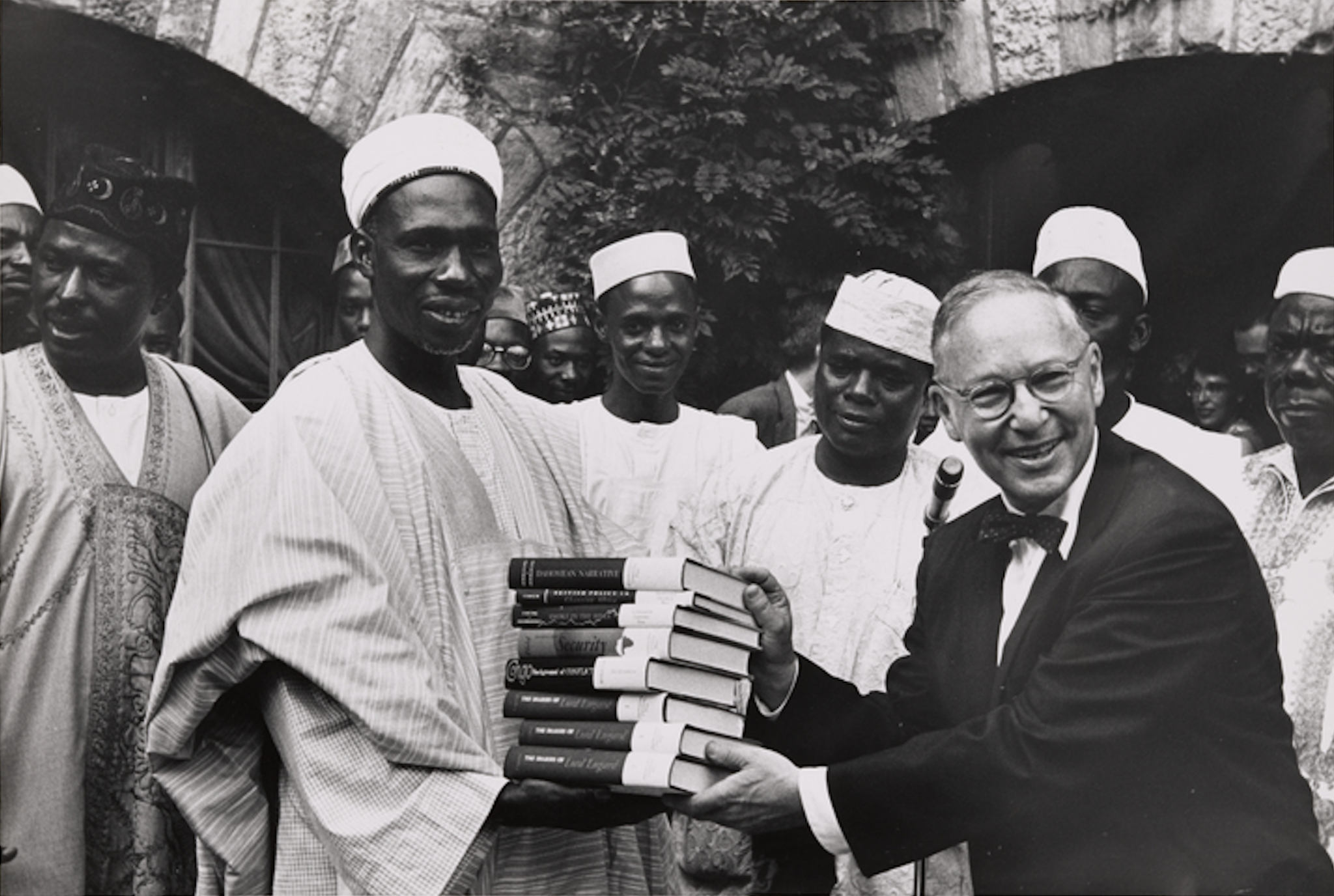
The military era led to a formal demarcation of roles. Military leaders were less experienced in governance and were initially reluctant to admit it. This meant that only senior civil servants were appointed to the increasingly expansive SGF role, and it was less political and more so reflected their seniority within the civil service. To buttress this point, from 1961 to 1986, spanning eight regimes or administrations, every SGF was concurrently Head of Civil Service.
This consolidation was necessary because Nigeria originally had leaders who were chosen by compromise. Balewa emerged after Ahmadu Bello, leader of the majority party, refused to lead his party in Lagos. Aguiyi-Ironsi took power accidentally following the January 1966 coup; Gowon was named because he was a senior northern officer and, conveniently, a Christian; Murtala was chosen after long, arduous meetings with the 1975 coup plotters; and Obasanjo was his deputy, who was given power after Murtala’s death. Even Shagari originally wanted to be a senator before he was convinced to run for president, and Buhari emerged as leader after coupists carried out the grunt work. Babangida was the first to want the top role and get it, and he ushered in an era of leaders who prepared for power and represented informal ‘governing coalitions’. Also, by this time, the senior crop of military leaders were experienced hands from the Murtala-Obasanjo and Buhari eras. And they were prepared to ensure they could really leverage this experience.
This led to Babangida’s Decree 43, which enacted Civil Service Reforms. The decree sought to strengthen political control over the bureaucracy and reduce the influence of powerful permanent secretaries. It also meant that military officers, who often doubled as ministers, would have greater oversight and direct authority over their ministries, and that a direct chain of command would run from the presidency to the ministries. These reforms were widely panned because they weakened the civil service’s neutrality and made it overly politicised. Later reforms would establish a clear distinction between an SGF, who handled government policy and cabinet business, and a Head of Civil Service, who managed career civil servants.
Babangida’s reforms also affected the security structure that had been expanded after Murtala’s death in 1976. The National Security Organisation had become a powerful security structure, but after Babangida divided it into three successor organisations, a coordinating security entity became necessary. The original unit for military intelligence could play this role, but a civilian-directed one would become necessary once the transition to democracy was complete. The presidency’s oversight of the civil service and security affairs meant that these principal aides on these topics would be key to the presidency’s functioning. When Obasanjo returned to office in 1999, his administration would have to reconcile a civil service used to a singular non-partisan structure, a security structure reeling from decades of coup-prone intelligence issues and a political class desperate for relevance and control where necessary. This would have been a tall order for any government.
Adjusted for Inflation
The 1999 transition inherited this architecture and had to navigate a return to democracy. To navigate this, Obasanjo picked Ufot Ekaette, a retired senior civil servant, as SGF ostensibly because he could help manage the tenuous transition. For NSA, he returned to Aliyu Mohammed Gusau, a retired general and intelligence expert who could help quash coup talk and manage intelligence. For Chief of Staff, he picked Abdullahi Mohammed, whose experience would prove invaluable in managing the Villa. Most of the political and partisan efforts were handled separately from governance structures. Obasanjo would wield the axe over his party chairs, but largely left his three intact—Gusau was the only one who left, and that was to run for president in 2007.
When Yar’Adua assumed office in 2007, he dismissed most of Obasanjo’s personnel but, interestingly, kept most of the technocrats who had been around that government. He appointed Ekaette to the cabinet to head the new Niger Delta Ministry, and retained both Mohammed as Chief of Staff and retired Major-General Aliyu Mukhtar, Gusau’s replacement as NSA. He even elevated Obasanjo’s Head of Civil Service, Yayale Ahmed, to SGF after firing Babagana Kingibe.
Jonathan’s elevation began the gradual encroachment of politicians into these roles, partly due to the lack of his own political coalition. He returned to Gusau as his first NSA and only later pivoted to Owoye A. Azazi. He also picked Mike Oghiadomhe, a former deputy governor, to serve as his Chief of Staff. But crucially, he named Anyim Pius Anyim, a former Senate president, as SGF. This image, of the former Number Three citizen in the country, in this role, changed the perception of the role as a mere secretary position.
Buhari’s picks were more uneven but also revealed the system’s limitations. Kyari’s credentials, as presented, were more technocratic—a former bank manager and media editor—but his control and extensive influence relied on his proximity to the president. Babachir David Lawal and Boss Mustapha, his SGFs, had been involved in partisan politics before assuming the role. Babagana Monguno, a retired general, was his NSA and was distinctly not associated with most political discussions. By the time Ibrahim Gambari, a former foreign minister and recognised diplomat, replaced Kyari, he was not seen as influential or as powerful as Kyari. It showed that technocracy has waned at the altar of political expediency.
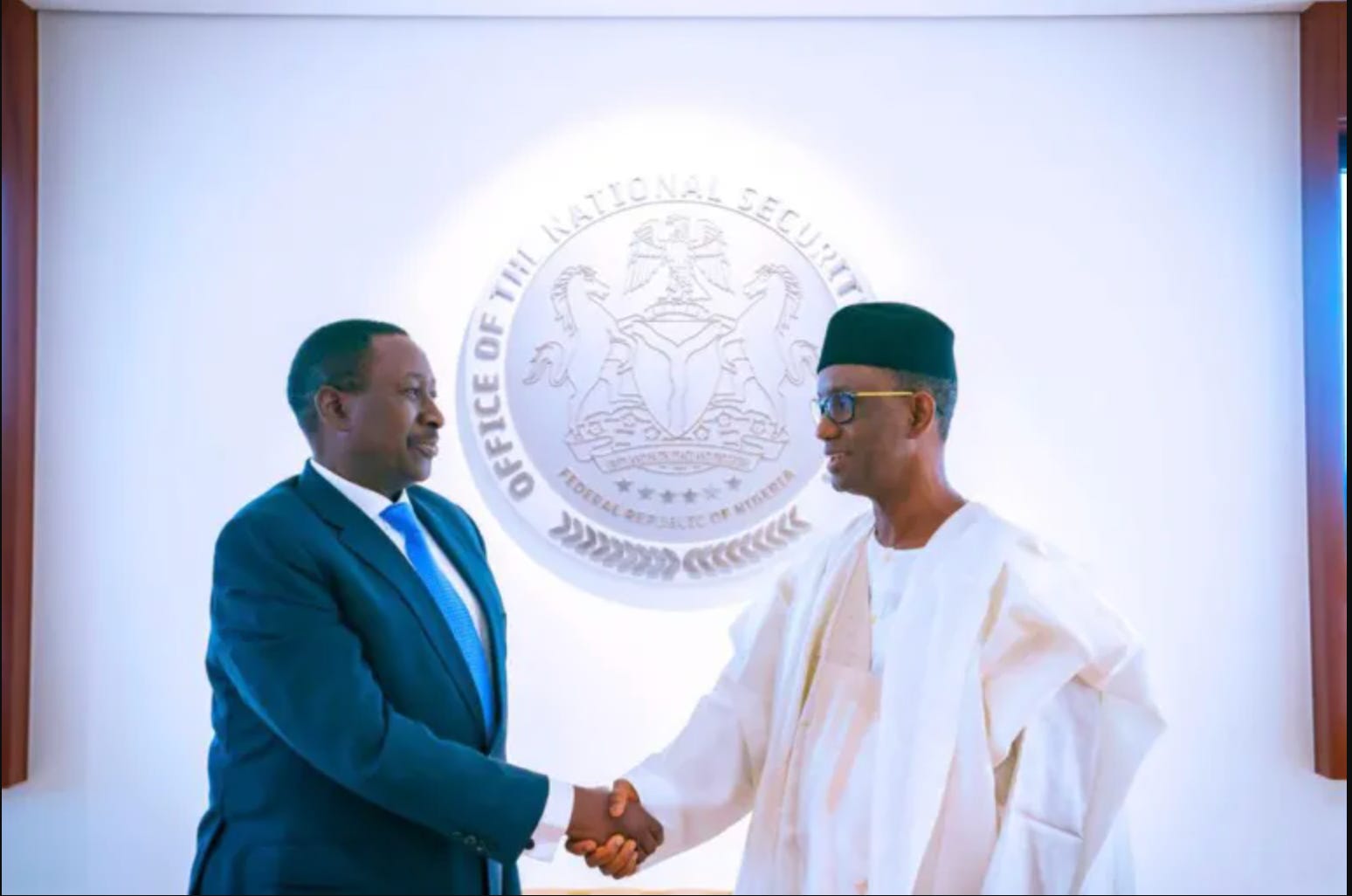
Tinubu’s appointments are the logical endpoint of a 25-year progression that has seen the limits of technocratic capacity in an increasingly political and partisan space. Previous occupants could focus on governance, but modern-day leaders rely on political value. Gbajabiamila, a former Speaker of the Federal House of Representatives, is not out of sorts compared to Anyim. Akume and Ribadu have been thrust into more active political participation because of a sad but obvious truth—Tinubu will not get re-elected simply by performing, but primarily by politicking. The team simply plays the way it needs to play to get the win, whatever it takes.
The Base Rate
This structure will remain because its causes feed on one another. It begins with the civil service, where there is no sign of any recovery in the capacity to address Nigeria’s issues. For reasons for this assertion, take your pick from an increasingly politicised appointment process, biased and unmeritocratic appointments, and salary compression driving the most capable hands away from governance. Nigeria’s best and brightest are not seeking to stay in the country, let alone in government. Permanent secretary positions, the peak of the civil service, are increasingly politicised and do not always reward the necessary capacity, creativity and industry that good civil servants should display. Instead, it rewards loyalty, pliancy, and sticking to the status quo. This does not provide a strong basis for technocratic appointments to rise to such key positions and earn the confidence of any president to place their political futures in their hands.
Into that vacuum steps politics, because politically partisan positions are an expedient tool in democratic politics. It definitely helps with representation and allotting roles. PDP alternated the SGF and Head of Civil Service between the North and the South. APC went one further and has only named Southern women as Head of Civil Service and Northern men as SGFs. These efforts help with catering to constituencies by giving them a name and a space in the presidency. It also helps with navigating key political needs. Jonathan’s third NSA, Sambo Dasuki, was embroiled in an arms scandal in which funds were allegedly funnelled toward the 2015 elections—allegations he has denied and which remain unproven in court. Monguno’s memo also asserted that Kyari’s mismanagement of security procurement was a means of siphoning dedicated funds, as cheaper items were being bought at higher prices. Tinubu’s team are actively involved in elections in their own states, with Ribadu even named in some blocs as a likely successor. Like other appointed positions, these three have since become platforms for the party to test and promote the future crop of leaders. It is just inconvenient and unfortunate that Nigeria’s political age issue has permeated here, too, even if Gbajabiamila and Ribadu are young by Nigerian politics standards.
Those appointments, in turn, harden the interests that profit from the arrangement, so that any structural reform runs afoul of established interests that profit from precedent. Ribadu’s nomination as NSA was scrutinised and criticised because he was not a retired military officer. Senior civil servants establish strong relationships with politicians and backers to protect them from being deployed to less convenient and less profitable positions. Even tangible reform efforts, such as implementing the proposed mergers and closures of Nigeria’s many government structures based on the Oronsaye Report, have stalled due to the risk of politicians losing access to budget lines and the backlash from constituents losing jobs.
And so the cycle closes on itself because each administration that routes coordination through political authority rather than institutional capacity further weakens the bureaucratic infrastructure that would make a different choice viable. Political appointments deepen the politicisation of permanent secretary appointments. They establish the expectation, inside the system and among the political class, that these offices are political prizes rather than service positions. They make any future president who might prefer a technocratic appointment face a political cost for breaking the norm. The calculation that makes sense for one administration worsens the next administration’s constraints.
The Opportunity Cost
There is a version of this argument that argues that more technocratic appointments, civil service reform and proper separation of political and administrative functions would help fix these issues. But that prescription not only fails to address the root problem of Nigerian politics as it exists in 2026, but also fails to future-proof governance as it appears headed. The current method is not necessarily failing, as Tinubu’s supporters would say when brandishing his successes, but it unnecessarily attracts too much media attention at a time when the work should suffice.
The more honest conclusion is structural. The original political settlement sought to manage a transition between governing structures with different styles and ways of validating success. A military regime simply needed to avoid coups; a democratic administration needs to get re-elected. Competitive democracy brought a set of coordination demands that technical offices were not designed to meet. Each administration has had to balance political weight and governing coordination to mitigate the structural limitations it has met.
A stronger effort to strengthen civil service capacity would also need to determine how parties and presidents balance governing and campaigning. Stronger processes to separate the two would also include ensuring that ruling parties prevent office holders from engaging in overly partisan conduct while in office and that sanctions are imposed for such conduct. Likewise, there will then be a question of how political parties that have proven limited in raising funds and managing their functions without access to public funding through public officials can afford to operate regardless. These are more existential questions around Nigerian politics and governance, but they speak to the root cause of these issues. They also explain why politically exposed partisan folk in technical roles are not an aberration; they are a natural destination.
A president’s confidence in an office holder will always result in more deference to their position and actions. But the flip side to this coin takes us back to the beginning with Monguno and Kyari. Clearly defined structures and organisation help to mitigate against these issues. It is worth sitting with the possibility that the current arrangement is simply working. No one is outwardly complaining; everyone appears to be in their own lane. Some of this may even be by design—there have been reports that Hakeem Muri-Okunola’s appointment as principal private secretary was a way to balance Gbajabiamila, that Ribadu’s expanding profile is grooming him for a higher office, and that a politically tactful president has simply kept his troops in line.
But that is the unsettling part. The failures we can see—Monguno and Kyari, Dasuki and the arms money—are the loud ones, and loud failures get corrected. The quiet success is the more corrosive, because a model that delivers politically has no reason to reform itself and every reason to entrench. The danger was never that politicising these offices would break the government. It is that it works well enough that we stop asking whether these offices still do the job they were built for.
And yet, these offices, designed to make the president effective, have become the clearest measure of what the Nigerian state cannot do. It is not a matter of the people in them, but of a structure that reproduces the same outcome by design—and that now works best when it quietly abandons the very purpose it was created to serve. The technocratic office did not fail in political hands; when it was retired, almost no one noticed.
—
Written by: Afolabi Adekaiyaoja
Edited by: ChiAmaka Dike and Hillary Essien
It has just become a game of thieves and brigands.