
Don’t Cry for Me Argentina
Nigeria is a country that can mobilise itself in an instant, but has never had a national dream. Its leaders are paid, in effect, not to fix that.

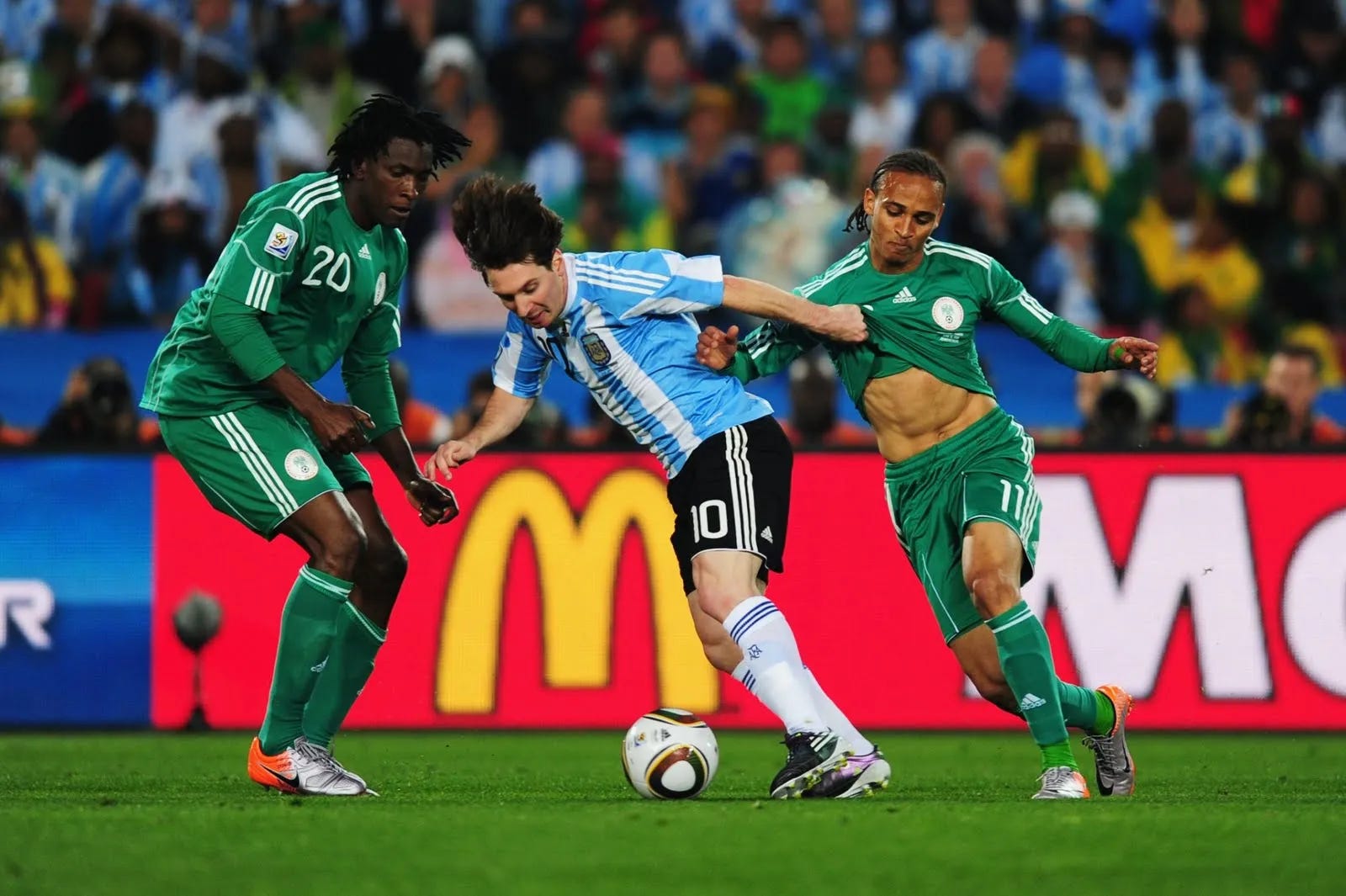
In an age of rising nationalism and global connectivity, the distance that matters is between how completely a country can rally and how little it can say about itself once the rallying stops. It is also about who benefits from keeping that distance. Argentina—globally less popular after its recent scandals, yet fiercely backed at home—shows the two are not mutually exclusive. Nigeria has the same reflex without the narrative, and the vacuum where a narrative should be is neither accidental nor equally costly to everyone.
The Argentine Example
Hours after retaining the Copa America title in July 2024, Argentina’s players were caught in a scandal. Midfielder Enzo Fernández posted a video on social media showing teammates singing racist and homophobic slurs that singled out French players of African heritage. This was not the first time—after winning the 2022 Final against France, players were videoed making similar chants against the French side, with many players of African descent.
Chelsea condemned the actions; the French federation filed a legal complaint, and the Argentine Undersecretary for Sport, Julio Garro, called on team captain Messi and the federation president to apologise. Yet Argentina’s President, Javier Milei, did not agree. In a statement posted on X, he backed ‘free speech’, promoted the side’s recent sporting victories and fired Garro immediately. The sentiment was clear: Argentina was proud of a side that had made it proud, no matter the cost.
By 2026, Argentina came into the World Cup as defending champions but not emphatic favourites. On the back of inspired performances from Messi, team familiarity, and the ability to stifle more creative sides, they reached the Final. Argentina is an interesting example of unnecessary football moralising, especially because it was able to draw support from Israeli leaders and Milei’s cosiness with Trump. Never mind that Milei’s approval rating has dropped in recent months and it is impractical to tie a population to a single leader’s politics. It also grew from attempts to foist ongoing identity debates on Argentina, including an article on its attempt to erase its black population and how this culture has led to opposition because of its own established racial inequalities. Conveniently, these cases only became more prevalent as Argentina progressed and other favourites were eliminated because they simply did not play well.
Then came the claim by an evidently effective disinformation campaign that Argentina benefited from a FIFA-sanctioned refereeing bias. Coupled with an emotional victory over an English side with a relentless media machine behind it and the binary debate of Messi v Ronaldo, Argentina support became feistily partisan and emotional.
That argument of dirty tactics and poor sportsmanship also stuck, which remains especially ironic since many fans support club sides that practice the ‘dark arts’. By the time Fernández received a red card, and Spain deservedly won the Final, there were many ‘football won’ think pieces driven to show that the ‘world’ had won—and Argentina had lost. Post-match scuffles painted the image of an unsporting nation, despite England’s Jude Bellingham instigating one against Argentina in the semi-final, and a nation well aware of balancing the love for their team and its shortcomings against a better side.
In the aftermath, commentary pivoted from whether Messi had ended the debate around football’s greatest (never was a debate for me) to how much of this had been driven by a content creation ecosystem that had a single topic to fixate on. Argentines welcomed back their heroes with pomp mirroring their 2022 victory, and the memories of a world united against them seared into its national consciousness. This sentiment is very familiar with the way identity works nowadays—with football teams, ethnicity, politics, supporters, and increasingly with nationalities.
The Nigerian Conundrum
Nigeria has been in this position for a while now. To be Nigerian is to embrace a legacy that is unfair and unkind in most cases, but not entirely undeserved—there are many Nigerians who do drag the name into disrepute in a way that other countries with large populations are not afflicted with. There are expectations of boisterousness, hustle, noise and fraud. Nigerian prince jokes have easily vacillated from advance-fee scams to television show fodder, and they also reinforce this perception for different audiences. The irony is that, for a country deeply divided across different identities, it rallies when it needs to.
An easier example is also in football. Nigeria’s rivalry with powerhouses such as Ghana, South Africa and Cameroon is established, but there have been instances when it has seemed like the whole continent wanted Nigeria to lose. During the Super Eagles’ run to the 2025 AFCON Final in Côte d’Ivoire, the support was widespread for the host side led by Sebastian Haller, a cancer survivor. But that did not stop a lot of ‘banter’ and celebration that Nigeria did not win the title. This was similarly replicated when Nigeria lost to DR Congo in the qualifiers for the recent World Cup. The obvious defence is that countries like Ghana (1982) and South Africa (1996) have not won AFCON in a while, and that a Ghanaian referee was in the middle for the controversial 2026 AFCON semifinal against Morocco, but Nigerian football fans have known that this is not entirely new for a nation that has lost nearly twice the number of Finals it has actually won and has placed third nearly five times its victories.
Nigeria’s protective sentiment has crossed into other spaces like Afrobeats. Nigeria’s population means that many Africa-related opportunities or roles will often see enough Nigerians presented as nominees, often ensuring the non-Nigerian stands out. The newly created Grammy Award for Best African Music Performance was created in 2024 and has since seen at least three of the five nominations go to Nigerians—with all five songs in 2025 having Nigerian nominees. Despite this, a Nigerian has only won in 2025, with South African artiste Tyla triumphing in both 2024 and 2026 against industry staples such as Burna Boy and Davido. This led to expected banter and commentary about the critical reception of Nigeria’s Afrobeats despite its pervasiveness across the continent.
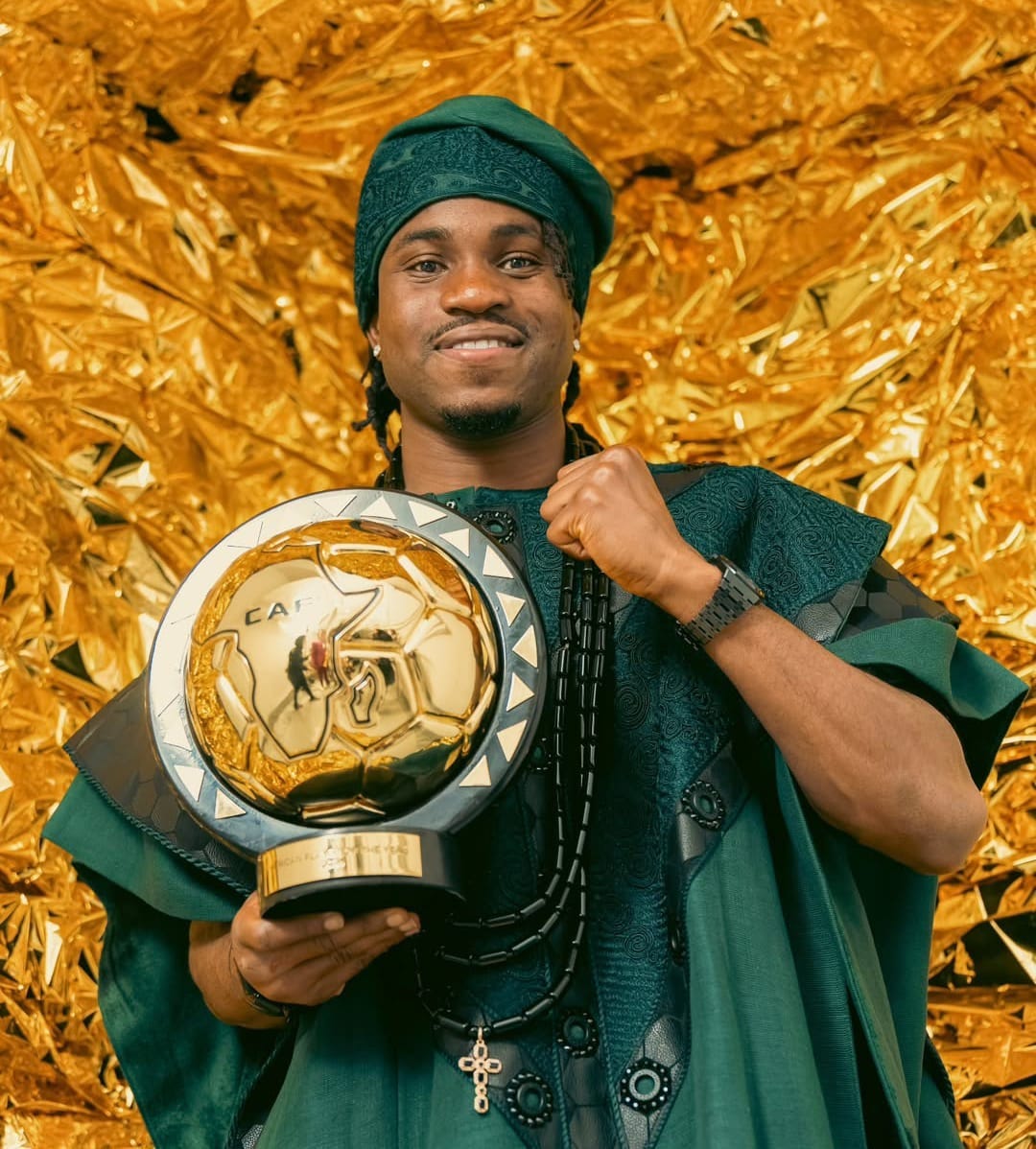
Nigeria’s size and expectations also mean that its successes are seldom appreciated for the often-challenging nature that understates it. Recent African Footballer of the Year winners Victor Osimhen and Ademola Lookman experienced considerable challenges and narratives that would have enthralled most neutrals and pundits, but these seldom captured the attention of those who did not follow the leagues they played in or Nigeria. This is another irony: when Nigerians have not faced external opposition to rally behind, the contrived opposition has come from within.
This rebuts the claim that Nigerians are not patriotic; when needed, Nigerians have proven an ability to rally around fellow Nigerians. This has even extended to diaspora Nigerians who have openly claimed Nigeria. Any division has often been weaponised or highlighted by politicians or groups who have benefitted from the lack of a united force capable of holding an errant or reckless elite to account. The consequence is clear domestically, with leaders who rely on rotation and sectional support to stay in power. It is worth being fair to the design. Power rotation and sectional balance were not invented as a swindle; they were a peace treaty, a way of assuring every group that it would not be permanently locked out of a country that had already fought a war over that exact fear—even if these sectional concerns continue to play a role in Nigerian politics decades after. What began as a settlement has now aged into an alibi, and the guarantee that once bought peace now buys the political elite a standing excuse to answer to a section rather than to a public. It is more evident when Nigerians face external challenges.
This affects foreign policy, a topic I explored two weeks ago. But we can use the example of the recent xenophobic attacks in South Africa in different ways. South Africans were protesting against a narrative of Nigeria that might have been exaggerated but would not have been helped by repeated, publicly shared instances globally. Other African countries were affected by the sweep and carried out diplomatic reprisal activities, such as Ghana cancelling a presidential visit, but Nigeria remained the named example for those seeking to justify the attacks.
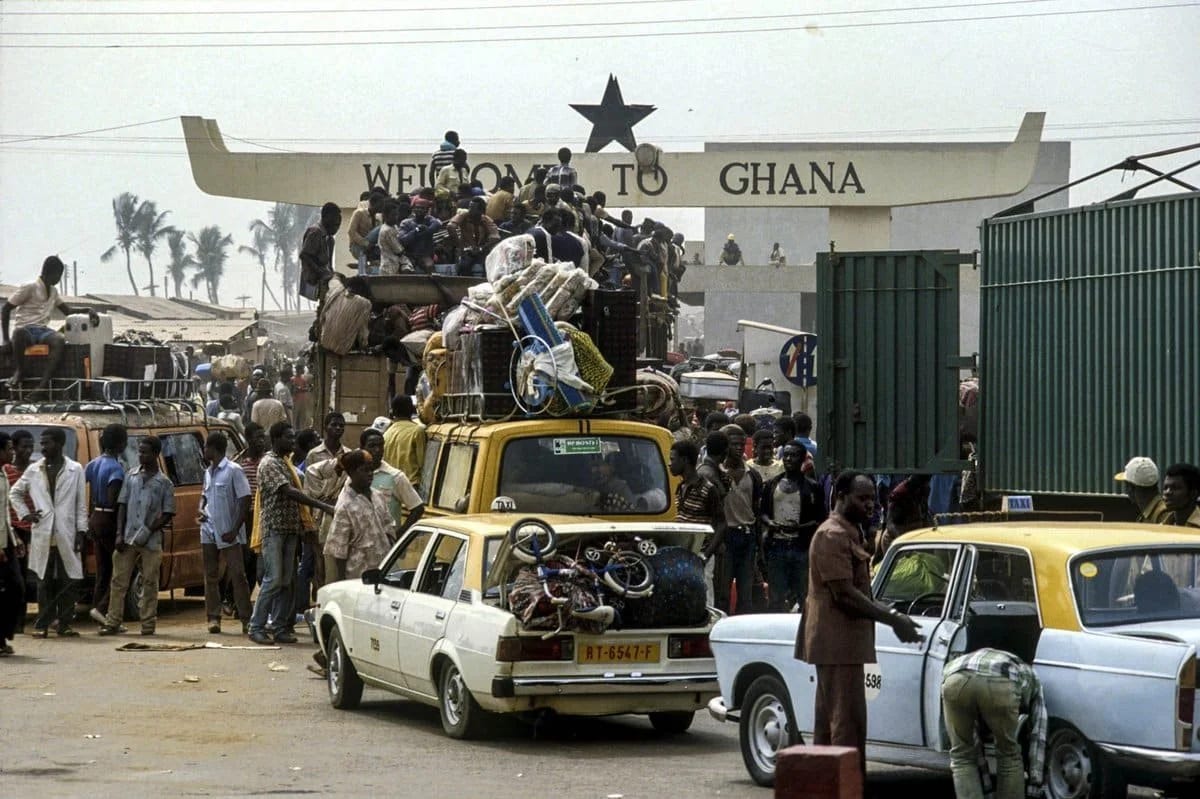
But Nigeria does not have an innocent past. In January 1983, the Shehu Shagari government expelled an estimated two million illegal West African migrants, most of them Ghanaians. Barely two years later, in 1985, the Buhari military regime ordered a second expulsion—many of the targets were people already driven out in 1983 who had drifted back because Nigeria was still the only place they could find work. The logic then was precisely the one now aimed at Nigerians in Pretoria—that the foreigner was the reason the citizen was suffering—and the bags those migrants carried gave the country an idiom it still uses. It is worth holding that the conditions that expulsion was meant to cure did not lift, because they were never caused by the people expelled; it takes concerted, coordinated effort, not a purge, to achieve better opportunities for citizens.
The Accountability Paradox
The obvious objection is that all of this is reputation management, that a country that polices how it looks abroad is not the same as a country knowing what it is. It can be akin to when nationals of more policed states are careful about what they say or post online, to avoid drawing the wrath of the state. But to avoid any doubt, managing perception is only worth anything when there is a clear value system that a nation shares, and is under an existential threat. Argentina did play expansive attacking football—it would not have scored as many goals as it did if it did not—even when criticised for being overly defensive. Nigerians should also learn to rally against domestic structures when they go against what Nigerians should stand for. The most complete example remains October 2020.
For nearly a month, young Nigerians concentrated in the South came out to protest police brutality in Nigeria. The October 2020 #EndSARS protests were an organic outpouring of angst and opposition against a police unit that had become unwieldy and dangerous. With no opposition leader and no party, it still organised legal aid, food, ambulances, and even a nightly headcount. It debunked myths that Nigerians could not care about civic issues and could only cohere as the object of somebody else’s opposition.
On 20 October, the state responded with a coordinated army attack on innocent youth at the Lekki tollgate. It showed the opportunity cost of mobilisation and rallying—the inevitable question of whether there was ever any point to coordination. There is an argument that the subsequent support for Peter Obi in the 2023 elections and the increasing voter apathy evidenced by poor voter turnout is an answer to this question. Increased migration, or the japa wave, has also been readily cited as a young generation coming to terms with the fact that rallying does not make a difference. Another angle is that even such a distinct national rallying point falls within the earlier caveat of Nigerians rallying against each other—supporters of former President Muhammadu Buhari saw a mostly southern protest movement as an attempt to remove him from power and did not engage. Likewise, those of President Bola Tinubu saw the mostly northern-based August 2024 #EndBadGovernance protests in the same light. Without a non-negotiable set of national ideals, such efforts will always be litigated.
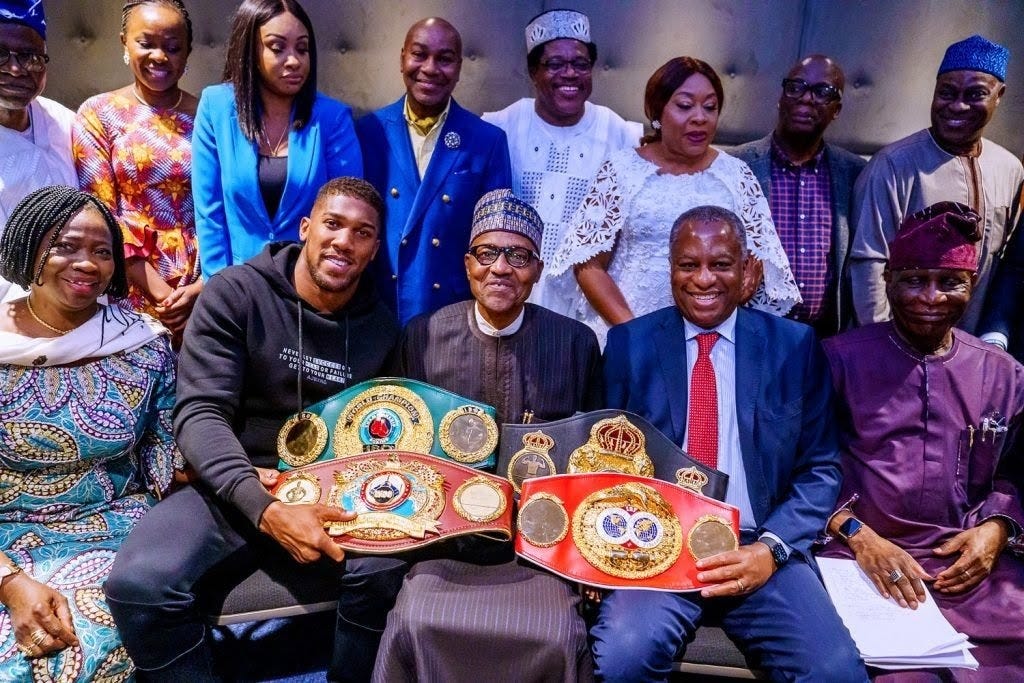
This narrows the argument to something less comfortable: the relationship between Nigerian citizens and the Nigerian state is conditional. This is because leaders, who ordinarily should be custodians of such national values and sentiments, do not have a working plan to abide by or even promote. Instead, they revert to self-preservation because it has become familiar. That is why government officials can weaponise sporting success when the national team does well, then watch repeated rows over bonuses and seldom intervene, or fail to put in place the structure for continued sporting success. Leaders will shamelessly parade for photo-ops with those who win global accolades and make the country proud, but fail to correct the inequality that led to their departure from their governance to succeed. Politicians will ride on the coattails of organically mobilised protest movements to get power, and turn around to crush dissent when they are the recipients.
Not all rallying is oppositional. There are states forged from anti-colonial or fierce independence fights that are inherently oppositional, but many more exist without having to fight an external foe. Nigeria holds neither. Where it works, the rally builds shared institutions that are critically and constantly reviewed, grounded in mutual obligation, and evolving in response to the question of what it means to be a people with a shared identity. This is why we can expect Japanese fans to clean stadiums after matches, Germans to present order, and Americans to embody the hustle and ambitious culture they pride themselves on. This answers the question of what it means to be from there or what the national dream is. Nigeria is in this position because it does not know what its ‘national dream’ is; it continues to be there because its leaders have decided not to answer it, as it is in their best interest.
Nobody’s Job
Global support for Argentina in a football match has largely hinged on the personal appeal of its footballing gods Diego Maradona and now Lionel Messi. However loudly the team and country gets branded as ‘anti-football’, it is always one magical story or player away from being forgiven. Stories, narratives, and increasingly ‘logics’ are conveniently conjured to make cases where emotion defies reasoning and when we have to present justification. Elsewhere, most countries that have seen increased tourism rates have actively worked to present friendly, welcoming populations and play down negative stereotypes when possible. It might not always be true, but we have ‘wanted it’ to be true enough to believe it.
This is where Nigeria finds itself, despite decades of many ‘experts’ from both parties running a frankly archaic and underperforming Ministry of Information and National Orientation. Billions of naira have been spent on projects such as the ‘Heart of Africa’ campaign, or the ‘Good People, Great Nation’ effort, or the ‘Change Begins With Me’ programme by the Buhari administration to little or no effect. It has not sustained a change in perception, and an evident example has been Nigeria’s poor recent record at bidding to host tournaments.
It is not clear what Nigeria wants to be, or what it wants others to see it as. It is convenient to be the big brother where applicable but unable to correct ‘younger siblings’ when it is mistreated. It is keen to be the ‘Giant of Africa’, but helpless when this is countered by its citizens being abused elsewhere. The country unites when it comes to having the best jollof rice, but does not recognise that its people are increasingly priced out of said rice.
Ironically, Nigeria’s size has repeatedly done for the continent, and for its diaspora, what no individual country could, and the sneering usually sits directly on top of those instances. The pride of being Nigerian already does the thing a national narrative is supposed to do. What is missing is a willing custodian, whether it is a successful national symbol or a political leader sharing a vision. These narratives often couch instances where Nigerians, through size and number, have been able to address conditions individuals seldom might. And, especially when performers or players literally or metaphorically wear the green and white, there is an instinctive gust of pride, as long as the affiliation is positive.
Nigeria might not have qualified, but its presence was felt through a fictional XI and its palpable online presence. It will chase the 2027 AFCON on the back of a silver medal in 2023 and a bronze in 2025. Another election is due in a couple of months, the kind of occasion at which a country is supposed to address the question of what it wants to be. Leaders have never made good on an answer, and the country has never once insisted on one past the final whistle. The gap is the arrangement itself, jointly kept by an elite with no incentive to define the country and a public whose feeling, real as it is, has only ever been summoned, but never stored.
__
The Village(r)
ChiAmaka Dike was a ruthless editor who removed my Messi and Arsenal praise and made me lose several paragraphs I really liked and kept this piece under length under duress handled edits and gracefully cut a lot of the throat-clearing that usually follows pieces like this (on my end at least). As always, any errors are mine and likely the result of me not accepting all her 256 comments/edits.